

Between the ages of fourteen and seventeen, studying English should not simply mean revising grammar rules or completing more difficult exercises. Older teenagers should be given opportunities to use the language to support an opinion, compare ideas, make decisions, create content and take responsibility within a group. That’s why a specifically designed English course for students aged 14 to 17 is crucial to their language development!
Astrolabio separates its academic programmes according to students’ stage of development:
- Explorers, for children aged 7 to 11;
- Voyagers, for students aged 11 to 14;
- Trailblazers, for teenagers aged 14 to 17.
Trailblazers is the programme created for our oldest students. It continues to develop their English skills while introducing activities that require critical thinking, creativity, argumentation and leadership.
The aim is to learn how to use the language with greater awareness, independence and confidence.
Trailblazers programme at a glance
Trailblazers is mainly designed for students aged 14 to 17, with an English level roughly between A2 and C1 on the Common European Framework of Reference for Languages.
The two-week programme includes:
- 27 academic hours;
- classes with a maximum of 16 students;
- communication and functional English development;
- activities focused on critical thinking, creativity and debating;
- a series of leadership lessons;
- identification of potential ELAC Student Leaders;
- projects on global citizenship and environmental awareness;
- lessons linked to excursions and cultural exchange;
- vlogging, podcasting, advanced photography and beatboxing workshops;
- sport, creative activities and collaborative challenges;
- 3 full-day excursions;
- 2 half-day excursions;
- a stated ratio of one leader for every 25 students.
Trailblazers challenges students to use English in stimulating situations and supports them in becoming more confident and responsible participants, both in lessons and in the international life of the campus.
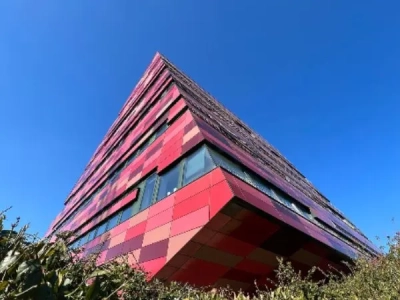
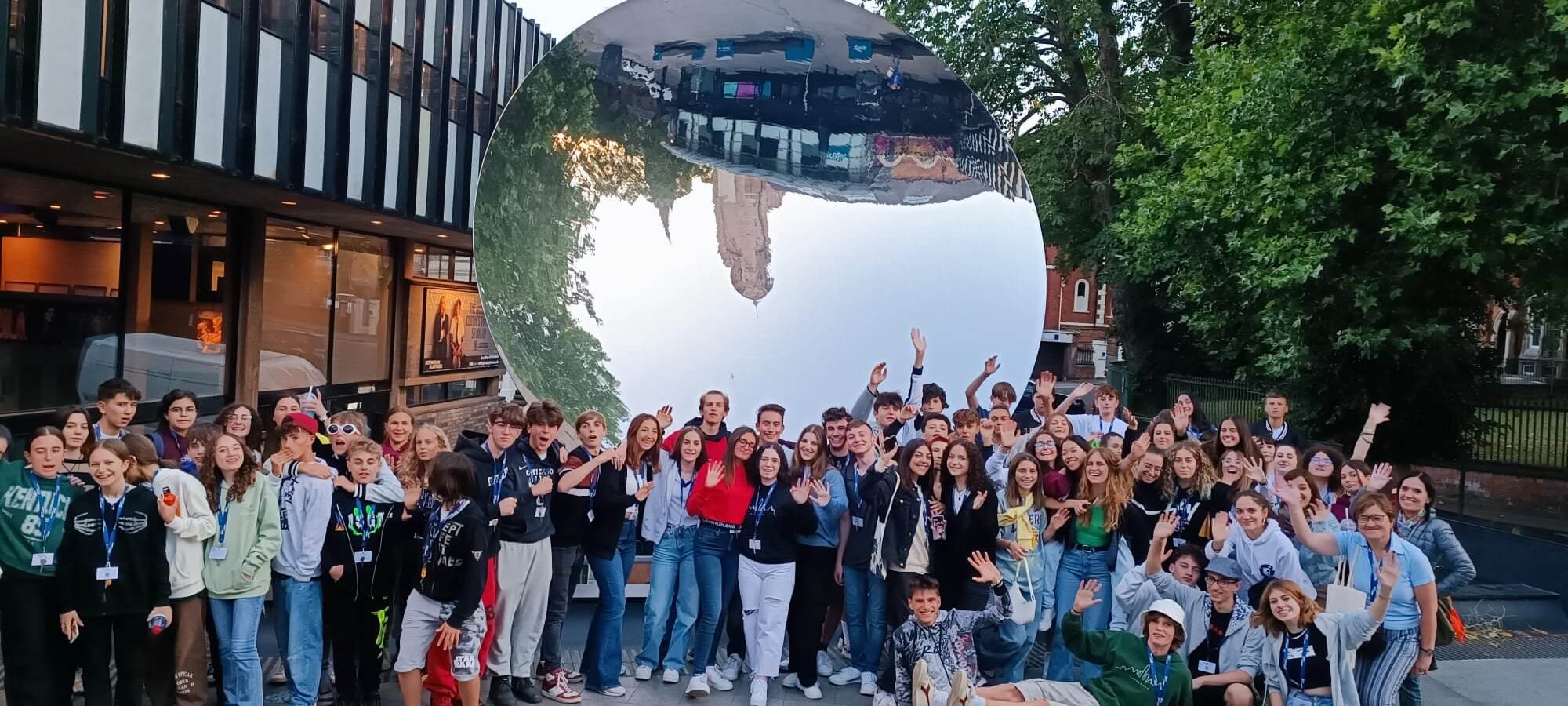
Nottingham Jubilee Campus
Why students aged 14 to 17 need a specific programme
A sixteen-year-old should not simply follow a harder version of a course designed for a child.
At this age, students are able to:
- understand more complex problems;
- compare different points of view;
- express and justify an opinion;
- take part in a debate;
- take on a role within a group;
- create digital content;
- work with greater independence;
- think about cultural, social and environmental issues;
- make decisions and consider their consequences.
This does not mean that every teenager is already confident, independent or comfortable speaking in front of other people.
The programme still needs to provide clear structure and suitable support, without relying on activities that students may see as childish or overly controlled.
Trailblazers responds to this stage of development by offering a course in which English becomes a tool for thinking, creating, arguing a point and working with others.
From Explorers to Trailblazers: an age-based learning progression
Explorers
Age: 7 to 11
Main objective: Become familiar with English and build confidence.
Type of participation: Structured, practical and creative.
Voyagers
Age: 11 to 14
Main objective: Communicate, work with others and develop soft skills.
Type of participation: Increasingly independent.
Trailblazers
Age: 14 to 17
Main objective: Argue a point, create, lead and make decisions.
Type of participation: Independent, critical and responsible.
With Explorers, children use vocabulary, drama, performance and small projects to become comfortable with the language.
With Voyagers, students work on functional communication, CLIL, problem solving and collaboration.
With Trailblazers, students take part in activities that require:
- critical thinking;
- debating;
- leadership;
- creativity;
- content creation;
- discussion of global topics;
- greater responsibility towards the group.
You can also read more about the Explorers programme for children aged 7 to 11 and the Voyagers programme for students aged 11 to 14.
Which English levels is Trailblazers designed for?
The programme is designed for students with an English level between A2 and C1.
In general terms:
- an A2 student understands frequently used expressions and can communicate in simple situations;
- a B1 student understands the main points of clear messages and can talk about experiences;
- a B2 student can interact more fluently and explain and support their opinions;
- a C1 student understands complex content and can use the language with a good level of independence.
Having students across several levels does not mean that an A2 student and a C1 student necessarily need to complete exactly the same tasks.
Classes and activities can take students’ starting abilities into account. The same topic can be adapted by changing:
- the complexity of the vocabulary;
- the amount of information students are expected to understand;
- the length of spoken contributions;
- the level of independence required;
- the depth of the argument;
- the format of the final task;
- the amount of support provided by the teacher.
To better understand what these levels mean, you can read our page on A1, A2, B1, B2, C1 and C2 language levels.

Can an 18-year-old join Trailblazers?
The standard age range for the programme is 14 to 17.
An 18-year-old may only be admitted in exceptional circumstances, when they are enrolling as part of a larger group.
Admission is not automatic and must be checked before booking.
Factors such as the composition of the group, travel arrangements, centre rules, school availability, the student’s English level and the suitability of the programme may all be considered.
This exception does not change the main age range for Trailblazers, which remains 14 to 17.
27 academic hours over two weeks
The Trailblazers programme includes 27 academic hours over two weeks.
Whether lessons take place in the morning or afternoon depends on the centre and the programme timetable for that departure.
One-hour sessions allow students to work on more developed activities than those used with younger children. A lesson might include an introduction to the topic, language preparation, group work, a practical task and a final discussion.
Academic hours remain the formal core of the programme, but students continue using English during workshops, sport, evening activities and excursions.
Classes with a maximum of 16 students
Trailblazers classes have a maximum of 16 students.
This makes it possible to organise:
- pair work;
- small-group work;
- debates;
- presentations;
- role-play and simulations;
- digital content creation;
- collaborative challenges;
- individual feedback.
A maximum class size alone does not guarantee that lessons will be participatory.
What matters is how the group is used. During a debate, students may take on different roles, prepare arguments, listen to the opposing position and formulate a response.
During a digital project, students might divide responsibilities between research, writing, recording, presenting and reviewing the final piece.
The aim is to prevent a small number of more confident students from dominating the activity while everyone else remains a spectator.
Communication and functional English
Trailblazers continues to develop students’ communication skills and functional English.
Functional English is the language used to achieve a practical outcome.
Students might use it to:
- present a point of view;
- explain a choice;
- make a proposal;
- ask for clarification;
- negotiate within a group;
- express agreement or disagreement;
- summarise information;
- assess advantages and disadvantages;
- make a decision;
- present a project;
- moderate a discussion.
Grammar, vocabulary and pronunciation remain part of the programme, but they are connected to tasks in which students need to communicate for a real purpose.
A language structure becomes useful when it allows a student to express an idea more accurately, rather than simply when it is placed correctly into an exercise.
Critical thinking
Critical thinking is one of the main skills developed through the programme.
Thinking critically means learning how to:
- distinguish between facts and opinions;
- identify relevant information;
- assess a source;
- compare different interpretations;
- identify advantages and limitations;
- ask questions;
- justify a conclusion;
- change your position when new information becomes available.
During a lesson, students might be given a problem, news story, situation or statement to analyse.
The task might ask them to:
- understand the information;
- identify the main issue;
- discuss it with classmates;
- form a position;
- support it with arguments;
- respond to objections;
- present a conclusion.
English therefore becomes a tool students can use to organise and communicate their thinking.
Debating and argumentation skills
Trailblazers includes activities focused on debating.
A well-structured debate is not about speaking louder than everyone else or necessarily defending what you personally believe.
Students may be asked to argue for an assigned position, even if it does not match their own opinion.
This allows them to practise:
- listening;
- organising ideas;
- using examples;
- language for agreement and disagreement;
- responding to other people;
- managing time;
- taking turns;
- giving a final summary.
Before the debate, students may work on vocabulary and useful expressions for:
- introducing an argument;
- adding another point;
- challenging a position;
- asking for an explanation;
- acknowledging a valid point;
- reaching a conclusion.
The aim is to help every student learn how to build and communicate an argument.
Creativity
Creativity is not limited to artistic activities.
Within Trailblazers, students may need to use it when they are asked to:
- find less obvious solutions;
- create a story;
- plan a piece of content;
- interpret a topic;
- make a video;
- record a podcast;
- present an idea in an original way;
- turn materials into a finished product;
- imagine alternative scenarios.
Creativity has a clear academic purpose when it is connected to a language and communication objective.
Creating a video, for example, may require students to:
- choose a topic;
- define the audience;
- write a script;
- assign roles;
- record;
- review the content;
- present the finished result.
The final product is therefore only the last stage of a process carried out in English.
Leadership lessons
Trailblazers includes a series of lessons focused on leadership and soft skills.
Leadership is not presented simply as being the person who tells everyone else what to do.
It can include the ability to:
- listen;
- share responsibilities;
- encourage participation;
- make decisions;
- manage disagreement;
- communicate clearly;
- lead by example;
- recognise other people’s strengths;
- take responsibility for the result.
During activities, students may be asked to change roles.
One student might coordinate one stage of the project, another might keep track of time, while someone else summarises the decisions made by the group.
This helps students see that leadership is not a fixed personality trait. It can be developed through specific behaviours and responsibilities.
ELAC Student Leaders
The leadership lessons can help identify students who may be suitable for the role of ELAC Student Leader.
Selection is not simply about identifying the students who speak the most or take control of every activity.
The role may recognise behaviours such as:
- responsible participation;
- listening skills;
- collaboration;
- initiative;
- reliability;
- willingness to support the group;
- respectful communication.
Not every student needs to aim for a formal role in order to benefit from leadership activities. The main purpose of the programme is to give students experience of responsibility, collaboration and initiative.
Global citizenship and environmental awareness
The programme includes content and projects focused on global citizenship and environmental awareness.
At this age, students can explore these topics at a more complex level than younger groups.
Activities may focus on:
- cultural differences;
- individual and shared responsibilities;
- sustainability;
- use of resources;
- digital communication;
- international communities;
- the consequences of everyday choices;
- problems affecting different countries;
- the relationship between development and the environment.
The international campus environment makes these conversations less abstract.
Students can meet people their own age with different experiences, habits and opinions, and use English to understand perspectives they may not have encountered before.
The aim is not to provide ready-made answers. Students are given opportunities to analyse a topic, discuss possible alternatives and develop a position they can explain and support.
Lessons linked to excursions and cultural exchange
Some lessons prepare students for excursions and cultural exchange experiences.
Before a visit, the group may work on:
- historical context;
- significant people;
- cultural themes;
- vocabulary;
- questions;
- information to check;
- details to look out for.
During the excursion, students may collect materials, notes, images or interviews.
Once they return, the experience can be developed further through:
- a debate;
- a podcast;
- a video;
- a presentation;
- an article;
- a group project;
- a comparison between their expectations and the actual experience.
Connecting classroom work with visits means that excursions can become part of the learning programme rather than simply a tourist break from lessons.
What a Trailblazers lesson can look like
The structure depends on the students’ level, the topic and the teacher. A lesson consistent with the Trailblazers approach might include:
- introducing a question, problem or topic;
- an initial comprehension activity;
- introducing vocabulary and useful language functions;
- analysing information or different points of view;
- pair or group work;
- producing a solution, piece of content or argument;
- presenting and discussing the result;
- reflecting on the process and the language used.
A lesson on creating a more sustainable city, for example, could ask students to:
- read short pieces of information;
- identify problems;
- take on different roles;
- suggest changes;
- consider costs and benefits;
- present a plan;
- answer questions from other groups.
Students therefore use English to complete a complex but clearly defined task, with support from the teacher where needed.
Vlogging workshops
Vlogging gives students the opportunity to work on communication, message structure and understanding their audience.
An activity might include:
- choosing a topic;
- deciding on the format;
- writing a script;
- organising sequences;
- recording;
- presenting;
- reviewing the final result.
The learning value does not come simply from producing a video.
Students need to decide:
- what they want to communicate;
- who they are communicating with;
- which tone to use;
- how much time they have;
- which words and images will work best.
Recording themselves can also help students pay attention to pronunciation, clarity and their ability to communicate information concisely.
Podcasting workshops
Podcasting focuses attention on the voice and the organisation of content.
Students may work on:
- interviews;
- discussions;
- stories;
- reviews;
- focused topics;
- cultural subjects;
- experiences from their study holiday.
Preparation requires students to divide responsibilities, create questions, plan their contributions and connect the different parts of the recording.
There is no need to produce a technically complex podcast. The aim is to use English to create a clear, coherent piece of content.
Advanced photography
Advanced photography can be used to develop observation, interpretation and storytelling skills.
Students may be asked to:
- choose a subject;
- work with perspective and composition;
- document a place;
- tell a story through images;
- explain their choices;
- present a photography project.
The activity may be linked to excursions, the campus or a cultural topic. Therefore, photography becomes a starting point for description, interpretation and communication.
Beatboxing
Beatboxing uses the voice, rhythm and coordination.
It can help students work on:
- listening;
- reproducing sounds;
- rhythm;
- confidence in expressing themselves;
- collaboration;
- performance.
The activity offers a different way to participate from a traditional lesson and may particularly appeal to students interested in music and sound production.
Sport
The social programme may include:
- cricket;
- ultimate frisbee;
- yoga;
- dance.
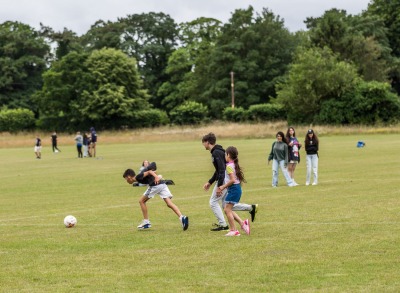
Sports activities are not simply opportunities to move around.
Students may need to:
- understand rules;
- follow instructions;
- coordinate with others;
- encourage teammates;
- make decisions;
- communicate during the game.
The activities available depend on the centre, its facilities and the arrangements for each departure.
Creative activities
Creative activities may include:
- trash fashion;
- Zentangle;
- T-shirt customisation;
- bracelet making.
Trash fashion
Trash fashion asks students to design and create clothing or accessories using recycled materials. The activity can bring together creativity, sustainability, teamwork and a final presentation.
Zentangle
The Zentangle technique uses repeated graphic patterns and can encourage concentration, creativity and attention to detail.
T-shirts and bracelets
Customising T-shirts and making bracelets can become language-based activities when students need to explain an idea, choose materials, follow instructions and present the finished result.
Collaborative activities
The programme includes activities such as:
- debate circles;
- student leadership;
- escape rooms;
- scavenger hunts.
Debate circles
In debate circles, students discuss a topic in organised groups, following set rules and time limits.
This format can make debating feel more manageable than speaking in front of an entire class.
Student leadership
Student leadership activities allow students to try roles involving coordination, organisation and responsibility.
Escape room
An escape room requires students to understand clues, connect information, divide tasks and manage their time.
Scavenger hunt
A scavenger hunt combines observation, orientation, teamwork and problem solving.
Any competitive element can support participation while still giving quieter students or those who prefer to work at a different pace a way to contribute.
Evening activities
Evening activities may include:
- silent disco;
- race around the world;
- murder mystery;
- karaoke.
These activities add to the social side of the programme.
Silent disco
A silent disco is a music evening where participants listen to the music through headphones.
Race around the world
Race around the world may include challenges linked to different countries, cultures, knowledge and teamwork.
Murder mystery
A murder mystery asks students to play different roles, understand clues, form theories and compare ideas with the other participants.
Karaoke
Karaoke gives students an opportunity to take part through music and performance in an informal setting.
The exact activities available can vary between centres and departures.
Educational excursions
The two-week programme includes:
- 3 full-day excursions;
- 2 half-day excursions.
The visits are linked to preparatory lessons.
Before an excursion, students may study the context, prepare questions and agree on a task.
Afterwards, they may use the experience to create a piece of content, take part in a debate or give a presentation.
Destinations vary depending on the college and the season, so students can check the current destination page for the excursion programme included with their chosen study holiday.
One leader for every 25 students
The stated programme ratio is one leader for every 25 students.
This figure is different from the maximum number of students in a class and does not, by itself, describe the full supervision structure.
A study holiday can involve teachers, programme leaders, Italian group leaders, residential staff, activity staff and staff working during excursions, depending on the centre and programme.

What can a student realistically improve?
Trailblazers cannot automatically guarantee that a student will move up to a higher language level within two weeks.
It can, however, give students opportunities to:
- use English more consistently;
- expand their functional vocabulary;
- formulate arguments;
- take part in a debate;
- present a project;
- create digital content;
- take on responsibilities;
- work with students their own age;
- understand different points of view;
- explore cultural and environmental topics;
- become more confident when speaking.
Results depend on:
- the student’s starting level;
- participation;
- class composition;
- motivation;
- length of stay;
- the quality of international interaction;
- willingness to take on unfamiliar roles and activities.
A student may not return home with a higher language qualification, but they may have a stronger ability to use English to express themselves and play an active role within a group.
Who is Trailblazers suited to?
Trailblazers may suit a student who:
- is normally between 14 and 17 years old;
- has an English level between A2 and C1;
- wants to use English in practical situations;
- is interested in cultural and international topics;
- is willing to engage with different opinions;
- wants to become more confident speaking English;
- is prepared to work with others;
- enjoys projects, debates and content creation;
- wants to become more independent;
- can follow an organised routine.
Students do not need to already be natural leaders, highly outgoing or completely confident in their English.
The programme also gives quieter students opportunities to contribute through research, writing, organisation, creativity or presentation.

When might it not be the right choice?
Trailblazers may not be suitable when:
- the student falls outside the age range and an exception has not been authorised;
- their English level is below A2 and there is no suitable group available;
- they are looking exclusively for one-to-one lessons;
- they want a course based only on grammar;
- they consistently refuse to work with others;
- they are unwilling to take part in projects and discussions;
- they require individual support that the programme does not provide;
- they are strongly opposed to going on the trip.
The teaching approach should be considered alongside the destination.
A famous city or prestigious campus cannot make up for a programme that does not suit the student’s age, level or expectations.
Where is Trailblazers available?
Trailblazers is offered at the same centres that provide the Voyagers programme:
Each destination gives students a different setting in which to take part in the programme. This means you can consider both the teaching approach and the type of study holiday experience that would suit you best.
Dates, accommodation, excursions, activities, services, age ranges and other arrangements can vary between destinations and departures.
For a broader comparison of the available locations, visit our page dedicated to study holidays in Great Britain.
Trailblazers in Eastbourne
Eastbourne gives students the chance to take part in Trailblazers while staying in a coastal town on the south coast of England.
The seaside setting creates a different atmosphere from a large university city. Students can combine their English lessons and Trailblazers activities with the wider experience of living and socialising in an English coastal destination.
The programme still follows the same focus on practical communication, critical thinking, creativity and increasing independence. Lessons form part of a wider timetable that includes activities, time with other students and excursions.
You can find the current dates, accommodation arrangements, excursions and other details on our Eastbourne study holiday page.
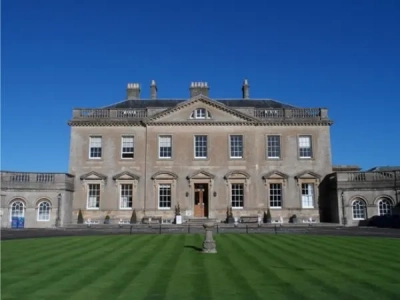
Trailblazers in Bath
Bath offers Trailblazers in one of England’s best-known historic cities, giving students a setting where their language programme sits alongside opportunities to experience British history and culture.
The study holiday takes place at Bath Spa University, surrounded by the countryside outside Bath. Staying on a university campus gives students a defined base for lessons, activities and day-to-day life during their time abroad.
The Trailblazers approach gives older teenagers opportunities to use English beyond traditional language exercises, whether they are discussing ideas, working on projects, creating content or taking responsibility within a group.
You can read more about the location and campus in our page about study holidays at Bath Spa University.
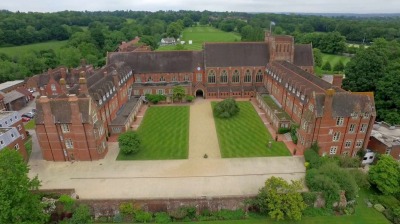
Trailblazers in Horsham
Horsham offers a more compact setting in West Sussex for students taking part in the Trailblazers programme.
For teenagers travelling abroad, the setting of a study holiday can make a real difference to the experience. A smaller location can provide a different rhythm from studying in a major city while still allowing students to take part in lessons, organised activities, excursions and international campus life.
Within Trailblazers, students continue to work towards greater confidence and independence in English through discussion, teamwork, creative tasks and activities that ask them to contribute actively rather than simply listen.
You can see the current programme and practical details on our Horsham study holiday page.
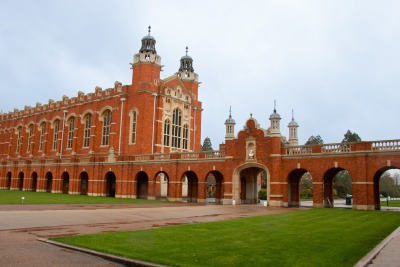
Trailblazers in Nottingham
Nottingham combines the experience of a university city with the structured environment of a study holiday programme.
For Trailblazers students, this means English lessons and programme activities take place within a wider experience that includes campus life, cultural activities and opportunities to spend time with other young people.
The programme’s focus on communication, discussion, collaboration and independence is particularly relevant for teenagers who are ready for more responsibility within their study holiday but still benefit from an organised timetable and support.
You can find more information in our dedicated post about study holidays in Nottingham, as well as the current Nottingham programme.
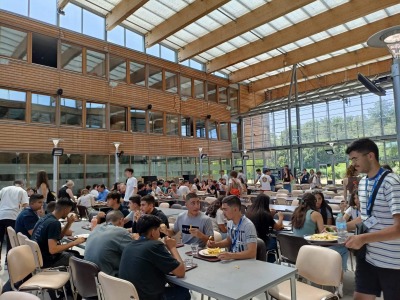
Trailblazers in Cirencester
Cirencester offers Trailblazers within a setting that makes the progression between Astrolabio’s different age-based programmes particularly clear.
Younger students can follow Explorers or Voyagers, while those aged 14 to 17 move into Trailblazers, where the emphasis shifts towards greater independence, critical thinking, debate, leadership and responsibility.
For students returning to a study holiday as they get older, this progression means that the academic experience can develop with them rather than simply repeating the same style of course at a higher language level.
Trailblazers students still have the structure of lessons and an organised programme, but the tasks they complete increasingly ask them to make decisions, contribute their own ideas and take responsibility within a group.
You can find the current arrangements on our Cirencester study holiday page.
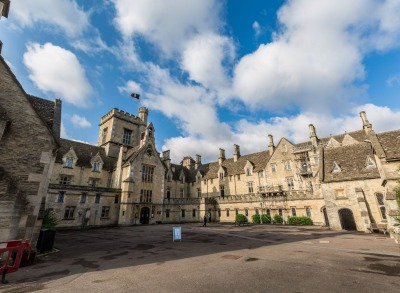
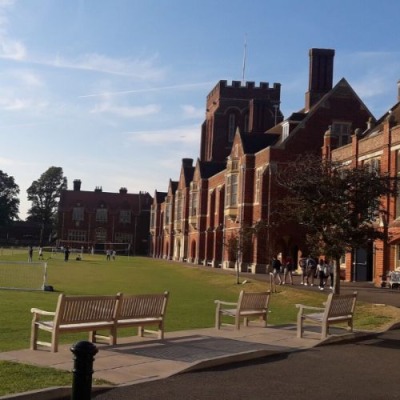
Trailblazers in Ardingly
Ardingly offers a boarding school experience surrounded by green space, creating a self-contained setting for students taking part in Trailblazers.
Lessons, activities and social time form part of the same study holiday experience, giving teenagers plenty of opportunities to use English throughout the day rather than only during formal classroom hours.
For Trailblazers students, this can support the programme’s emphasis on communication and participation. English is used during lessons, but it can also become the shared language for activities, teamwork and everyday interactions with other students.
The boarding school setting may particularly appeal to students who like the idea of a structured programme where much of daily life takes place within the same campus environment.
You can find the current programme details on our Ardingly study holiday page.
Why Trailblazers reflects a more carefully designed teaching approach
The quality of Trailblazers is supported by clear features:
- a defined age range;
- stated English levels;
- 27 academic hours;
- a maximum of 16 students per class;
- functional English development;
- critical thinking;
- debating;
- creativity;
- leadership lessons;
- global citizenship projects;
- language preparation linked to excursions;
- workshops connected to content creation;
- continuity between lessons, activities and international campus life.
Many programmes separate students only according to their English level.
Trailblazers also considers what changes during the later teenage years: students’ ability to build an argument, their growing need for independence, their relationship with the group, their wish to express themselves and their ability to take on responsibility.
The difference comes from designing a programme in which students use English to think, create, discuss and lead.