
You might think that Cricket in the UK might is just a sport, but to the Brits, it’s so much more! It is a deep-rooted tradition that began in the English countryside and gradually evolved into one of the most widely followed sports in the world.
Cricket has captivated audiences across generations. Although it may seem complex or slow or even boring at first glance, there is far more beneath the surface. Once you understand the game, what might’ve initially felt like a quiet pastime often becomes a tense, strategic contest that rewards patience, skill and quick thinking.
In this article, we will take you through the history and essence of British cricket that will completely change how you see the game. If you are planning a study holiday in the UK, cricket is an essential part of British culture worth experiencing firsthand.
When was cricket invented?
Before cricket developed into the sport we know today, people played a much simpler game known as “club-ball”. In this early form, players used a wooden bat to strike an object, such as a stone or a ball of wool, towards another player.
There is a widely held belief that cricket originated from this game, although historians do not all agree on this theory. However, what is clear is that cricket has very early origins in England, possibly dating back to the Saxon or Norman periods.
Some scholars suggest that cricket may have evolved from bowls, with the addition of a batter attempting to stop the ball from reaching its target, while others believe the word “cricket” may derive from the French term criquet, used after the Norman Conquest of 1066.
What we do know with certainty is that by the early 1600s, cricket had begun to take shape as a recognisable game, often described as a pastime for children. From there, it spread rapidly across the country, becoming a central part of British sporting culture.
The evolution of cricket in the UK
So, when did cricket become an organised sport?
The first recorded match took place in 1697 in Sussex, England. The stakes were surprisingly high, with a prize of 50 guineas, a significant amount at the time. From this point onwards, cricket began to grow in popularity, with more matches being formally recorded.
By 1709, the first inter-county match between Surrey and Kent had taken place, while early organised teams were already forming within institutions such as the University of Cambridge.
Many early matches were played in areas around London and Hambledon in Hampshire. These locations became deeply associated with the sport, with Lord’s in London later recognised as the spiritual home of cricket.
During the eighteenth century, cricket’s popularity grew rapidly, not only as entertainment but also as a form of betting. This increase in interest led to the need for standardised rules. The first written laws of cricket, established in 1744, defined key aspects of the game and are still preserved today.
When did cricket become an international sport?
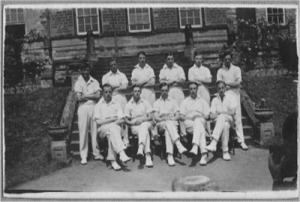
Cricket began to spread beyond British culture during the period of the British Empire, particularly in the nineteenth century. As British influence expanded, so too did the game, taking root in countries such as Australia and India.
The first international match took place in 1844 between the United States and Canada. Later, in 1877, the first official Test match was played between England and Australia, marking the beginning of one of the most famous rivalries in sport.
In 1882, Australia defeated England on English soil for the first time. This led to the creation of The Ashes, a historic series that remains one of the most celebrated competitions in cricket today.
The development of modern cricket
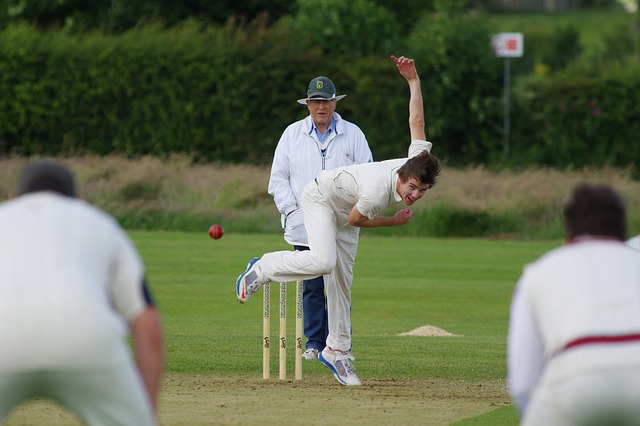
Modern cricket began to take shape in the late nineteenth century with the introduction of structured competitions such as the County Championship.
A key change came in 1900 with the standardisation of six-ball overs, replacing the earlier five-ball format. This helped define the pace and structure of the modern game.
In 1909, the Imperial Cricket Conference was established, which later became the International Cricket Council (ICC), the global governing body of cricket.
In more recent years, cricket has evolved further to suit modern audiences. The most notable innovation is the Twenty20 (T20) format, introduced in 2003. With shorter matches and faster gameplay, it offers a more dynamic and accessible experience, attracting new generations of fans worldwide.
How cricket is played
Cricket is played between two teams of eleven players and is divided into innings. The aim is simple: score more runs than the opposing team.
During an innings, one team bats while the other bowls and fields. The batting team attempts to score runs, while the bowling team tries to limit scoring and dismiss players.
Two batters are on the field at any one time. Each player continues batting until they are dismissed. When ten of the eleven players are out, the team is declared “all out” and the innings ends.
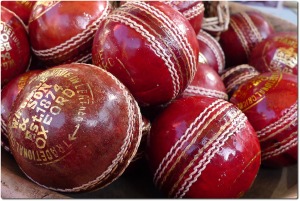
The main equipment includes a hard leather ball with a cork core, a wooden bat traditionally made from willow, and the wicket, made up of three vertical stumps and two bails.
Experience cricket during your study holiday in the UK
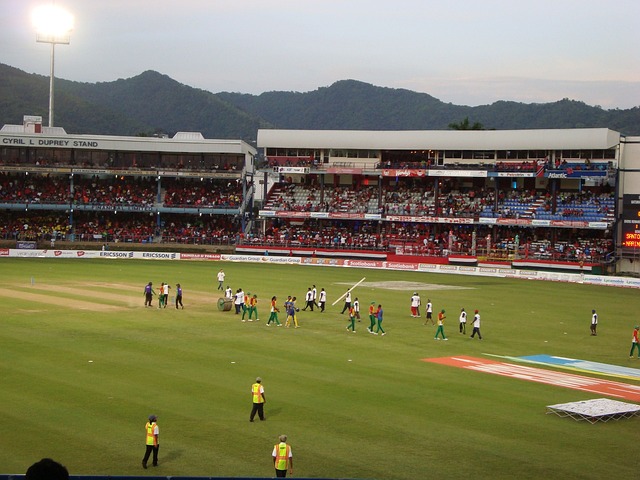 If you are planning a study holiday in the United Kingdom, take the opportunity to experience cricket for yourself. It is a key part of British culture, offering insight into both tradition and everyday life.
Visiting a cricket ground allows you to understand the atmosphere of the game, from the quiet anticipation of play to the excitement of key moments. If you are lucky, you may even watch a live match and join local supporters.
Beyond learning the rules, cricket in the UK offers a way to connect with people, traditions and shared experiences.
Whether you watch, learn or even try playing, it is an experience that can make your time in the UK even more memorable.