
An eight-year-old child and a fourteen-year-old do not learn in the same way.
Their interests, attention spans, independence, relationships with others and the way they take part in activities are all different. That is why simply dividing students into classes according to their English level and giving everyone the same junior course is not enough.
At Astrolabio, we have chosen to differentiate our teaching according to age too, with programmes designed for different stages of childhood and adolescence:
- Explorers, an English course for children aged 7 to 11;
- Voyagers, an English course for students aged 11 to 14.
Explorers is built around the way younger children participate, communicate and learn through practical experiences.
The Explorers programme at a glance
Explorers is our academic programme for children aged 7 to 11, with English levels ranging approximately from A1 to B1 on the Common European Framework of Reference for Languages (CEFR).
The course uses:
- vocabulary building;
- interactive communication;
- project-based learning;
- themes linked to environmental awareness;
- drama and performance.
The two-week programme includes:
- 23 academic hours;
- classes of no more than 16 students;
- social, sporting and creative activities;
- workshops;
- organised evening activities;
- 3 full-day excursions;
- 2 half-day excursions;
- educational activities linked to excursions;
- a maximum ratio of one group leader to every 12 students during the programme described.
The aim is to get children involved by making learning enjoyable, helping them become more confident, giving them opportunities to make new friends and encouraging their curiosity about languages and the world around them.
Why Explorers is different from a generic junior English course
The term “junior course” can include students with very different needs.
A primary-school-aged child may need:
- short, easy-to-understand instructions;
- practical activities;
- frequent changes of pace;
- plenty of support from their teacher;
- opportunities to move around and interact;
- subjects that relate to their own experiences;
- an environment where they can try speaking without being afraid of making mistakes.
An older student will generally be more able to work independently, take part in more detailed discussions and contribute to more complex projects.
That is why Explorers and Voyagers are not simply two different names for the same course.
They differ in:
- the students’ age range;
- the level of independence expected;
- the length and structure of activities;
- the way the language is introduced;
- the type of projects students complete;
- the way the group is encouraged to participate.
To find out more about our other programmes, you can visit our post on language courses during study holidays.
Explorers and Voyagers: two programmes for different age groups
Explorers (ages 7–11)
Approach: Guided, practical and participatory.
Pace of activities: Short, varied and active.
Role of the teacher: Guides and supports participation.
Communication: Simple exchanges linked to practical activities.
Projects: Creative activities, performances and small group projects.
Voyagers (ages 11–14)
Approach: Progressively more independent.
Pace of activities: More developed and structured.
Role of the teacher: Supports independent and collaborative work.
Communication: Wider use of English to work with others and express ideas.
Projects: Activities and projects suited to a greater level of independence.
This distinction means younger children are not expected to complete activities designed for teenagers, while older students are not asked to take part in activities they may perceive as too childish.
English level remains important, but it is not the only consideration. Two students with similar language skills may participate in very different ways if one is eight and the other is thirteen.
After the age of 11, students generally become more independent, develop their ability to work with others and are able to approach more complex subject matter. Our Voyagers programme for 11 to 14-year-olds develops functional English, CLIL, problem-solving and soft skills through activities suited to this stage of development.
What English levels is Explorers designed for?
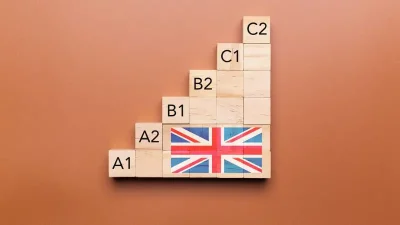
The Explorers programme is suitable for students with English levels between A1 and B1.
In general terms:
- a child at A1 level can understand and use simple, familiar expressions;
- a child at A2 level already has some basic vocabulary and can communicate in familiar, everyday situations;
- a child at B1 level can understand the main points of clear messages and take part in more developed conversations.
Having students with levels ranging from A1 to B1 does not mean that everyone necessarily completes exactly the same activities in exactly the same way. The programme needs to allow instructions, vocabulary and the level of complexity to be adapted to the abilities of the class.
To understand what the different classifications mean, you can read our explanation of A1, A2, B1, B2, C1 and C2 language levels.
23 academic hours over two weeks
The programme includes 23 academic hours spread across two weeks.
Lessons may take place in the morning:
- 9:00–9:50;
- 10:10–11:00;
- 11:30–12:20;
and/or in the afternoon:
- 13:50–14:40;
- 15:10–16:00;
- 16:30–17:20.
Alternating lessons with breaks, activities and excursions allows the academic course to form part of a much broader daily programme. The academic component sits alongside a social programme where children continue to interact, work together and understand instructions in an international environment.
Classes of no more than 16 students
Explorers classes have a maximum of 16 students.
This limit makes it possible to organise activities where children are not simply watching or listening, but have opportunities to:
- answer questions;
- move around;
- work with others;
- play a role;
- contribute to a project;
- present a small piece of work;
- interact with their classmates.
The maximum class size does not mean every lesson follows the same format. Students might work as a whole class, in small groups, in pairs or individually before coming back together to share what they have done.
Group size is particularly important when using drama, performance and project work because every child needs genuine opportunities to contribute.
Vocabulary building and interactive communication
In the Explorers programme, vocabulary is not taught solely through lists of words for children to memorise.
New words are connected to activities, images, objects, characters, actions and situations that children can understand.
A child might be asked, for example, to:
- recognise a word;
- match it to a picture;
- follow an instruction;
- ask a question;
- describe an object;
- choose between different options;
- use a short expression during a game;
- present a small part of something their group has created.
Interactive communication allows children to use English to actually do something, rather than simply completing an exercise. The aim is not for them to speak perfectly straight away, but to begin understanding and participating using the language they already have.
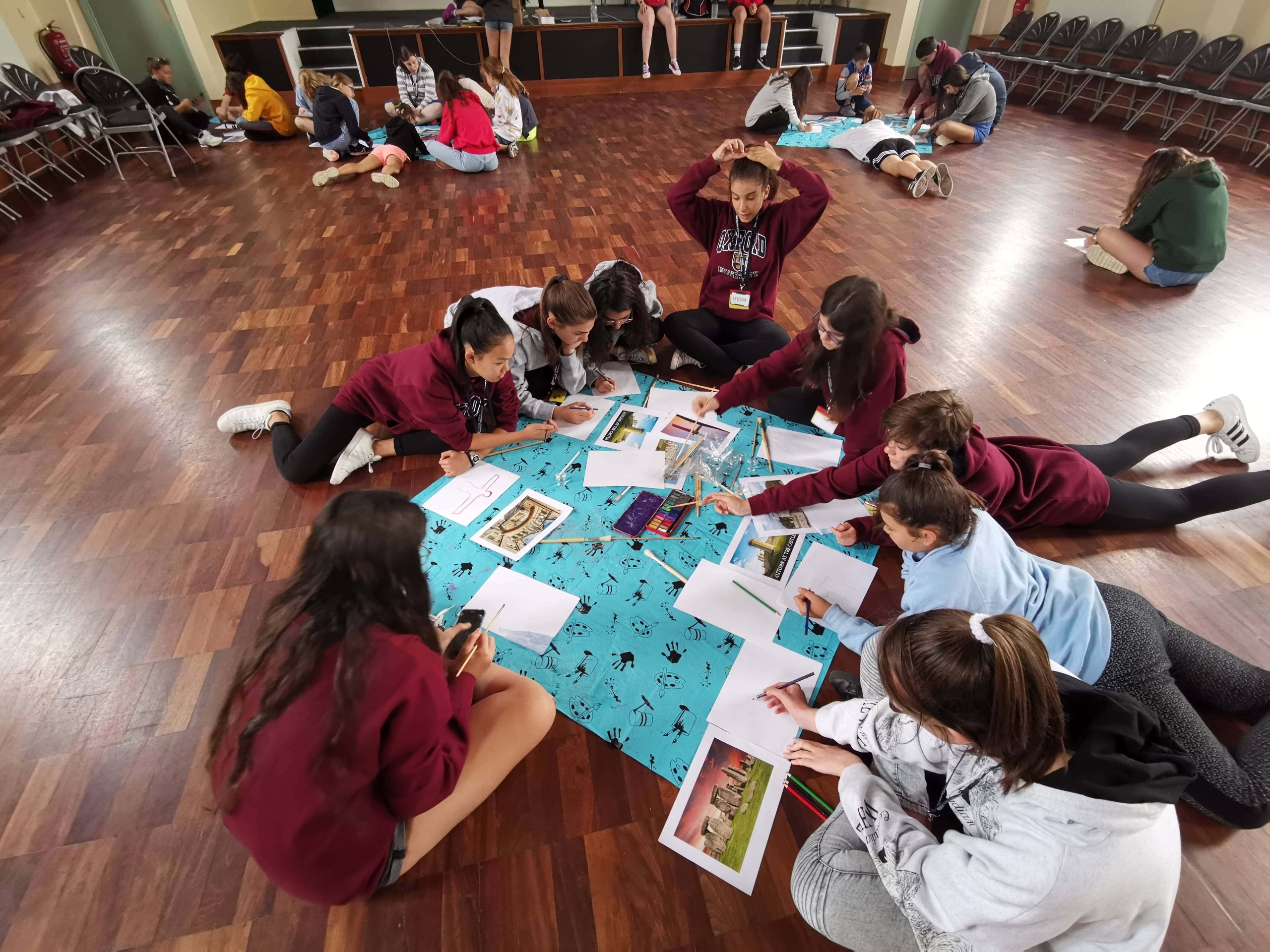
Learning through projects
Project-based learning uses language to work towards a practical outcome.
A project might ask children to:
- create a piece of work;
- invent a story;
- make a poster;
- prepare a short performance;
- make a prop;
- work together on a presentation;
- solve a small task together.
English becomes a tool that children can use to organise themselves, suggest an idea, ask for help and contribute to the group’s work.
For Explorers, an effective project should be:
- suitable for the children’s age;
- easy to understand;
- achievable within the time available;
- connected to the language objectives;
- flexible enough to allow everyone to participate.
The work itself does not need to be complicated. What matters most is that each child understands their role and uses English as part of a meaningful experience.
Drama and performance
Drama and performance are two central parts of the Explorers programme.
Through drama, children can:
- listen to and repeat short lines;
- play different characters;
- connect words with movements;
- work on pronunciation;
- use intonation and expression;
- work together to create a scene;
- speak in front of others in a supported setting.
Performance does not necessarily mean putting on a formal show.
It could be:
- a short scene;
- a role play;
- a dialogue;
- a mimed story;
- a presentation;
- a group activity.
Drama can help children concentrate on a character or an action rather than feeling as though they are being tested on their English.
More reserved children can also participate through different roles, gradually becoming more comfortable with speaking or performing in front of others.
Environmental awareness themes
The programme also includes activities related to environmental awareness.
These topics can provide a practical context for talking about:
- nature;
- animals;
- water;
- energy;
- materials;
- recycling;
- everyday habits;
- the relationship between people and the environment.
The language and subject matter should remain connected.
Rather than necessarily having a theoretical lesson about the environment, children use words, pictures and activities to understand a topic and communicate simple ideas about it.
A social programme designed to get children involved
Explorers does not end when lessons finish.
The social programme includes different types of activities so that children can get involved according to their own interests and the ways in which they feel most comfortable participating.
Workshops
Workshops may include:
- circus skills;
- body percussion;
- bubble art;
- prop making.
These activities involve listening, observation, coordination and working with others.
Sports activities
The programme may include:
- mini football;
- parachute games;
- relay races;
- swimming.
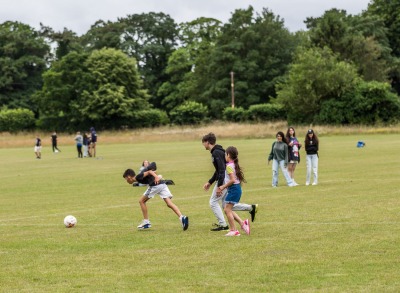
Sport gives children immediate opportunities to understand rules, follow instructions and communicate with the group.
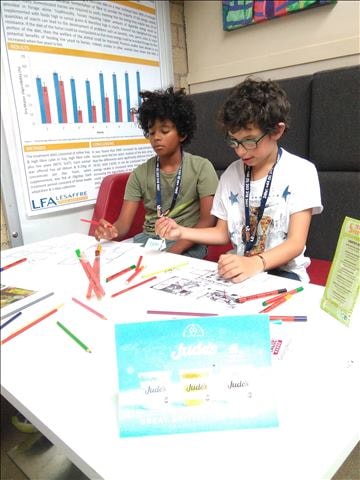
Creative activities
Creative activities include:
- collage;
- rock painting;
- T-shirt decorating;
- storytelling.
Creative work allows children to use images, materials and stories to support communication.
Collaborative activities
The programme also includes:
- getting-to-know-you games;
- circle time;
- imagination stations;
- role play.
These activities help children get to know one another and gradually become comfortable within the group.
Organised evenings
Evening activities may include:
- film nights;
- discos;
- talent shows;
- ELAC Olympics.
These evenings are another part of group life and allow children to experience their study holiday as a social experience as well as an academic one.
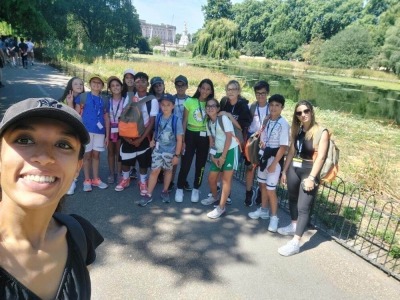
Excursions with educational activities
The two-week programme includes:
- 3 full-day excursions;
- 2 half-day excursions.
Excursions are not treated simply as sightseeing trips. They can include educational activities and tasks connected to the places children visit.
Children may be asked to:
- look out for particular things;
- collect information;
- recognise words;
- complete a small activity;
- work with their classmates;
- use what they have learnt after the visit.
Specific destinations may change depending on the study centre and departure date. Check the current programme information rather than assuming that itineraries from previous seasons are automatically included.
One group leader for every 12 students
The programme described has a ratio of one group leader for every 12 students.
This ratio is particularly important for children aged between 7 and 11, but it should not be considered on its own.
Before departure, it is also worth checking:
- how supervision is organised;
- staff presence at the accommodation;
- how travel and transfers are managed;
- rules during excursions;
- procedures for health and medical needs;
- how families can make contact;
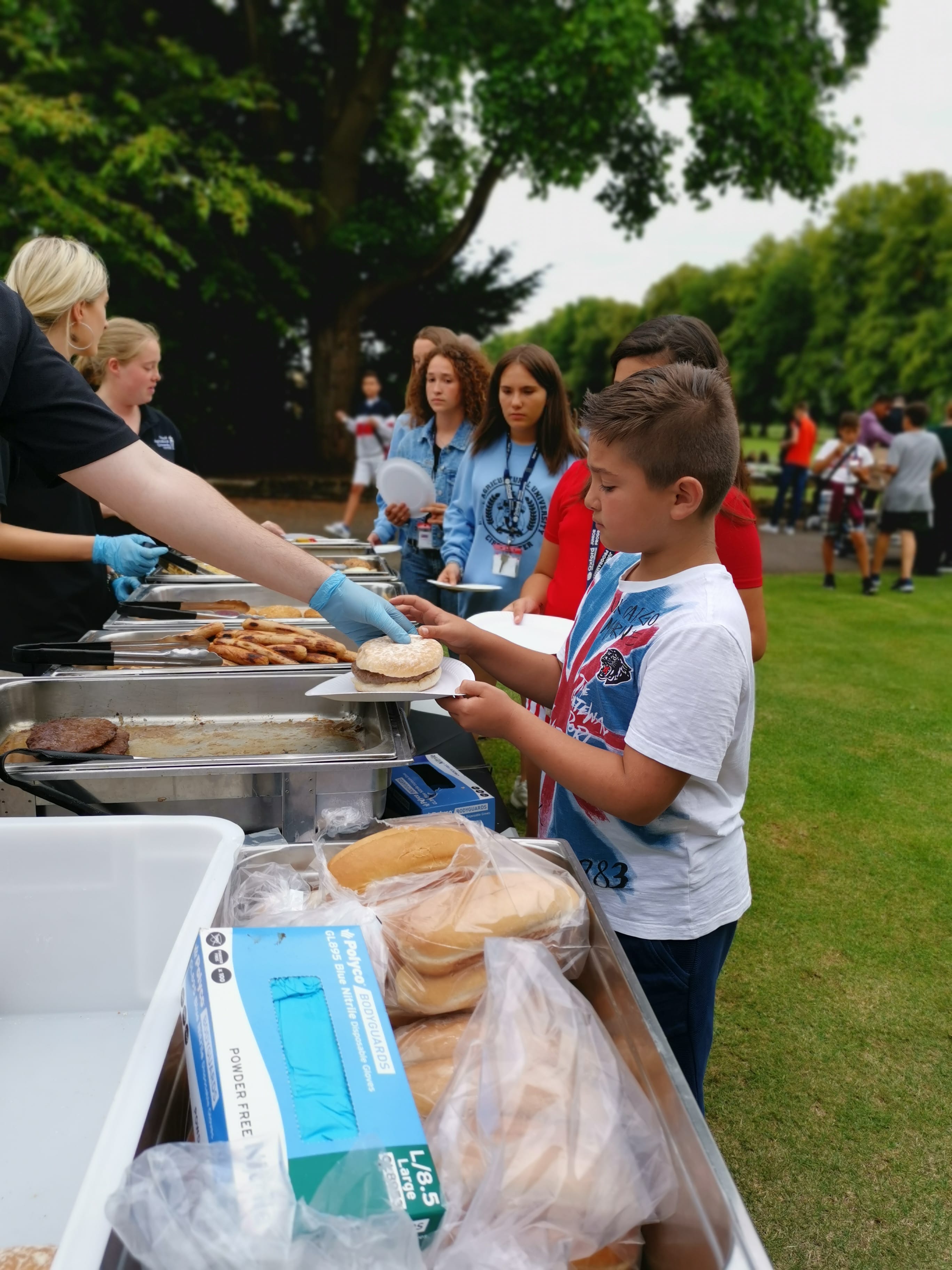
- support during meals and activities;
- how free time is managed.
To help you decide whether your child is ready for the experience, you can also read our information about a first study holiday for children aged 8 to 13.
Is Explorers suitable for children who know very little English?
The programme is designed for students with English levels between A1 and B1, so it can include children who still have an elementary knowledge of the language.
Your child does not need to be able to speak English fluently before taking part.
It is useful, however, if they are willing to:
- listen;
- observe;
- have a go;
- participate;
- accept that they will not immediately understand every word;
- ask for help;
- work with the group.
During activities, pictures, demonstrations, gestures, examples and repetition can all help children understand what they are being asked to do.
For a child at A1 level, one of the first important achievements may simply be learning to participate without constantly depending on translation.
What can a child realistically achieve in two weeks?
Explorers does not promise to make a child fluent in English in two weeks.
What the programme can offer is regular opportunities to:
- listen to English more consistently;
- understand simple instructions;
- expand their vocabulary;
- use short phrases in real situations;
- participate in a project;
- play a role;
- interact with new classmates;
- become more comfortable communicating without knowing every word;
- gain confidence in trying to speak.
Results can vary depending on:
- their starting level;
- participation;
- personality;
- length of stay;
- class composition;
- willingness to use English;
- how they respond to being away from home and living as part of a group.
The quality of an educational programme should not be measured by promises of immediate results, but by how well the children’s age, objectives, activities and genuine opportunities to participate work together.
What kind of child could Explorers work well for?
Explorers may be a good choice if your child:
- is between 7 and 11 years old;
- has an English level between A1 and B1;
- is curious about trying new activities;
- is ready to spend time away from their family;
- is comfortable living and working as part of a group;
- learns more easily through practical experiences;
- enjoys creative, sporting or drama activities;
- benefits from a supported programme;
- is willing to try communicating even when they make mistakes.
The variety of activities means there are different ways to participate, whether through movement, creativity, group work, storytelling or performance.
When might Explorers not be the right choice?
The programme may not be suitable if:
- your child does not want to go;
- they are not yet ready to sleep away from their family;
- they find it difficult to follow a group routine;
- they require individual support that the programme does not provide;
- you are looking for individual or intensive English tuition;
- your child does not fall within the programme’s age range;
- their English is below A1 or above B1 and no suitable group is available;
- creative, sporting and collaborative activities do not match what they are looking for.
Your decision should take both the course itself and the wider study holiday experience into account.
Good teaching cannot compensate for a child being sent away when they do not want to go or at a time when they are not yet ready for the experience.
Where is the Explorers programme available?
The study centres offering Explorers can change from season to season.
The information for each destination should tell you:
- the permitted age range;
- the course available;
- the required English level;
- the number of academic hours;
- where lessons take place;
- activities;
- excursions;
- accommodation;
- dates;
- price;
- what is included.
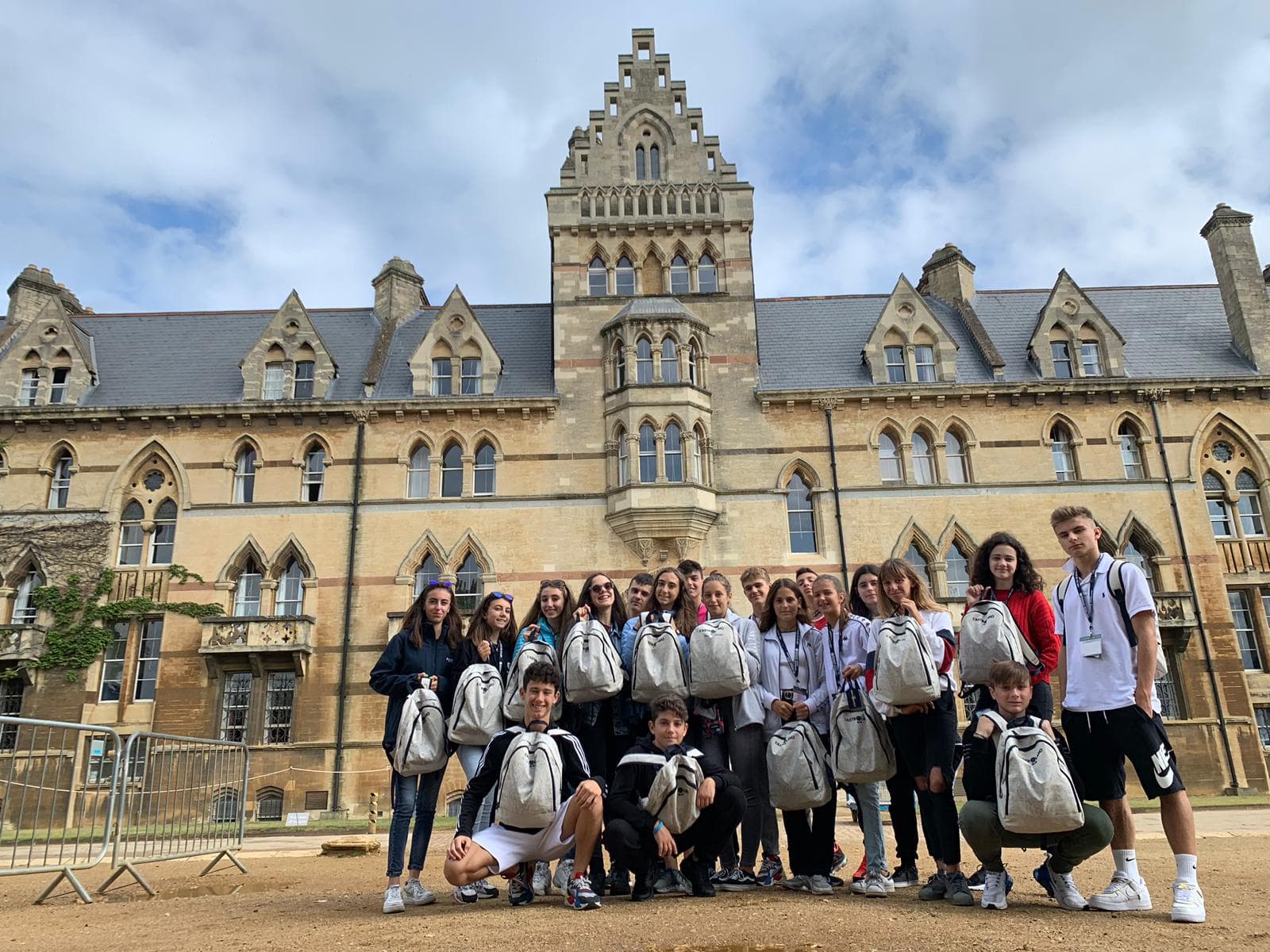
When Explorers is available in Cirencester, you can find the latest details on our Cirencester study holiday page.
You can also compare this destination with other options by exploring our study holidays in Great Britain page.
Why age-specific teaching makes a difference
What makes Explorers different is not simply the use of games or enjoyable activities. The value of the programme comes from the relationship between:
- the students’ ages;
- their English level;
- the length of the activities;
- the way communication is introduced;
- the type of project;
- support from the teacher;
- the social programme;
- supervision.
A game without an objective is simply a way to pass the time. A project that is too complicated can exclude children with less English, while a performance without enough preparation can make more reserved children uncomfortable.
Well-planned teaching instead makes sure that every activity has:
- an objective the children can understand;
- age-appropriate language;
- a manageable length;
- a role for every participant;
- a connection to the programme as a whole.
This is the principle behind Explorers: rather than making superficial changes to a course created for teenagers, we design a language-learning experience that reflects the needs of children aged 7 to 11.