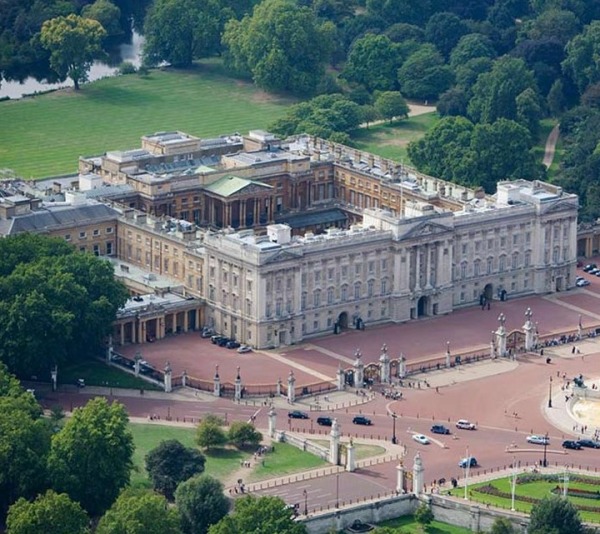
Located in the City of Westminster, in the heart of London, Buckingham Palace is one of the most recognisable buildings in the United Kingdom. As the official London residence and administrative headquarters of the British monarch, it has been at the centre of royal life for almost 200 years.
Although the British monarchy has existed for more than a thousand years, Buckingham Palace is relatively new compared with some of the Royal Family’s other residences. Nevertheless, its history is full of fascinating stories, important events and traditions that continue to this day.
As well as being one of London’s most popular tourist attractions, Buckingham Palace is used for official ceremonies, state occasions and royal receptions. Over the years, it has witnessed some of the most significant moments in British history, from royal weddings and jubilees to the bombing of London during the Second World War.
Today, the palace has 775 rooms, including 19 State Rooms, 52 royal and guest bedrooms, 188 staff bedrooms, 92 offices and 78 bathrooms. Its impressive grounds also include one of London’s largest private gardens.
But there’s much more to Buckingham Palace than its famous balcony and the Changing of the Guard. From its surprising beginnings as a private house to its unusual facilities and hidden history, there’s plenty you might not know about this famous royal residence.
The history of Buckingham Palace
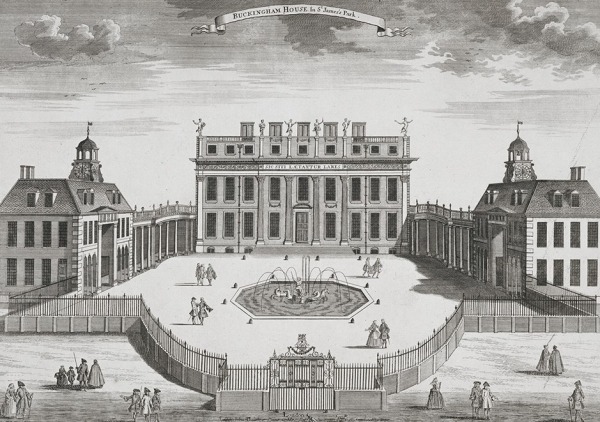
Buckingham Palace began life as Buckingham House, a large townhouse built in 1703 for John Sheffield, who became the Duke of Buckingham and Normanby.
Before Buckingham Palace became the monarch’s official London residence, St James’s Palace had held that position for centuries. Located just a short walk away, St James’s Palace remains an important royal building and is still the official seat of the Royal Court.
The land on which Buckingham Palace stands has an interesting history of its own. The area was once marshland associated with the River Tyburn, which flowed through this part of London.
During the reign of James I, the Crown acquired land in the area, and the king established a mulberry garden in an unsuccessful attempt to develop an English silk industry.
In 1698, John Sheffield acquired the property, and Buckingham House was completed in around 1705. It remained a private residence until 1761, when King George III purchased it as a home for his wife, Queen Charlotte, and their children.
The house subsequently became known as the Queen’s House, and 14 of George III and Charlotte’s 15 children were born there.
The most significant transformation took place during the reign of George IV, who commissioned architect John Nash to turn the house into a grand royal palace. Nash expanded the building considerably, creating an impressive residence with new wings surrounding a central courtyard.
Further changes followed under architect Edward Blore, including the construction of the east wing, which forms the famous front of the palace that visitors recognise today.
In 1837, Queen Victoria became the first British monarch to take up residence at Buckingham Palace following her accession to the throne. Since then, it has remained the official London residence of the sovereign, although not every monarch has chosen to live there permanently.
The famous balcony of Buckingham Palace
One of the most recognisable features of Buckingham Palace is its balcony, which has become closely associated with major royal celebrations.
The tradition of royal balcony appearances dates back to Queen Victoria, who appeared on the balcony during celebrations for the opening of the Great Exhibition in 1851.
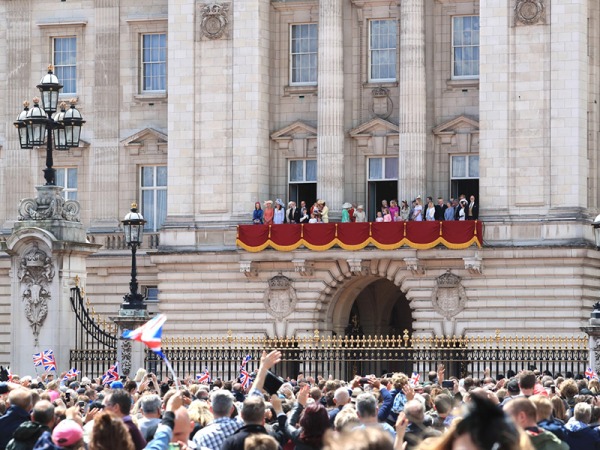
Since then, the balcony has provided the setting for some of the most memorable moments in British royal history.
In 2002, Queen Elizabeth II appeared on the balcony to celebrate her Golden Jubilee, marking 50 years on the throne. She returned for her Diamond Jubilee in 2012 and Platinum Jubilee in 2022.
The balcony is also famous for royal wedding celebrations. In 1981, King Charles III, then Prince Charles, and Lady Diana Spencer appeared before the crowds following their wedding.
Thirty years later, in 2011, Prince William and Catherine Middleton shared their first public kiss as a married couple on the same balcony.
More recently, King Charles III and Queen Camilla appeared there following their coronation in May 2023.
Today, balcony appearances remain an important part of events such as Trooping the Colour, when members of the Royal Family gather to watch the Royal Air Force flypast.
The Changing of the Guard at Buckingham Palace
If you’re planning to visit Buckingham Palace, one of the most famous traditions you can experience is the Changing of the Guard.
Also known as Guard Mounting, this ceremony marks the formal handover of responsibility for guarding the royal residences from the Old Guard to the New Guard.
The soldiers involved are serving members of the British Armed Forces, most commonly from the Foot Guards regiments of the Household Division. Their distinctive red tunics and tall bearskin caps have become internationally recognised symbols of the British monarchy.
The ceremony is accompanied by military music, with bands performing everything from traditional marches to familiar songs from films, musicals and popular music.
The history of royal guarding duties stretches back to 1660, when the Household Troops were established following the restoration of the monarchy.
When Queen Victoria moved into Buckingham Palace in 1837, the main guard remained at St James’s Palace, with a detachment stationed at Buckingham Palace. This arrangement continues today, with guards responsible for protecting both royal residences.
Although the ceremony is traditionally associated with the Foot Guards, other military units have also taken part.
During Queen Elizabeth II’s coronation celebrations in 1953, troops from several Commonwealth countries, including Canada, Australia, New Zealand, Pakistan and Ceylon, now Sri Lanka, participated in ceremonial duties.
Members of the Royal Navy, Royal Air Force and Commonwealth armed forces have also taken part in guard ceremonies over the years.
The Changing of the Guard usually begins at 11 am on scheduled days, although the timetable varies throughout the year and ceremonies may be cancelled or changed because of weather conditions or official events.
The gardens of Buckingham Palace
Behind Buckingham Palace lies an enormous private garden covering approximately 39 acres, or 16 hectares.
Despite being located in the centre of one of the world’s busiest cities, the garden provides a surprisingly peaceful setting for royal events and receptions.
It is home to more than 1,000 trees, hundreds of varieties of wildflowers and an impressive collection of plants and shrubs.
One of its most attractive features is the Rose Garden, where visitors can find a collection of roses, including varieties associated with members of the Royal Family.
The grounds also contain a large lake, a tennis court and extensive lawns that are used for the palace’s famous summer garden parties. These events are an important royal tradition, bringing together thousands of guests who have been recognised for their contributions to their communities and public service. The gardens also provide an important habitat for wildlife, including birds, insects and other species that might seem surprising in such a central London location.
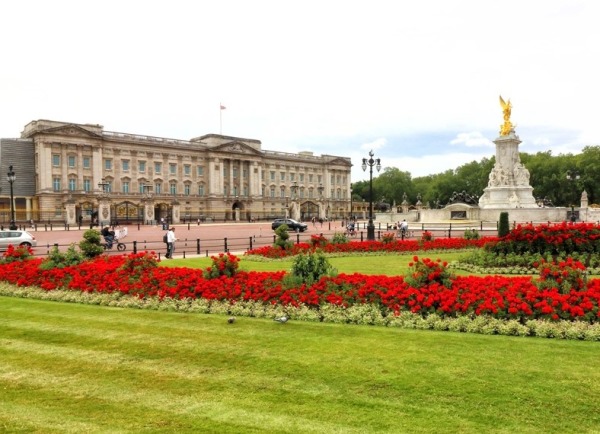
Near the front of the palace, visitors can admire the colourful flowerbeds surrounding the Victoria Memorial. These formal gardens are separate from the palace’s private grounds and are particularly attractive during the warmer months.
Inside Buckingham Palace
Although Buckingham Palace is a working royal residence, certain areas are open to visitors at selected times of the year.
One of the most popular experiences is a tour of the magnificent State Rooms, which are used by the monarch and members of the Royal Family for official occasions and ceremonial events.
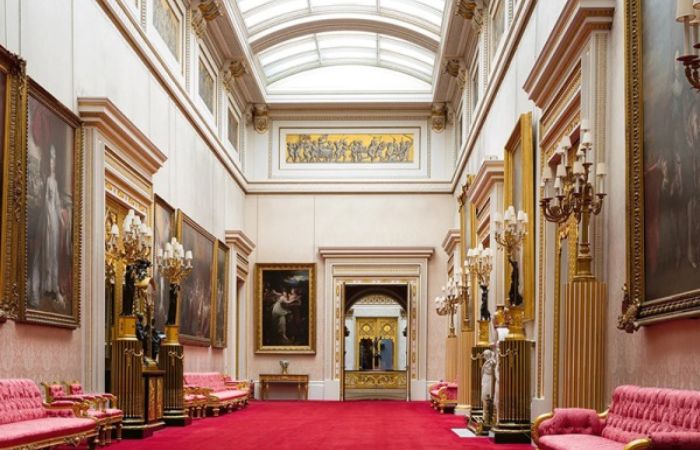
There are 19 State Rooms, each decorated with elaborate furnishings, paintings and objects from the Royal Collection.
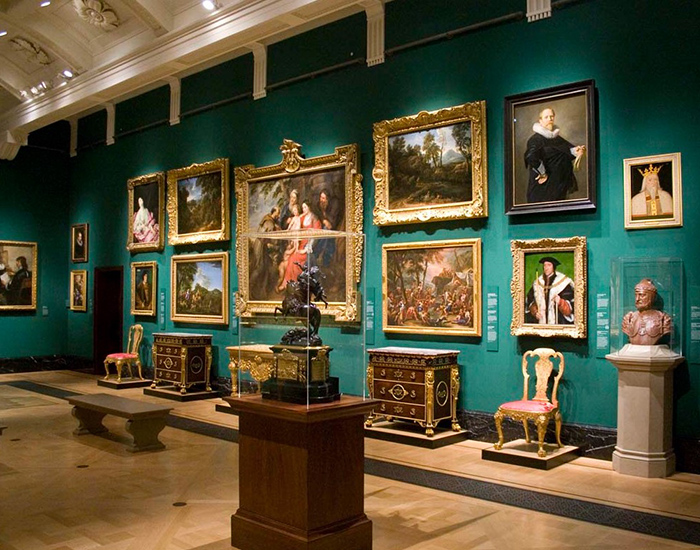
Among the most famous are the Throne Room, the Ballroom, the White Drawing Room and the Picture Gallery.
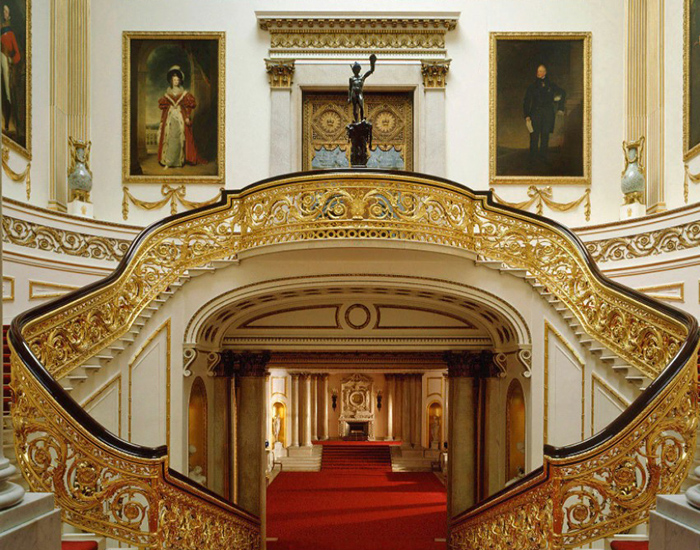
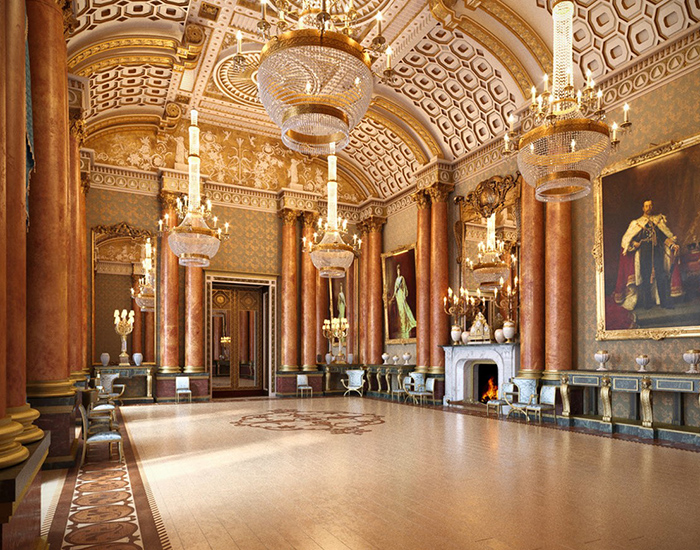
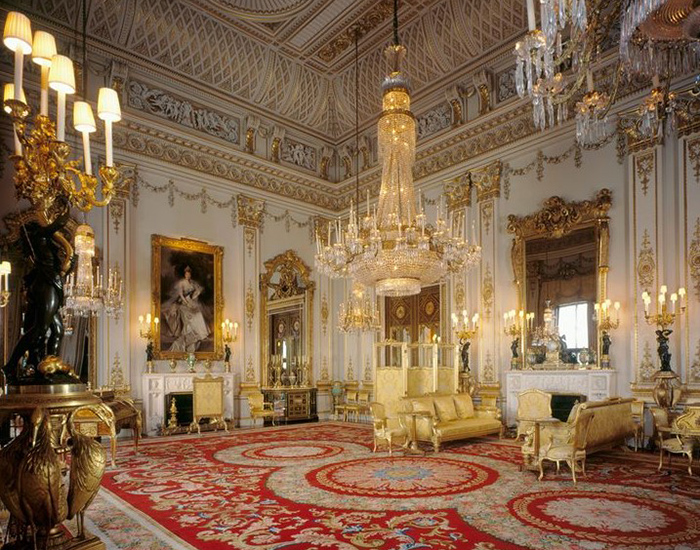
The Throne Room is particularly well known for its dramatic red and gold decorations and its association with royal ceremonies and official photographs.
The Ballroom, completed during Queen Victoria’s reign, is the largest room in the palace. It is used for state banquets, investitures and other important occasions.
The White Drawing Room is another highlight, featuring beautiful chandeliers, ornate ceilings and an impressive collection of furniture.
Visitors can also admire the Grand Staircase, designed by John Nash, which leads to the State Rooms and is decorated with portraits of members of the Royal Family.
The Royal Collection includes works by celebrated artists such as Rembrandt, Rubens, Vermeer and Canaletto, although individual paintings and displays may change.
Another important attraction is the King’s Gallery, formerly known as the Queen’s Gallery. Located beside Buckingham Palace, it hosts changing exhibitions featuring artworks and objects from the Royal Collection.
Contents
Fascinating facts about Buckingham Palace
Buckingham Palace has been the setting for countless historical events, but some of its most interesting stories are far less well known. From rumours of secret tunnels to its unusual facilities, here are a few surprising facts about the royal residence!
1. Are there secret tunnels beneath Buckingham Palace?
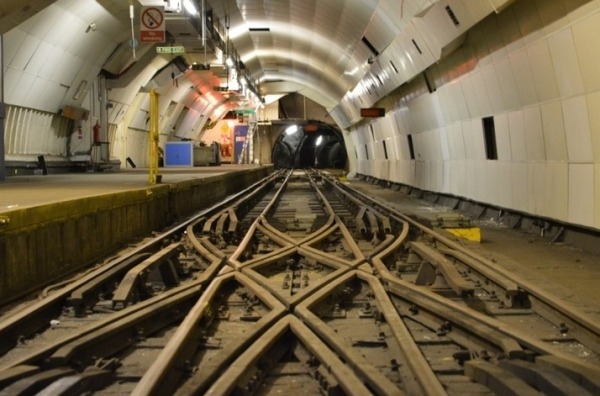
For many years, rumours have circulated about a network of secret tunnels connecting Buckingham Palace with other important buildings across London.
Some stories suggest that underground passages lead to Whitehall and the Houses of Parliament, while others claim that a tunnel connects Buckingham Palace with Clarence House.
These stories have become part of the palace’s mythology, but there is no reliable public evidence confirming the existence of these particular tunnels.
Like many historic buildings, Buckingham Palace has service areas and underground spaces, but claims about an extensive secret network remain unverified.
2. Buckingham Palace has its own helicopter landing pad
Did you know that Buckingham Palace has a helicopter landing area hidden within its gardens?
The grounds have been used for helicopter landings for decades, allowing members of the Royal Family to travel to and from the palace when required.
A designated landing area provides a practical way for helicopters to access the royal residence without requiring the monarch to travel to an airport outside central London. Given the palace’s location in the middle of the capital, it’s certainly one of its more surprising features.
3. Buckingham Palace was bombed during the Second World War
Although Buckingham Palace is associated with royal celebrations and grand ceremonies, it also experienced some of the most difficult moments of the Second World War.
During the Blitz, the palace and its grounds were bombed on nine occasions. King George VI and Queen Elizabeth, later known as the Queen Mother, remained in London throughout the war, despite the danger posed by German air raids.
In September 1940, a bombing raid caused serious damage to the palace, including the destruction of its private chapel.
Following the attack, Queen Elizabeth famously remarked that she was glad the palace had been bombed because she could now look the East End in the face. Her words reflected the suffering experienced by ordinary Londoners, particularly those living in areas that had been heavily targeted during the Blitz.
The site of the destroyed chapel was later used for the construction of the Queen’s Gallery, now known as the King’s Gallery.
4. How can you tell if the King is at Buckingham Palace?
Have you ever noticed the flag flying above Buckingham Palace?
Well, that flag tells you whether the monarch is present at the palace!
When the Royal Standard is flying, it means King Charles III is at Buckingham Palace. When the Union Flag is flying instead, the King is not in residence.
Unlike the Union Flag, the Royal Standard is never flown at half-mast, even following the death of a monarch. This is because the throne immediately passes to the next sovereign. So, next time you’re standing outside Buckingham Palace, remember to look up!
5. Buckingham Palace is almost like a small village
With hundreds of rooms and a large workforce, Buckingham Palace operates almost like a small village. The building has facilities that you might not expect to find inside a royal residence, including its own swimming pool and a post office!
There is also an ATM for use within the palace, although the popular claim that it prints special money exclusively for the Royal Family is a myth. Like other cash machines, it dispenses banknotes rather than producing them.
The palace has also been reported to contain facilities such as a cinema, medical rooms and areas used by security personnel.
Maintaining such an enormous building requires a wide range of staff, from administrative employees and household workers to conservators, gardeners and maintenance teams.
Although Buckingham Palace may look like a grand historic monument from the outside, it is also a working building with many of the practical requirements of a large organisation.
Discover Buckingham Palace during your London study holiday
Now that you know more about Buckingham Palace, why not see this famous royal landmark for yourself?
From watching the Changing of the Guard to walking along The Mall and admiring the Victoria Memorial, there’s so much to discover around Buckingham Palace. It’s also a great starting point for exploring some of London’s other famous attractions, including St James’s Park, Westminster Abbey and the Houses of Parliament.
With Astrolabio, you can experience the history, culture and traditions of the British capital while improving your English.