Read the guide about our UK programmes in 2026
British royal residences, including Buckingham Palace, Windsor Castle and the Palace of Holyroodhouse, are symbols of the monarchy that tell the story of the United Kingdom’s history, institutions and culture.
Knowing more about them can help students, parents and teachers understand London, Windsor, Edinburgh and British identity more clearly before a study holiday in Great Britain 2026.
Royal residences have always held a particular fascination for people visiting the United Kingdom. They help you understand how the British monarchy continues to hold an important place in public life, historical memory and the country’s shared imagination.
For this reason, learning about the main British royal residences can be very useful if you are preparing for a study holiday in the UK. For students, parents and teachers, these residences offer a practical way to read British culture with more context.
They can add meaning to visits, excursions, civilisation lessons and moments of discovery once you are there. Seen in the right way, they become a bridge between language, history and modern British life.
If you would like to complete the picture with a profile of the current sovereign, you can also read our piece on King Charles III and the British monarchy, which helps explain the institutional and symbolic context behind these residences.
Which residences are the most important to the Royal Family, and why do they still matter today?
Official Royal Collection Trust sources identify Buckingham Palace, Windsor Castle and the Palace of Holyroodhouse in Edinburgh as the King’s three official residences. These buildings are where the sovereign carries out official duties, including institutional meetings, audiences, receptions, garden parties and state visits.
Alongside these main residences, there are other palaces and estates, either public or private, that help explain the symbolic geography of the British monarchy.
Understanding the difference between official residences, working palaces, private homes and places linked to the most visible members of the Royal Family matters from a cultural point of view too. Not every royal place has the same function. Some represent the institutional heart of the monarchy. Others show its ceremonial role, while others tell a story of family continuity, private life or the changing public image of the Crown.
This layered meaning is exactly what makes the topic so interesting if you want to understand the United Kingdom more fully.
Buckingham Palace: the official face of the monarchy in London
When you think of the British monarchy, Buckingham Palace is probably the first place that comes to mind.
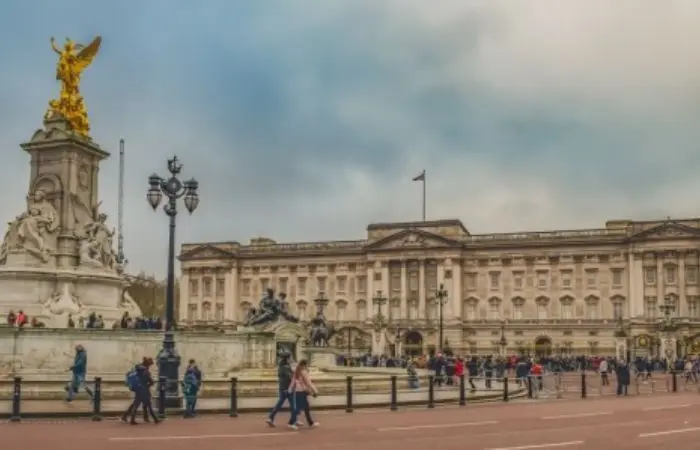
That is no coincidence. Since 1837, Buckingham Palace has been the official London residence of British sovereigns, and today it is also the administrative headquarters of the Monarch. As well as being one of London’s most recognisable buildings, it is the setting for many official events, receptions and symbolic moments in the public life of the United Kingdom.
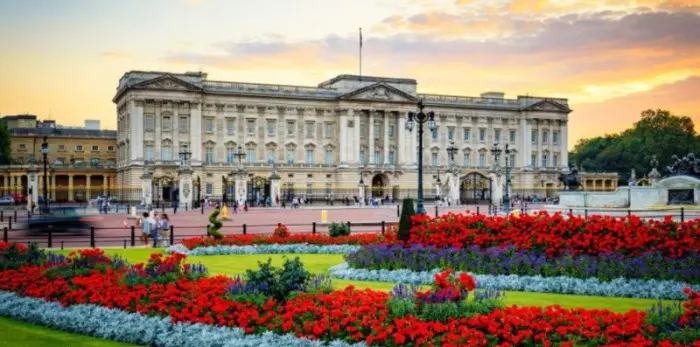
Buckingham Palace, London
Buckingham Palace matters not only because of its architectural value, but because it is the point at which the monarchy becomes visible to the nation and to the world.
The famous balcony, the Changing of the Guard, state receptions and the images that come from this palace have helped shape the idea of British royalty for decades.
For a student visiting London, or preparing to leave for a study holiday, Buckingham Palace is a real-life lesson in British civilisation. As part of a wider discovery of the United Kingdom, Buckingham Palace also connects naturally with a broader reflection on the role of the sovereign and the Royal Family in contemporary society.
St James’s Palace: the palace that tells the story of the Crown’s continuity
St James’s Palace is far less photographed than Buckingham Palace, but it is extremely important from a historical and institutional point of view.
Official Royal Family sources explain that it remains a working palace today, used for receptions, formal occasions and activities connected to members of the Royal Family.
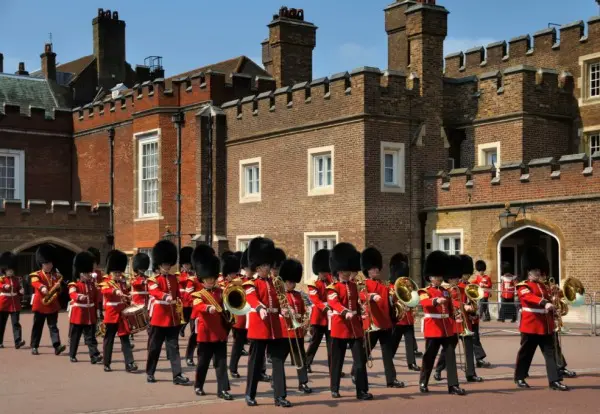
This function makes it especially interesting, because it shows that the monarchy also exists through a network of less showy, but still central, spaces of work and representation.
St James’s Palace is a valuable reminder that the British monarchy is not represented by one building or one icon alone. This kind of detail can really enrich the experience of visiting London during a study holiday.
Windsor Castle: the castle that brings together history, ceremony and royal life
If Buckingham Palace is the official face of the monarchy in London, Windsor Castle is probably the place that best conveys the historical weight of the British Crown.
Royal Collection Trust describes it as the oldest and largest occupied castle in the world, as well as a royal residence with 1,000 years of history. It is a place where the medieval castle, the representative function of monarchy and the continuity of royal life all exist together in a unique way.
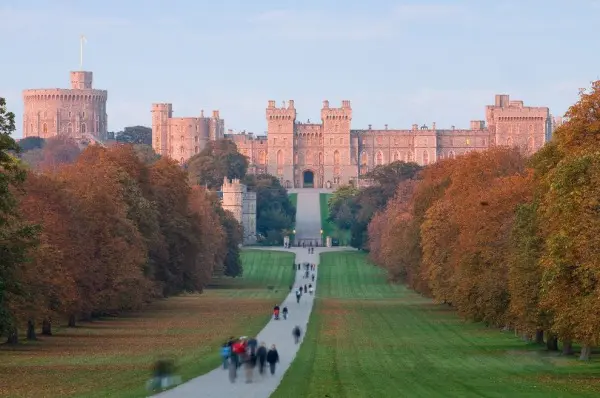
Windsor also matters greatly on a symbolic level. Here, tradition does not feel abstract, but it takes the shape of chapels, state rooms, ceremonies, orders of chivalry and long centuries of continuity.
For students and teachers, Windsor is one of the most effective places for explaining how, in the United Kingdom, the past continues to speak to the present in a very visible way.
If you are reading this while preparing for a trip, Windsor can be considered one of the strongest cultural stops in any itinerary in England.
Holyroodhouse: the monarchy seen from Scotland
When people speak about the British monarchy, they often think immediately of London.
The Palace of Holyroodhouse in Edinburgh reminds us that the Crown extends across the whole United Kingdom, and that Scotland holds an important place in this symbolic geography.
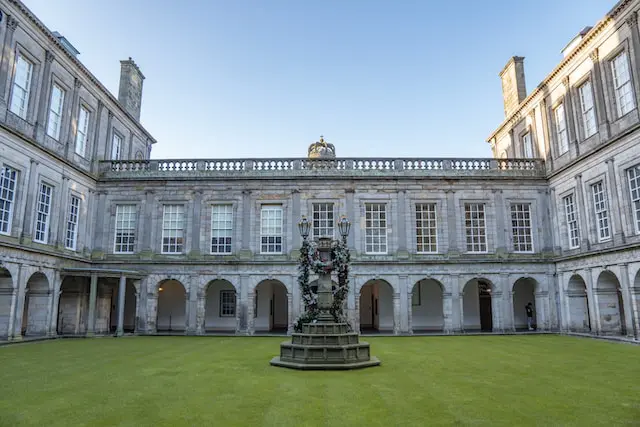
Royal Collection Trust describes it as the official residence in Scotland of His Majesty The King. It continues to be used for official engagements and representative moments.
Holyroodhouse is also interesting because it widens the perspective. It shows the more complex relationship between the Crown, Scotland and British history.
Kensington Palace: the more contemporary side of the Royal Family
If Buckingham Palace and Windsor Castle mainly tell the institutional story of the monarchy, Kensington Palace speaks to a more contemporary dimension. It is closely connected to the Royal Family as a daily public presence.
Official Royal Family information states that Kensington Palace contains the offices and London residences of the Prince and Princess of Wales, as well as those of other members of the Royal Family.
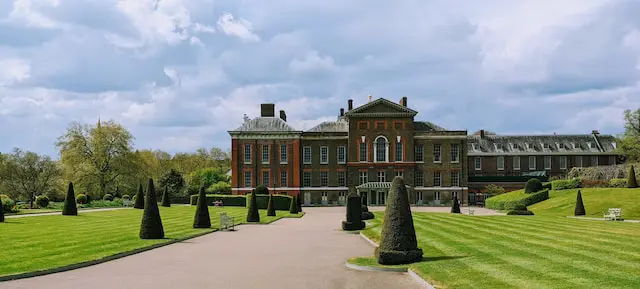
This makes it an important place for understanding how the monarchy is perceived and represented in the present day.
Kensington Palace is the right place for reading the more human, media-facing and still institutional side of the Crown.
It is connected with the memory of Diana, the contemporary image of the Prince and Princess of Wales, and part of the royal story that brings together family, public communication and modern sensibilities.
In an educational context, it can help students understand that the British monarchy is not only about protocol and distant history. It is also shaped by current forms of communication, media figures and public images that change over time.
The statue of Diana at Kensington Palace
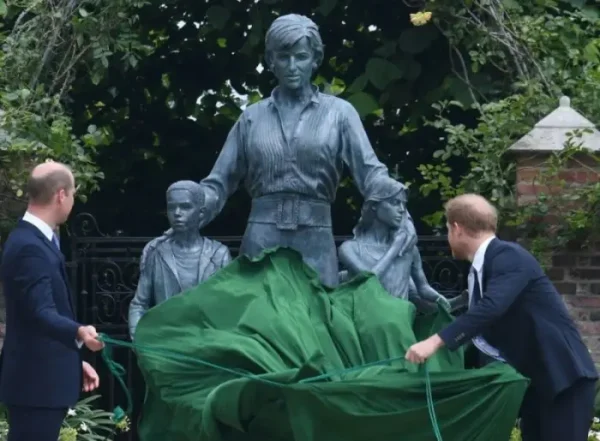
William and Harry stood side by side to commemorate the memory of their beloved mother, Diana, Princess of Wales, as the long-awaited statue was finally unveiled in the gardens of her much-loved London home, Kensington Palace.
Sandringham and Highgrove: the more private side of the monarchy
Alongside the official residences, there are places that tell a more private and personal story of the Royal Family.
Sandringham is officially presented as the much-loved country retreat of King Charles III and Queen Camilla, while Highgrove is described as Their Majesties’ private residence.
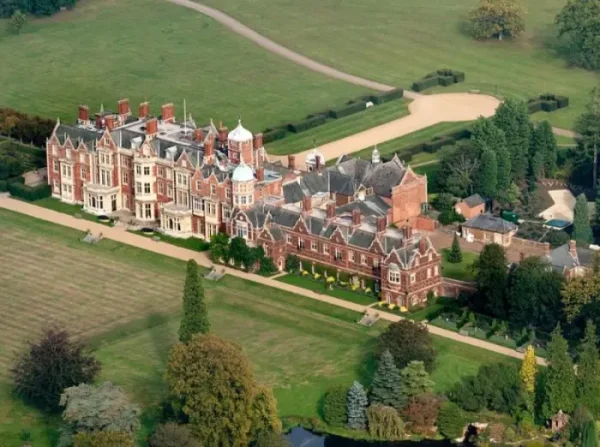
Sandringham House
These estates help you understand the more domestic, agricultural, landscape-based and personal side of British royal life.
Highgrove is especially interesting because it directly reflects King Charles III’s long-standing interest in sustainability, gardens, landscape and organic management.
Public information from the Highgrove website places strong emphasis on this identity, connecting the estate with the King’s personal vision.
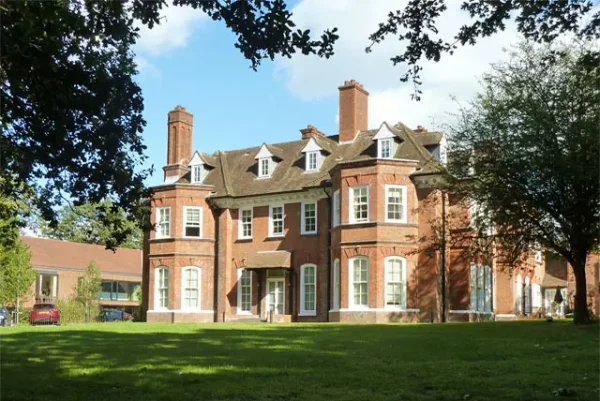
Highgrove
Why these residences really help you understand the United Kingdom
Seen together, they create a useful map of the United Kingdom: London as a centre of power and representation, Windsor as a symbol of historical continuity, Edinburgh as the Scottish doorway to the monarchy, Kensington as a space connected to the contemporary Royal Family, and Sandringham and Highgrove as more personal places.
Knowing these places before you leave can help you better understand the cities, monuments, words, symbols and cultural references you may encounter in everyday life, during excursions or in language activities.
British royal residences and study holidays: cultural context that enriches the trip
Yes, a well-planned study holiday is made up of lessons, colleges and evening activities. But that is not all! It is also made of context, meaning, cultural references and opportunities to look at the country with more awareness.
From this point of view, British royal residences are a practical way to understand the United Kingdom more clearly, useful if you want to experience the local culture with greater awareness.
If you are considering a programme for your child, your students or your group, the natural next step is to discover our study holiday programmes in Great Britain.
FAQ
Which British royal residences are the most important?
The King’s three official residences are Buckingham Palace, Windsor Castle and the Palace of Holyroodhouse in Edinburgh.
Alongside these, places such as Kensington Palace, Sandringham and Highgrove help explain other sides of the Royal Family’s life.
Is Buckingham Palace still the King’s residence?
Yes. Buckingham Palace has been the official London residence of the sovereign since 1837, and today it is also the administrative headquarters of the Monarch.
What is the difference between Buckingham Palace and Windsor Castle?
Buckingham Palace is the main centre of royal representation in London.
Windsor Castle combines royal function with major historical importance, and is described as the oldest and largest occupied castle in the world.
Is Kensington Palace still connected to William and Kate?
Yes. Official Royal Family information states that Kensington Palace contains the offices and London residences of the Prince and Princess of Wales.
Why talk about royal residences on a study holiday website?
Because these places help you understand British culture more clearly.
They are not only famous palaces. They tell the story of the monarchy, history, institutions and identity of the United Kingdom, offering very useful context before a study holiday in Great Britain.
Which royal residences are most useful to know before a study holiday in Great Britain?
If you are travelling to London and the south of England, Buckingham Palace, St James’s Palace, Kensington Palace and Windsor Castle are the most immediate reference points.
If your programme also looks towards Scotland, Holyroodhouse helps explain the Scottish dimension of the monarchy.