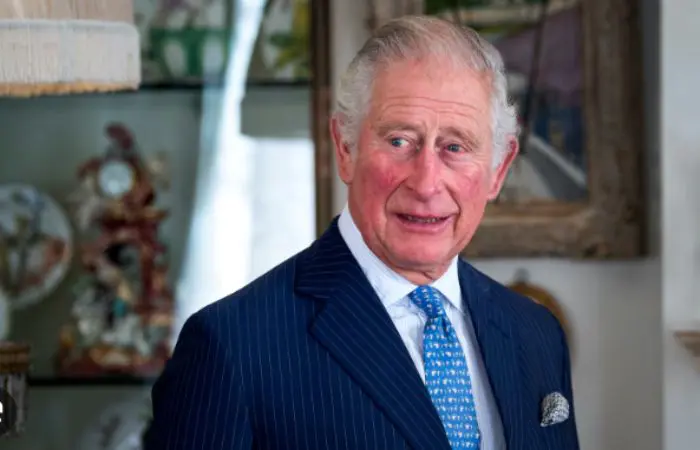
King Charles III has been King of the United Kingdom since September 2022 and was crowned at Westminster Abbey on 6 May 2023.
Understanding the British monarchy, its symbols and its role in public life can help students, parents and teachers better understand UK culture before a study holiday in Great Britain.
Charles became King on Thursday 8 September 2022, following the death of his mother, Queen Elizabeth II. He was the oldest person ever to become British monarch. After a lifetime of preparation that began in childhood, Charles now represents a new stage for the British monarchy!
Discover our junior summer programmes in Enggland in our complete guide
Who is Charles III and why does he matter when understanding the UK today?
Charles was the first heir to the British throne not to be educated at home, the first to gain a university degree and the first to grow up under the increasingly intense gaze of the media, at a time when public deference towards royalty was beginning to fade.
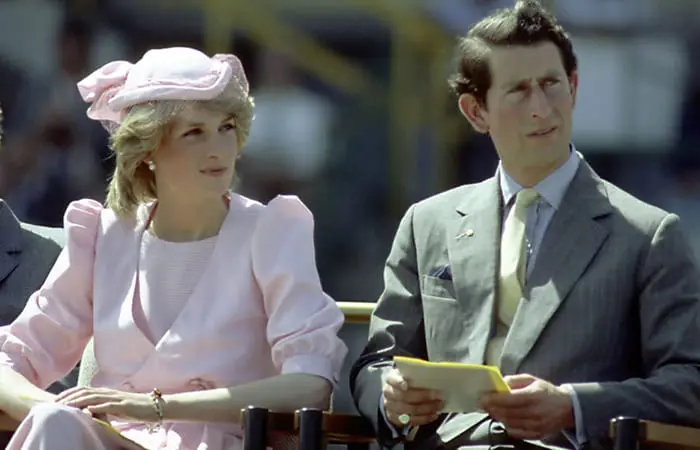
In the past, he attracted considerable attention because of his divorce from the much-loved Princess Diana. He also tested the limits of the rules that discourage members of the Royal Family from intervening in public affairs.
He has long been committed to issues such as environmental protection and the preservation of architecture.
Here is a TL;DR version of what you need to know about the current King of the United Kingdom!:
- Charles was born to Elizabeth and her husband, Prince Philip, on 14 November 1948 in London. He was christened Charles Philip Arthur George.
- As a young prince, he attended Gordonstoun, a boarding school in eastern Scotland, just as his father had done, rather than being taught privately at the palace as had previously been the custom.
- He later attended the University of Cambridge, where he studied history.
- Charles was invested as Prince of Wales at the age of 20 by the Queen in 1969, during a ceremony at Caernarfon Castle in Wales.
- After Charles became King, William became heir to the throne. He also became Duke of Cornwall and Duke of Rothesay, before being created Prince of Wales. Catherine became Princess of Wales.
What are Charles’s interests and causes?
Charles is well known for supporting social and charitable causes. He has been patron or president of hundreds of organisations, covering areas such as education, the arts, military groups, rural life and environmental work.
Nature and environmental conservation have been among his main concerns, long before climate change became a central global issue.

Charles has driven electric vehicles and, like his mother, has promoted tree planting.
He has also supported major financial prizes for technological and scientific innovations designed to reduce carbon emissions and limit the impact of climate change.
He runs an organic farm, and products associated with his estate have been sold in British shops.
The King has also spent many years supporting young people. The King’s Trust, formerly The Prince’s Trust, was founded during a period of high unemployment and now provides training, education and employment support to young people across the UK.
Charles is also known for his interest in architecture, Middle Eastern art and alternative medicine. He is a prolific letter writer, sending letters to staff members, officials and public figures.
In the past, he was criticised several times for speaking openly on subjects where the monarchy has traditionally been more cautious. He has sometimes acknowledged that his public comments could be seen as “meddling”, while also saying that he has often challenged accepted wisdom.
What title did Charles’s wife, Camilla, receive?
Charles married Camilla Parker Bowles in 2005, after divorcing his first wife, Princess Diana, in 1996. Diana died a year later in a car crash in Paris, an event that shocked and moved people around the world.
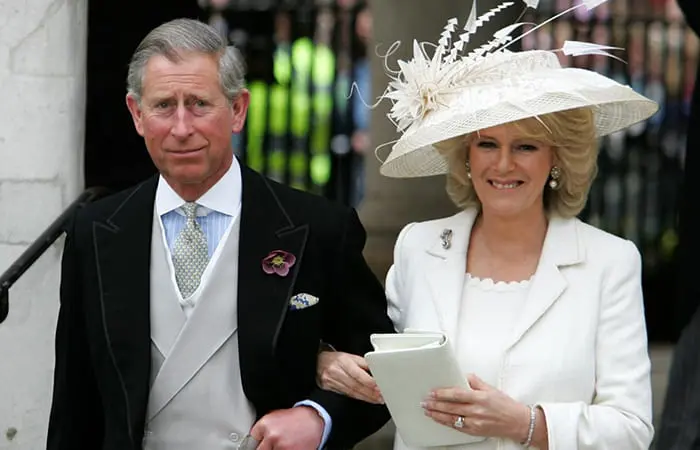
When Charles and Camilla married, British public feeling towards her was still fairly cold. At the time, it was announced that when Charles became monarch, Camilla would not be known as Queen but as Princess Consort.
Later, during the celebrations for the 70th anniversary of her reign, Queen Elizabeth II said it was her wish that Camilla would be known as Queen Consort when Charles became King.
Camilla was crowned alongside Charles at Westminster Abbey on 6 May 2023 and is now commonly styled Queen Camilla.
Who are King Charles III’s children?
Charles has two children with his first wife, Diana, Princess of Wales: Prince William, born in 1982, and Prince Harry, born in 1984.
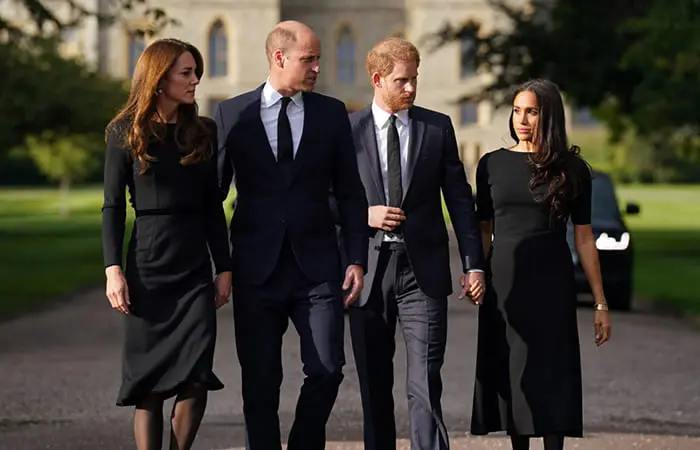
William Arthur Philip Louis was born on 21 June 1982 and is the eldest son of King Charles III.
When his father became King, William became heir to the British throne. He also received titles including Duke of Cornwall, Duke of Rothesay, Prince of Wales and Earl of Chester.
Prince William has been married to Catherine Middleton since 2011. The couple have three children: Prince George, Princess Charlotte and Prince Louis.
Henry Charles Albert David was born on 15 September 1984. He is the younger son of King Charles III and Diana.
Harry is married to the American former actress Meghan Markle. Harry and Meghan are one of the most famous couples in the world. They have two children, Archie and Lilibet Mountbatten-Windsor.
In January 2020, the couple stepped back as senior working members of the Royal Family and moved to Southern California, causing considerable disruption at Buckingham Palace.
Who were Charles I and Charles II?
Charles I succeeded his father, James I, in 1625. His reign was troubled and led to the English Civil War.
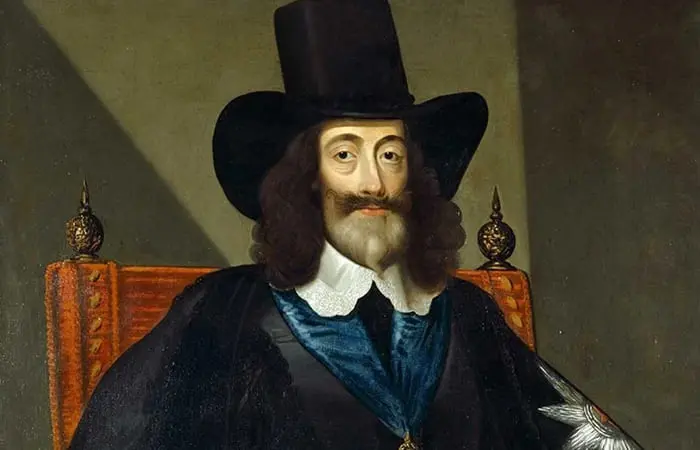
He married a Catholic, which offended many English Protestants, and dissolved Parliament several times when faced with opposition.
He was defeated by Parliament during the Civil Wars and was imprisoned for treason. He refused to cooperate and was later executed in London in 1649.
After his death, England briefly became a republic under Oliver Cromwell. The Scots later invited Charles I’s son, Charles II, to Scotland and proclaimed him King. Charles II was crowned at Scone in 1651, prompting retaliation from English forces.
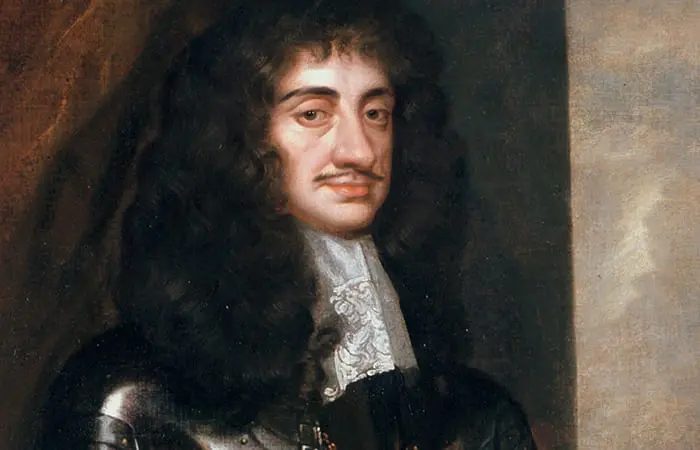
He fled to France, and the English government announced that England and Scotland would become a single Commonwealth, with a union in place from 1652. Charles II spent the next nine years in exile. Then, in 1660, after Cromwell’s death, he was invited back to London and restored to the throne.
Once back in power, Charles II ensured that those who had signed his father’s death warrant were executed. Even Cromwell’s body was dug up and beheaded.
The final phase of Charles II’s reign was shaped by attempts to settle religious dissent. He died in 1685 without legitimate children.
Five facts about King Charles III
- He was the longest-serving heir apparent in British history.
- He was the first royal baby born at Buckingham Palace in the 20th century.
- He was the first British heir apparent to gain a university degree, studying anthropology, archaeology and history before completing a Bachelor of Arts.
- He can play the cello.
- In August 2019, he worked with British designers Vin and Omi on a clothing line made using nettles from his Highgrove estate.
What is expected of Charles III today?
Impartiality, balance and institutional credibility
The first major expectation surrounding the reign of Charles III concerns his ability to carry out the role of constitutional monarch with restraint.
In the United Kingdom, the King does not govern and does not take part in party politics. Instead, he represents continuity, stability and national unity.
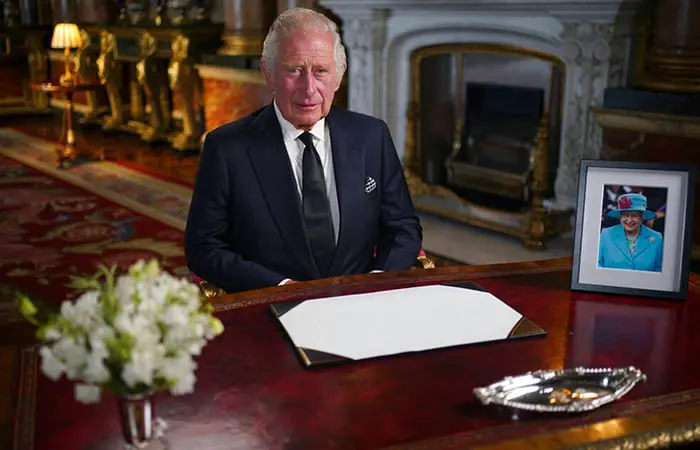
For this reason, his impartiality remains one of the most closely watched aspects of the British monarchy.
During his years as Prince of Wales, Charles became known for his work on the environment, sustainability, architecture, landscape protection and heritage.
Today, those same convictions have to sit within the limits and responsibilities of his current role.
The real challenge is not to erase his past, but to turn it into a more measured public presence, in line with the profile of a monarch who must remain above party politics.
A monarchy that must continue to prove its value
With Charles III, the British monarchy has entered a different phase.
The reign is not measured only by the strength of tradition, but also by the monarchy’s ability to remain credible in a contemporary society that is more aware of public costs, more demanding when it comes to reputation and less willing to accept the symbolic weight of institutions automatically.
The Crown continues to play a central role in British public life, but it must also show that it still has relevance in the present.
Every official gesture, ceremony and public statement is therefore read not only as an expression of British tradition, but also as a test of the monarchy’s current place in society.
In this sense, Charles III is not expected to revolutionise the monarchy. He is expected to show that it can still offer stability, representation and a sense of continuity in an age very different from the early decades of Elizabeth II’s reign.
The most delicate challenge: balancing personal beliefs and public duty
One of the most interesting questions of Charles III’s reign is the boundary between personal conviction and institutional duty.

The King spent decades promoting initiatives linked to sustainability, community, education and the environment. That long record is part of why his reign is watched so closely.
The question is how far a moral voice can remain influential without being seen as political. It is not a matter of whether Charles III should stop having a point of view. The issue is how he can continue to express values within the boundaries of his role as King.
It is in this balance, perhaps even more than in grand ceremonies, that much of his public credibility will be tested.
The Royal Family, public image and the strength of the Crown
Alongside the institutional dimension, there is also a more fragile but equally important question: reputation.
In the 21st century, the image of the monarchy depends not only on the duties carried out by the sovereign, but also on public perception of the wider Royal Family, its relationship with the media and its ability to contain tensions, controversies and highly personal narratives.
Today more than ever, the strength of the Crown cannot be taken for granted. It has to be protected in the way the monarchy is spoken about and understood publicly.
Why this matters if you are preparing for a study holiday in Great Britain
For students, parents and teachers, understanding the role of Charles III also means understanding more about the United Kingdom today.
The monarchy is not just a historical curiosity. It is a useful way to read British symbols, ceremonies, institutional language and places such as Westminster Abbey.
It also helps you understand how British culture continues to tell its own story. That is the value of a topic like this: it turns a familiar name into a way of understanding the country you will experience during a study holiday.
Our Great Britain page follows the same idea, presenting the experience not only as a language course, but as time spent among colleges, symbolic cities, culture and personal growth.
Charles as King: what kind of monarch is he?
King Charles III cannot expect the same level of public reverence that many people showed Queen Elizabeth II.
He faces a more critical and questioning public mood, as do other members of the Royal Family and royal staff. Royal residences, particularly those near Windsor Castle, have attracted public and media attention.
Every change of reign brings some movement between royal homes. One example involved Angela Kelly, the late Queen’s dresser, who was reported to have moved from the home where she lived while working closely with Queen Elizabeth II. This was discussed in the context of the King’s reported efforts to reduce royal household costs.
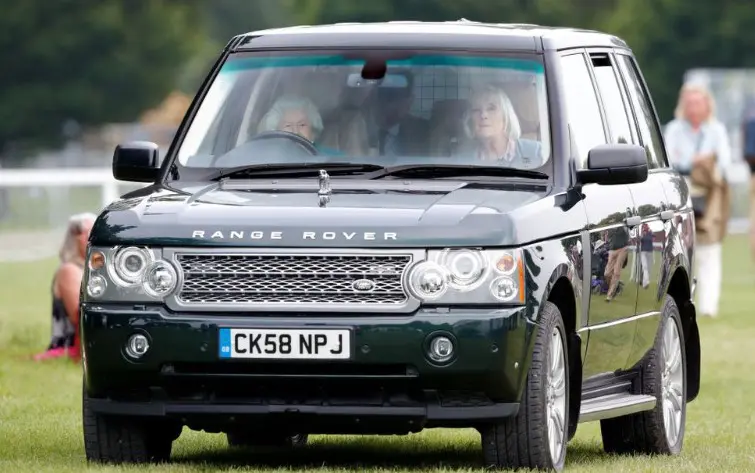
The late Queen Elizabeth II with Angela Kelly
Keeping the monarchy visible without stripping it of meaning
One of the most delicate questions of Charles III’s reign concerns the visibility of the Royal Family.
In a constitutional monarchy, public presence is not a minor detail. Official visits, patronages, ceremonies, meetings with charities, garden parties and institutional events help make the monarchy feel present to the public, rather than distant or purely symbolic.
For Charles III, the question is not simply whether the monarchy should be seen. It is how it should be seen.
A monarchy that is too distant risks losing contact with everyday life. A monarchy that is too exposed can start to look like permanent spectacle, weakening the institutional restraint that has long been one of its strengths.
The challenge is to find a balance between closeness and authority, visibility and sobriety.
The number and role of working royals also matter.
The public work of the monarchy does not depend only on the sovereign, but on a group of people who take part in ceremonies, visits, charitable initiatives and institutional representation.
For this reason, the idea of a “slimmed-down monarchy” is not only about how many members of the family are visible. It is also about whether the Crown can maintain a credible, steady and well-distributed presence across the UK and internationally.
There is also an important difference from the past.
Elizabeth II built her public image over decades through a remarkable discipline of privacy. Charles III comes to the throne after a long public life, during which his opinions, interests and priorities were discussed much more openly.
This makes his profile easier to read, but also more exposed to interpretation. Every public gesture, invitation and institutional appearance can be examined as people try to understand what kind of monarchy he is trying to shape.
The media, reputation and new pressures on the Royal Family
Another central issue is the relationship between the monarchy and the media.
In the contemporary world, the public reputation of the Crown does not depend only on major official moments. It is also shaped by the way family tensions, interviews, controversies and personal stories enter public debate.
The Duke and Duchess of Sussex’s decision to step back from official roles in 2020 showed very clearly how internal Royal Family dynamics can affect the image of the institution as a whole.
For Charles III, the challenge is not only to manage the monarchy’s image during solemn public occasions. It is also to protect its credibility at a time when private tension can quickly become a public issue.
Today more than in the past, the strength of the Crown cannot be assumed. It has to be confirmed through careful communication, consistent institutional presence and a clear distinction between personal matters and public duty.
FAQs
Who is Charles III?
Charles III is the current King of the United Kingdom.
He became sovereign on 8 September 2022, following the death of Queen Elizabeth II, after spending many years as Prince of Wales.
When was Charles III crowned?
Charles III was crowned on 6 May 2023 at Westminster Abbey.
Westminster Abbey is the symbolic place where coronations of British monarchs have taken place for centuries.
Why is the British monarchy still important when understanding the United Kingdom?
The monarchy continues to have strong institutional, symbolic and cultural value.
The King is Head of State, and the Royal Family remains a familiar presence in British public life, official ceremonies and the country’s wider imagination.
Why talk about Charles III in a piece for students, parents and teachers?
Because understanding Charles III helps you understand the United Kingdom today.
If you are preparing for a study holiday in Great Britain, knowing about the monarchy can help you make sense of British symbols, traditions, institutional language and important cultural sites.
On the Astrolabio website, Great Britain is presented not only as a language destination, but as a full cultural experience.
How can this topic help before a study holiday in Great Britain?
It can help students and families travel with a few more cultural reference points.
Knowing who the monarch is, where the coronation took place and what role the monarchy has today makes many aspects of British life easier to understand, especially during visits, excursions and activities in symbolic UK cities.
Which places linked to the British monarchy can help students understand the country better?
The most emblematic place is Westminster Abbey.
Charles III was crowned there in 2023, and many of the most important ceremonies in British history have taken place there.
It is an ideal place to help students understand the link between monarchy, history, religion and national identity.
Is Charles III only a symbolic figure, or does he have a practical public role?
His role is mainly constitutional and representative, but it is not purely decorative.
As Head of State, the King represents the United Kingdom at home and abroad, takes part in official activities and works with other members of the Royal Family in carrying out public duties.
Why can this FAQ be useful for an accompanying teacher?
For a teacher, a clear reference to Charles III and the British monarchy can help give context to the destination and add educational value to the trip. Students are not only studying English. They are also coming into contact with the history, institutions and symbols of the country they will visit.