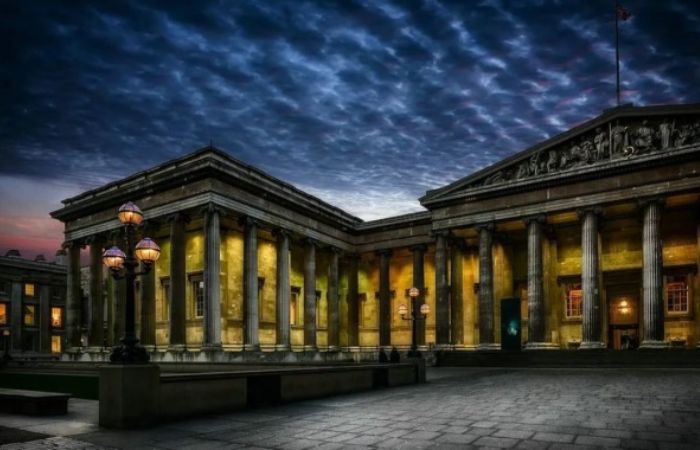
London is one of those cities you can visit time and time again and still find something new to discover. From its famous landmarks and historic streets to its constantly changing exhibitions and attractions, there’s always another reason to return.
One of the best things about London is its incredible selection of museums. Whether you’re interested in history, science, nature, art or design, you’ll find plenty to keep you entertained.
There are more than 170 museums in London, and many offer free admission to their permanent collections. This makes them particularly appealing if you’re visiting the capital on a study holiday and want to learn more about British history and culture without spending a fortune.
We’ve chosen five of the most famous museums in London that we think you should add to your itinerary.
Before your visit, it’s worth checking each museum’s website for upcoming exhibitions, events and activities. Although general admission is often free, some temporary exhibitions require paid tickets, and certain museums recommend booking your entry slot in advance.
British Museum
The British Museum is one of London’s most famous cultural attractions and one of the world’s leading museums of human history and culture.
First opened to the public in 1759, it was the world’s first national public museum, established by an Act of Parliament in 1753. Its collections have grown enormously over the centuries, with millions of objects representing cultures from across the globe.
Here, you can see some of the most significant objects in human history, including the Rosetta Stone, the colossal bust of Ramesses II and the famous Parthenon sculptures from ancient Athens.
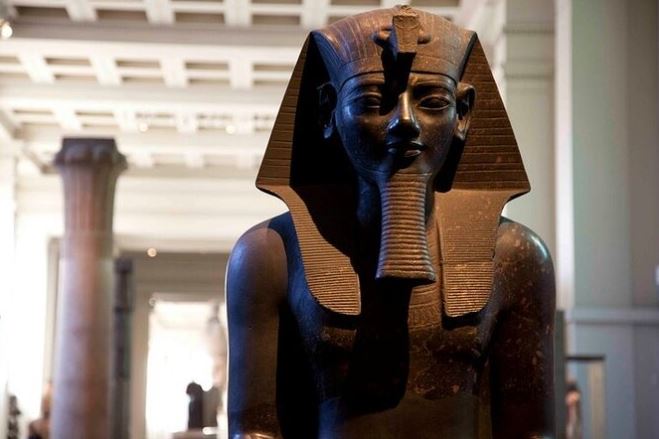
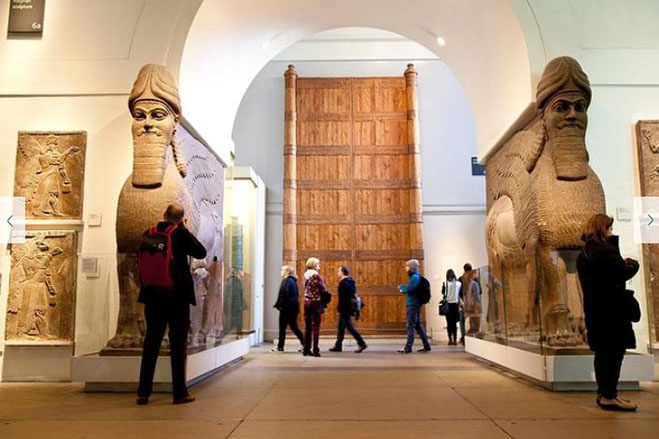
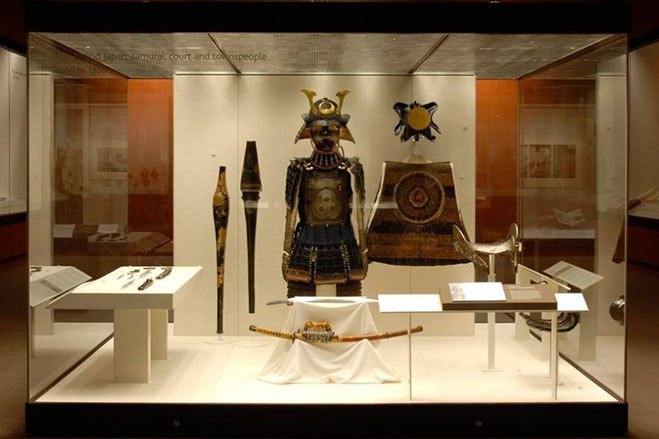
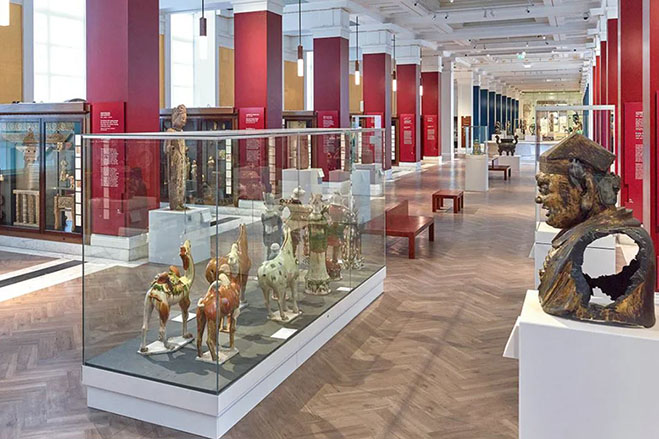
Many of the museum’s galleries are free to visit, allowing you to discover around two million years of human history.
One of its most celebrated collections is dedicated to ancient Egypt, with sculptures, mummies, jewellery and everyday objects that reveal how people lived thousands of years ago.
Contents
The fascinating history of the British Museum
The British Museum‘s origins date back to 1753, when the physician and collector Sir Hans Sloane died, leaving his enormous collection to the nation under the terms of his will.
His collection included books, manuscripts, natural history specimens and objects gathered from around the world.
The museum was established through an Act of Parliament later that year, bringing Sloane’s collection together with the Cottonian Library and the Harleian collection of manuscripts.
The Cottonian Library, assembled by Sir Robert Cotton and later expanded by his descendants, included extraordinary historical documents such as manuscripts of Beowulf and copies of Magna Carta.
These collections formed the foundation of what would become the British Museum.
In 1754, Montagu House in Bloomsbury was purchased to accommodate the collections, and the museum officially opened to visitors in January 1759.
As the collections expanded, so did the building.
One important addition was the Townley collection of classical sculpture, acquired in 1805 from the estate of Charles Townley, an English collector and museum trustee. A gallery designed to display the sculptures opened in 1808.
The museum continued to develop throughout the nineteenth century, including the construction of a new building to accommodate the growing collections.
Victoria and Albert Museum (V&A)
Art and design in South Kensington
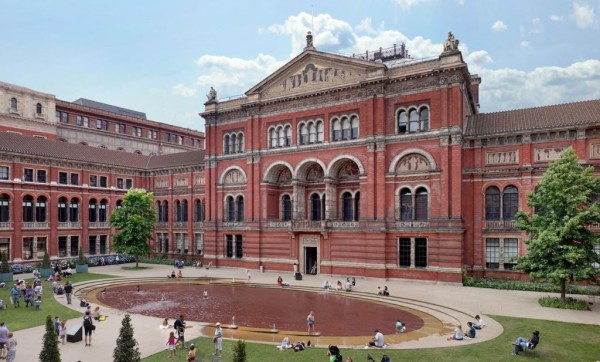
The Victoria and Albert Museum, better known as the V&A, is home to one of the world’s most important collections of art, design and decorative objects.
From fashion and photography to sculpture, ceramics, furniture and manuscripts, the museum celebrates human creativity across thousands of years.
Its permanent collections include objects from different countries and historical periods, making it a fascinating place to discover how art and design have changed over time.
Activities for families and students
The V&A is particularly interesting for families and groups of students, thanks to its educational activities and events.
The museum offers free activities and resources, while its programme of workshops and family events changes throughout the year.
During school holidays, you can often find special activities designed to encourage younger visitors to get creative and learn through hands-on experiences.
These programmes give you the opportunity to interact with the museum’s collections in a different way, rather than simply walking through the galleries.
Natural History Museum
Nature and dinosaurs in South Kensington
The Natural History Museum is another of London’s most famous museums, and one of the most popular attractions for anyone interested in the natural world.
Located in a magnificent Victorian building in South Kensington, it houses more than 80 million specimens spanning billions of years of Earth’s history.
Its collections cover everything from fossils and minerals to plants, animals and the evolution of life on our planet.
The museum is also a world-leading scientific research institution, with scientists using its collections to investigate biodiversity, evolution, geology and environmental change.
What can you see at the Natural History Museum?
There is plenty to discover, particularly if you’re interested in dinosaurs and prehistoric life.
One of the museum’s most popular attractions is its dinosaur gallery, where you can come face to face with an animatronic Tyrannosaurus rex.
You’ll also find fascinating displays featuring extinct animals, including the dodo, alongside enormous fossils and skeletons.
Other highlights include a cross-section of a giant sequoia tree, displays of spectacular crystals and minerals, and an earthquake simulator that recreates the experience of the 1995 Kobe earthquake in Japan.
In the magnificent Hintze Hall, you can admire the enormous skeleton of a blue whale suspended from the ceiling.
Named Hope, the skeleton measures approximately 25 metres long and has become one of the museum’s most recognisable exhibits.
Beyond its public galleries, the museum is also an important centre for scientific research. Its collections help scientists investigate some of the biggest questions about the history and future of life on Earth.
Imperial War Museum London
The history of modern conflict in Lambeth
The Imperial War Museum London is one of the most thought-provoking museums in the capital.
Founded in 1917, during the First World War, the Imperial War Museums organisation was established to record the experiences and contributions of those involved in the conflict.
Today, its collections contain millions of objects, photographs, documents and personal accounts relating to warfare and its effects on society.
The London museum is located in Lambeth, within walking distance of Waterloo station.
Through its permanent galleries and temporary exhibitions, you can explore the history of conflict from the First World War to the present day.
Discover the human stories behind the wars
What makes the Imperial War Museum particularly interesting is its focus on the people affected by conflict.
Rather than concentrating solely on military equipment and battles, the exhibitions explore the experiences of soldiers, civilians and families.
You’ll discover how war has affected everyday life, political decisions and societies around the world.
The museum also examines more recent conflicts and the changing nature of warfare.
National Maritime Museum
Maritime history in Greenwich
The National Maritime Museum is one of the world’s leading museums dedicated to maritime history.
Located in historic Greenwich, it celebrates Britain’s relationship with the sea, from exploration and trade to naval warfare and navigation. Inside, you’ll find fascinating collections of maps, paintings, navigational instruments, ship models and historic objects connected to life at sea.
The museum is part of Royal Museums Greenwich, which also includes the Queen’s House, the famous Cutty Sark and the Royal Observatory.
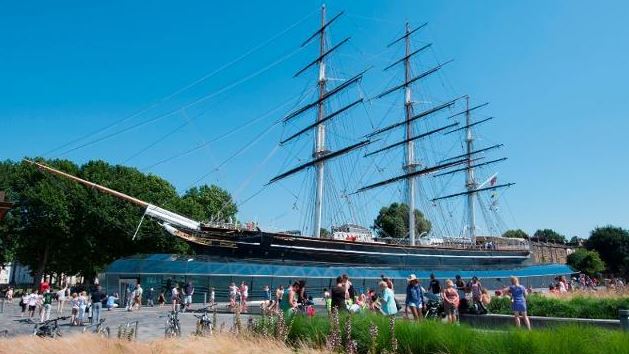
Discover Britain’s naval history
The museum’s wider collection contains more than 2.5 million items, making it one of the largest maritime collections in the world.
Among its most famous objects is the uniform worn by Admiral Horatio Nelson when he was fatally wounded at the Battle of Trafalgar in 1805.
Nelson was one of Britain’s most celebrated naval commanders, and his victory at Trafalgar helped secure British naval supremacy during the Napoleonic Wars.
Seeing his uniform offers a particularly personal connection to this important moment in British history.
The museum also offers educational visits and learning opportunities for school and student groups, making it a worthwhile addition to a London study holiday.
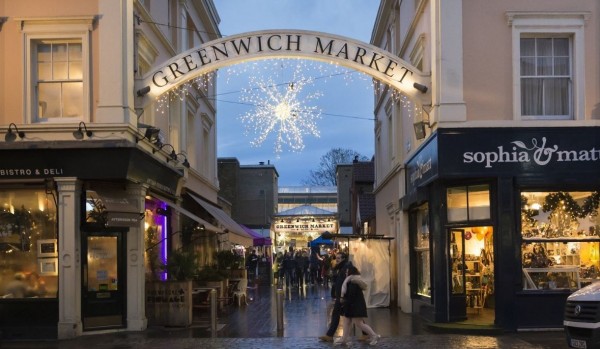
Discover the best museums in London on your study holiday
With so many fascinating museums in London, there’s no shortage of opportunities to learn something new during your visit.
Whether you’re interested in ancient civilisations, natural history, art or Britain’s maritime past, these five museums are a fantastic place to start.
And what better way to discover London than on a study holiday with Astrolabio? You’ll have the opportunity to improve your English while experiencing the history, culture and attractions that make the British capital so special.
Explore our study holidays with Astrolabio and start planning your next adventure!