
‘Travelling with classmates’ is written by Martina Rossi, International Study Travel Consultant
Updated: 24 March 2026
With over 10 years of experience designing international educational programmes and group travel for schools, this guide is based on direct, real-world experience of organising and accompanying student groups across Europe and beyond, with observations gathered between 2016 and 2025.
Why are group trips a complete educational experience?
Travelling with classmates is a formative experience that combines learning, personal development and social growth within a single, shared context.
The group becomes a dynamic environment where each participant actively contributes, turning every moment into an opportunity for discovery. Through shared experiences, emotions and challenges, you develop skills that rarely emerge in more traditional settings.
How does the group improve learning?
Learning during a group trip becomes more effective because it combines direct experience and continuous discussion. Information is no longer just theoretical. It is experienced, shared and processed together, which makes it more meaningful.
Each participant notices different details and contributes their own perspective, creating a broader and more complete understanding. This process strengthens both curiosity and memory, making learning more long-lasting.
Key benefits:
- greater engagement in activities
- exposure to different perspectives
- experiential learning
- improved retention
How does group travel develop social skills?
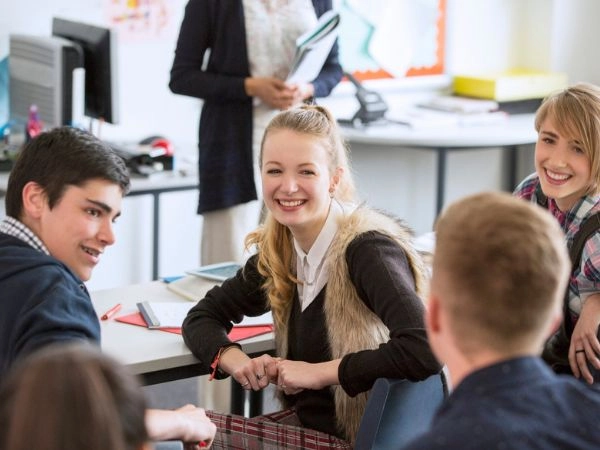
Travelling together means sharing spaces, time and decisions. This naturally leads to the development of essential social skills.
You learn to communicate more clearly, listen to others and manage differences of opinion. Even simple situations, such as planning a day or sticking to schedules, become opportunities to improve collaboration.
Over time, the group finds its balance and each member gains a clearer sense of their role.
Skills developed:
- effective communication
- active listening
- conflict management
- teamwork
Why does the group encourage independence?
It may seem counterintuitive, but group travel is an ideal setting for building personal independence.
Being away from your usual routine encourages you to take more responsibility for your time, decisions and actions. The group provides a sense of security, but it does not replace individual initiative.
Instead, it creates the right balance. You feel supported, while still being encouraged to make choices and try things for yourself. This helps build both confidence and independence that lasts beyond the trip.

What is the role of shared experiences?
Shared experiences are one of the most powerful aspects of group travel. Living meaningful moments together creates a strong sense of belonging and deepens connections between participants.
Emotions become part of a collective experience, giving each moment greater significance.
Key moments include:
- cultural activities
- excursions
- shared meals
- unexpected situations
These moments stay with you and help build lasting relationships.
How does travel build adaptability?
Travel often involves new and unpredictable situations, which naturally develops adaptability and resilience.
Changes in plans or small challenges become opportunities to respond with flexibility. The presence of the group makes these situations easier to manage, thanks to mutual support.
What you develop:
- mental flexibility
- ability to handle the unexpected
- adaptability
- resilience
How does cultural awareness develop?
Exposure to different cultures is one of the most valuable parts of travelling, and experiencing it in a group makes it even more meaningful.
Observing different habits and traditions encourages you to reflect on your own culture. Within the group, these observations are shared and discussed, creating a continuous exchange of ideas.
This process builds open-mindedness and respect for diversity, both of which are increasingly important in a global context.
Why does travelling in a group feel safer?
Travelling with classmates provides a strong sense of security and reassurance during the trip.
Knowing you can rely on others reduces anxiety and allows you to enjoy the experience more fully. Mutual support makes it easier to deal with challenges and face new situations with confidence.
Safety factors include:
- peer support
- structured organisation
- constant supervision
- shared management of situations
How is self-confidence strengthened?
Facing new experiences away from your usual environment plays a key role in building self-confidence.
Each small challenge you overcome becomes a step forward. The group supports this process by offering encouragement during difficult moments, making the experience more motivating.
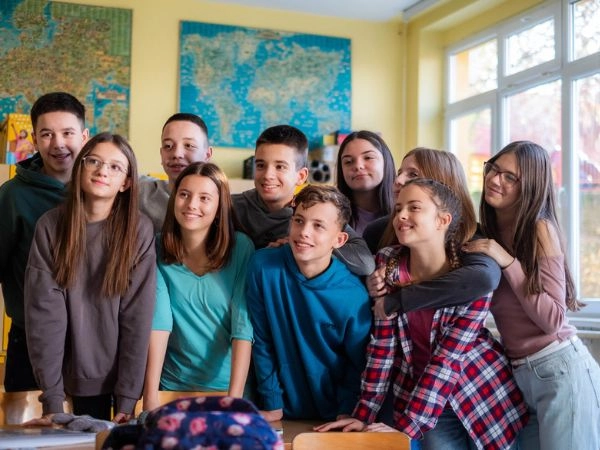
This leads to a stronger belief in your own abilities that continues long after the trip ends.
What is the value of shared responsibility?
During a group trip, everyone is expected to respect rules and commitments that keep the group running smoothly.
This develops a sense of responsibility and awareness of how your actions affect others.
Shared responsibilities include:
- being punctual
- following instructions
- participating actively
- contributing to the group
How does group travel improve communication?
Communication is a central part of group travel and develops through constant interaction.
Expressing your needs, sharing opinions and coordinating with others requires clarity and active listening. In international settings, this becomes even more valuable, as you often communicate in different languages.
This creates a richer and more complete learning experience.
Why is comparison with others important?
Comparing perspectives with your classmates is one of the most stimulating aspects of group travel.
Each person brings different ideas and viewpoints, which helps create a broader understanding of the world. Discussing and sharing opinions supports critical thinking and greater awareness.
How does problem solving develop?
During a trip, situations arise that require quick decisions. The group becomes a space where problems are analysed and solutions are found together.
Skills developed:
- situation analysis
- decision making
- collaboration
- managing challenges
What is the emotional impact of the experience?
Group travel has a strong emotional impact because experiences are lived and shared intensely.
These shared emotions strengthen bonds and make each moment more meaningful, creating memories that stay with you over time.
How does travel support personal growth?
Every trip offers an opportunity for growth, but doing it in a group makes the experience even richer.
Facing new situations, adapting to different environments and sharing meaningful moments helps you develop greater self-awareness.
Comparing yourself with others allows you to recognise both your strengths and areas for improvement, supporting your personal development.
| Area | Benefit |
|---|---|
| Social | Collaboration and communication |
| Personal | Independence and confidence |
| Cognitive | Active learning |
| Emotional | Shared experiences |
| Cultural | Open-mindedness |
How does travel strengthen individual responsibility?
In a group setting, each participant becomes part of a system where individual actions affect others.
This leads to a more concrete and conscious sense of responsibility. It is not just about following rules, but understanding the impact of your behaviour on the group.
Being punctual, respecting commitments and contributing positively all help build a more mature mindset that carries into everyday life.
How does travel encourage curiosity and initiative?
Travel naturally creates a stimulating environment that encourages curiosity and initiative.
In a new setting, even small details can spark interest. The group amplifies this, as questions and observations from others lead to further reflection.
Over time, curiosity becomes a habit, encouraging you to take initiative, engage more actively and seek out new information beyond the trip itself.
An experience that shapes, connects and stays with you
Travelling with classmates is a complete educational experience that brings together learning, personal growth and social development.
The group is not just a logistical structure. It is a powerful learning tool that makes every experience more meaningful. Through shared moments, discussion and real-life situations, you build skills that are difficult to develop elsewhere.
What you experience together does not remain just a memory. It becomes part of who you are.
About the author
Martina Rossi – International Study Travel Consultant
Martina has been designing and coordinating international educational programmes for over 10 years, working closely with schools and training organisations. She has accompanied groups in a wide range of cultural contexts, using her direct experience to create programmes that are safe, educational and focused on personal growth.
FAQ – Travelling with classmates: the educational benefits of group travel
1. Why are group trips useful for learning?
They combine direct experience with shared reflection, making learning more engaging and memorable.
2. How do they support social skill development?
They encourage communication, collaboration and conflict management through real-life interaction.
3. How does the group increase independence?
It provides support while encouraging individual decision-making and responsibility.
4. Which shared experiences are most impactful?
Cultural visits, excursions, meals and unexpected situations.
5. How do they stimulate curiosity and initiative?
New environments and group discussions encourage exploration and active participation.
6. How does travel improve adaptability?
By exposing you to new and changing situations that require flexibility.
7. Why is comparison with others important?
It broadens perspectives and strengthens critical thinking.
8. How does it contribute to personal growth?
It builds self-awareness through new experiences and social interaction.
9. Which cognitive skills are developed?
Observation, analysis, memory and problem solving.
10. What is the emotional impact?
Shared experiences create strong emotional connections and lasting memories.