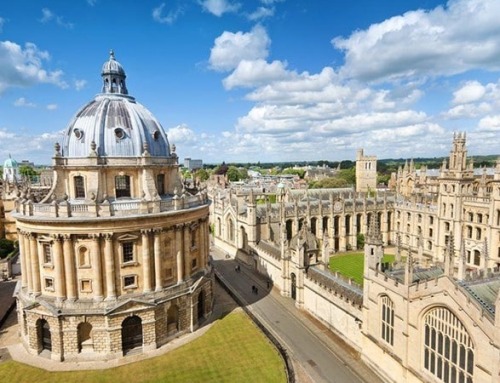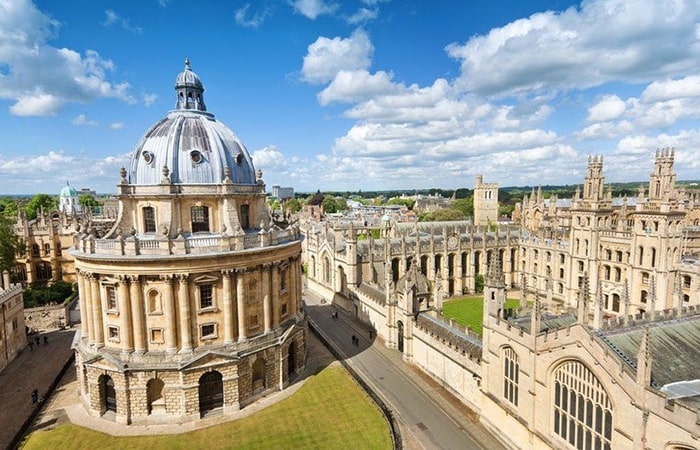
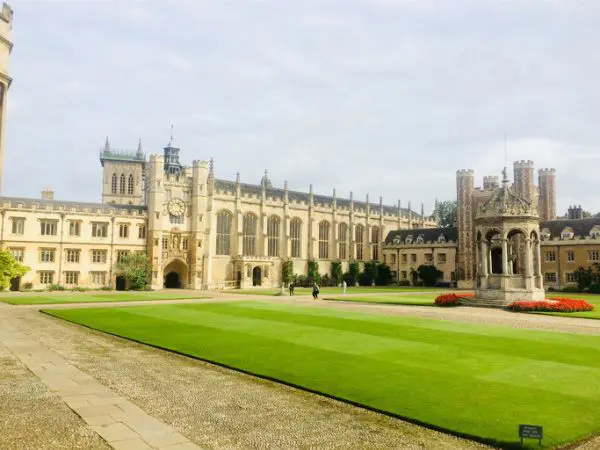
Oxford and Cambridge traditions are among the oldest within academic institutions in the Western world, with traditions dating back to the Middle Ages that still form part of everyday student life today. Some of the best known include Matriculation, the formal admission ceremony where students wear academic dress; Formal Hall, a formal dinner held in the college dining hall; Subfusc, the traditional dark academic clothing worn for examinations at Oxford; Punting, taking a flat-bottomed boat along rivers such as the Cam and Cherwell; and end-of-year celebrations such as Commemoration Balls at Oxford and May Week at Cambridge.
These traditions shape college life at Oxford University and University of Cambridge, contribute to each institution’s identity and give students a sense of belonging to an academic community with centuries of history behind it.
When you think of Oxford and Cambridge, the first images that come to mind are probably Gothic spires and bicycles rattling over cobbled streets. But if you spend time at either university, even for just a few weeks during a summer programme at one of Britain’s colleges, one of the most interesting things you discover has little to do with the buildings. It is the customs and conventions surrounding them.
Oxford and Cambridge have developed their own rituals, ceremonies and social conventions, many of which still influence student life. Knowing about these traditions before you arrive can help you understand what it actually feels like to experience British academic culture from the inside!
Subfusc: when what you wear matters
One of the first Oxford traditions that surprises visitors is subfusc, the formal academic dress required for university examinations and certain ceremonies. Students wear dark clothing, such as a dark suit or skirt with a white shirt and appropriate neckwear, together with their academic gown.
For written examinations, there is also a popular student tradition involving carnations. Students traditionally wear a white carnation for their first examination, pink carnations for those in between and a red carnation for their final exam.
It is one of Oxford’s most visible traditions and an immediate reminder that many of the university’s customs are still part of student life rather than something preserved purely for visitors.
Cambridge also has a long tradition of academic dress, although the rules surrounding gowns and when they are worn differ between colleges and occasions.
Formal Hall: dinner with centuries of tradition
Many Oxford and Cambridge colleges hold Formal Hall, a formal evening meal in the college’s historic dining hall. Depending on the college, students may be required to wear academic gowns, and the evening may begin with a grace, sometimes said in Latin.
The dining hall itself might have panelled or vaulted ceilings, portraits of notable former students and academics hanging on the walls, and long wooden tables. These are not historical sets created for tourists. Students have eaten in many of these rooms for centuries.
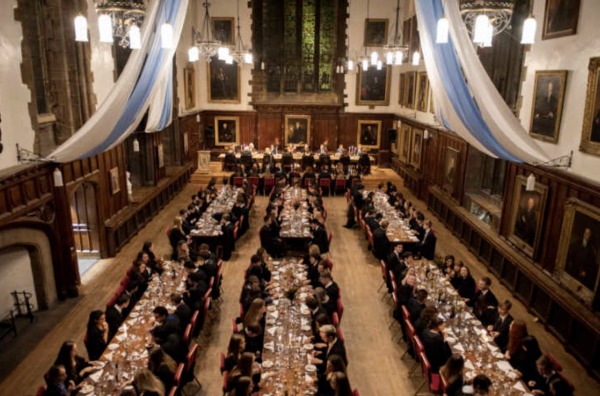
The High Table, traditionally used by Fellows and senior members of the college, remains a feature of many dining halls today.
Attending Formal Hall, whether as a student or an invited guest, offers an unusual glimpse into a part of British academic life that has survived for generations.
Matriculation: officially joining the university
At the beginning of their studies, new Oxford and Cambridge students go through matriculation, the process through which they formally become members of their university.
At Oxford, the matriculation ceremony traditionally takes place in the Sheldonian Theatre, with students wearing academic dress. Cambridge also has its own matriculation traditions, although arrangements vary between colleges.
The practical process of enrolling at university has already taken place by this point. Matriculation is largely ceremonial, marking your formal admission into an academic institution whose history stretches back centuries.
It connects today’s students with generations of people who studied at the same university before them, including scientists, writers, politicians and Nobel Prize winners.
Oxford and Cambridge traditions: how they compare
The two universities have plenty in common, including their collegiate structures, academic dress and centuries-old ceremonies, but the details are often different.
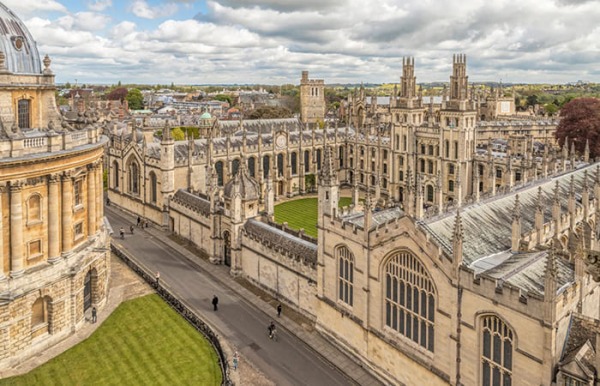
University of Oxford traditions
Academic year: divided into Michaelmas, Hilary and Trinity terms.
Academic dress for examinations: students wear subfusc together with their academic gown.
Matriculation ceremony: traditionally held in the historic Sheldonian Theatre.
Formal dinners: many colleges hold Formal Hall, with rules on academic dress varying between colleges.
Language used in ceremonies: Latin continues to be used in a number of official university ceremonies.
River and punting: punting is popular on the River Cherwell, particularly around Magdalen Bridge.
End-of-year celebrations: colleges hold a number of balls and commemorative celebrations, including Commemoration Balls.
Historic library: the Bodleian Library, where new readers traditionally make a declaration before being admitted to use the library.
Sporting rivalry: Oxford competes against Cambridge in the famous annual Boat Race on the Thames.
Post-exam celebrations: students completing their final examinations are often met by friends outside the examination schools for the unofficial tradition known as trashing.
University of Cambridge traditions
Academic year: divided into Michaelmas, Lent and Easter terms.
Academic dress: gowns remain part of formal university and college life, with rules varying according to the occasion and college.
Matriculation: new students formally become members of the university through their colleges.
Formal dinners: many colleges hold Formal Hall, often with students wearing academic gowns.
Language used in ceremonies: Latin remains part of some of Cambridge’s traditional university ceremonies.
River and punting: punting takes place on the River Cam, with routes through the famous College Backs and towards Grantchester.
End-of-year celebrations: the famous May Balls take place around May Week, which, despite its name, is held in June.
Historic library: Cambridge University Library is one of the university’s major institutions and one of the UK’s legal deposit libraries.
Sporting rivalry: Cambridge competes against Oxford in the annual Boat Race on the Thames.
Post-exam celebrations: students have their own informal ways of celebrating the end of examinations, although traditions vary between colleges and groups of friends.
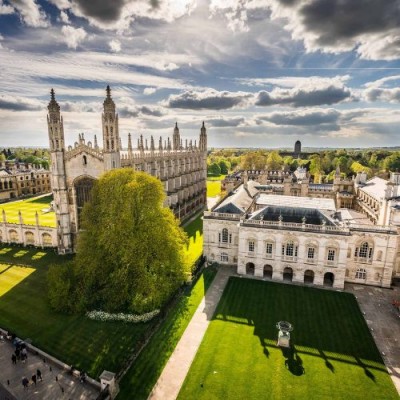
Punting: slowing things down
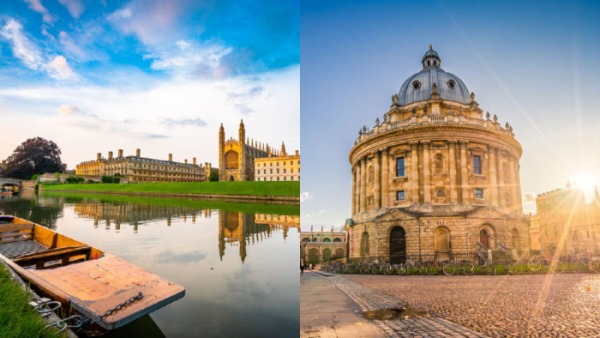
Away from the formal ceremonies, one of the traditions most closely associated with student life in Oxford and Cambridge is punting. A punt is a flat-bottomed boat propelled through the water using a long pole.
You’ll see punts on the Cam in Cambridge and the Cherwell in Oxford, particularly during the warmer months.
Punting isn’t necessarily about getting anywhere quickly. Students use punts to take a break from studying, have picnics with friends, talk, read or simply spend an afternoon on the river.
It is slow by definition, and that’s part of the appeal. Learning how to control a punt without falling into the water can become something of an unofficial rite of passage.
May Week and Commemoration Balls: celebrating the end of the academic year
At Cambridge, May Week takes place in June rather than May. It is a period of celebrations around the end of the academic year, with events including concerts, performances, garden parties and the university’s famous May Balls.
These balls are organised by individual colleges and some continue throughout the night, ending with breakfast as the sun comes up.
Oxford colleges have their own balls and end-of-year celebrations, including Commemoration Balls. Tickets for the biggest events can sell out months beforehand, and formal evening dress is usually expected.
Another longstanding British university tradition is cricket. Oxford and Cambridge first played each other in 1827, beginning a sporting rivalry that has continued in various forms ever since.
If you want to understand the rules and culture surrounding the sport before you arrive, read our introduction to cricket culture in the UK.
Oxford is also closely associated with some of the most recognisable locations seen in the Harry Potter films. If you’d like to know which places were used for filming and what you could see during your stay, take a look at our page on British filming locations in our destinations.
The unwritten rules: what should you actually expect?
Alongside the formal traditions, British college life comes with plenty of unwritten conventions that you’ll quickly begin to notice.
Libraries are expected to remain quiet. College grounds have their own rules about where you can walk and which spaces you can enter. Porters, based in the Porter’s Lodge, are an important part of college life and are often one of your first points of contact if you need help.
Colleges may also have rules about access at particular times of day, including arrangements for entering after the main gates have closed.
These customs aren’t simply restrictions. Together, they help create the sense that a college is a community rather than just a collection of university buildings.
Mistakes to avoid
7 things international students might do in an English college without realising they shouldn’t
Nobody necessarily sits you down and explains every college convention when you arrive. Some you discover gradually, but knowing about them beforehand can save you an awkward moment.
1. Walking across the grass in a college quadrangle
At many Oxford and Cambridge colleges, there are rules about who can walk on particular lawns. Some lawns are traditionally reserved for Fellows, while others can be used by students at certain times or for particular events.
Pay attention to signs and follow the rules of the college you’re visiting rather than assuming every patch of grass is open to everyone.
2. Assuming the porter is simply a receptionist
Porters are an established part of college life. They manage entrances, help with practical problems, deal with keys and security and are often extremely knowledgeable about how their college works.
Treating the Porter’s Lodge as nothing more than a reception desk means missing an important part of the college system.
3. Arriving late for Formal Hall
Formal Hall follows the customs of the individual college, and punctuality matters. There may be a grace before dinner, sometimes in Latin, and late arrivals can cause problems once the meal has formally begun.
If you’re attending one, check the arrangements beforehand and arrive on time.
4. Not knowing what to do with your gown
If you’re taking part in a programme or event where academic gowns are provided, make sure you understand when you’re expected to wear yours and where it should be kept or returned.
Nobody expects you to know automatically. Ask the first time and you’ll avoid unnecessary confusion later.
5. Thinking every Cambridge college is basically the same
Cambridge is made up of individual colleges, each with its own history, community, buildings and traditions. Oxford works in much the same way.
The college you’re associated with can be a significant part of your university experience, which is why students often identify strongly with their particular college as well as the wider university.
6. Taking photographs during Formal Hall without checking
Historic dining halls often have their own photography rules. Christ Church in Oxford, whose Great Hall helped inspire the look of Hogwarts in the Harry Potter films, is one of the city’s best-known examples.
Rules may change depending on whether the hall is open to visitors or being used for a meal, so always check before taking photographs.
7. Being too informal with Fellows and academics straight away
British universities can sometimes be less formal than international students expect, but there isn’t one rule that applies to every academic or college.
If you’re unsure how to address someone, follow the title and name they’ve given you or the convention used by your programme. You can always become more informal if they invite you to.

The College Glossary
Words you’ll hear at Oxford and Cambridge
Walking into an Oxford or Cambridge college without knowing its vocabulary can sometimes feel like arriving somewhere with its own language. A handful of terms will make college life much easier to understand.
Porter / Porter’s Lodge
A college porter works at the main entrance and deals with everything from access and security to keys, post and everyday questions. The Porter’s Lodge is usually one of the first places you’ll encounter when entering a college.
Porters often know the college extraordinarily well and can be an invaluable source of practical information.
Bedder
At Cambridge, bedder is the traditional term for a member of staff responsible for cleaning student rooms and communal areas.
Historically, bedders became familiar figures in students’ everyday lives, and the term remains part of Cambridge’s distinctive college vocabulary.
JCR / MCR
JCR usually stands for Junior Common Room and MCR for Middle Common Room. The terms can refer both to physical common rooms and to student representative bodies, although exact arrangements and terminology differ between colleges.
Broadly speaking, JCRs represent undergraduate students, while MCRs are associated with postgraduate students.
Buttery
The buttery is traditionally a college food or drink outlet. What you’ll actually find there depends on the college, from a café or bar to somewhere serving meals.
The word has been used in colleges for centuries and originally referred to a room where provisions, particularly drink, were stored.
Scout
At Oxford, scout is the traditional name used in many colleges for members of staff who clean and look after student rooms and communal areas.
It is broadly comparable with the Cambridge term bedder, although duties vary between colleges.
Gaudy
A gaudy is an Oxford college reunion or celebratory dinner, usually held for alumni.
The word is traditionally linked to the Latin gaudium, meaning joy. Gaudies are a good example of the way college membership can continue long after a student has graduated.
Subfusc
Subfusc is the formal clothing worn with academic dress for examinations and certain ceremonies at Oxford.
The term comes from Latin and refers to dark or subdued colouring. The exact requirements are set by the university and are worn together with the appropriate academic gown.
Fellow
A Fellow is a senior member of a college’s academic community. Depending on the college and type of fellowship, they may be involved in teaching, research, administration or the governance of the college.
Fellows traditionally have particular privileges within college life, including association with the High Table at formal dinners.
Why does any of this matter if you’re studying in England?
Learning about Oxford and Cambridge’s college traditions gives you an insight into far more than two famous universities.
They tell you something about British academic culture itself: its respect for institutions, the importance placed on belonging to an academic community and the surprising number of centuries-old rituals that continue alongside modern university life.
If you spend even a few weeks at an English college during a summer programme in Oxford or a summer course in Cambridge, you won’t necessarily take part in the traditions reserved for the universities’ own students.
You’ll still be surrounded by the places and customs those traditions have shaped. The architecture, dining halls, quadrangles and Porters’ Lodges all tell part of the same story.
If you’re coming from another country and want to understand what studying in Britain can actually feel like, knowing a little about this culture before you arrive can make a real difference.
Understanding the traditions is only part of preparing for your stay. You can also read about how to prepare for your first study holiday abroad, including documents, packing and what to expect on your first day.

The Academic Year Calendar
What happens when at Oxford and Cambridge?
The Oxford and Cambridge academic years are divided into three short, intensive terms, separated by longer vacations.
Understanding that rhythm also helps explain why the atmosphere in the colleges during the summer can feel very different from term time.
October: Michaelmas Term
The academic year begins. New students arrive, matriculation takes place and college life starts again after the summer.
For new students, it is a period filled with introductions, new routines and some of the traditions associated with joining the university.
January: Hilary Term at Oxford / Lent Term at Cambridge
The second term of the academic year begins in January.
With the excitement of arriving at university behind them, students are well into their courses by this point. Formal college traditions continue alongside teaching and study.
April to June: Trinity Term at Oxford / Easter Term at Cambridge
The final term brings examinations and, for many students, the end of the academic year.
It is also the period associated with many of the universities’ best-known social celebrations, including Cambridge’s May Week and college balls.
July to September: Summer vacation
The universities’ regular undergraduate teaching terms have finished, but many college buildings remain active throughout the summer.
This is when summer programmes for international students can take place, including programmes available through Astrolabio in Oxford and Cambridge.
You may be living, eating and studying in spaces used by university students during the academic year. The people using them may have changed for the summer, but the buildings and centuries of college history surrounding you remain.
You can see all our available UK destinations on our study programmes in Britain page.
FAQ
What are Oxford and Cambridge college traditions?
Oxford and Cambridge have centuries-old academic and social traditions connected with their collegiate university systems. These include academic dress, matriculation, Formal Hall, punting, university sporting rivalries and end-of-year celebrations.
The exact customs vary considerably between the two universities and between individual colleges.
Can summer students take part in Oxford and Cambridge college traditions?
It depends on the programme and the college. Many traditions, particularly official university ceremonies such as matriculation, are reserved for enrolled members of Oxford or Cambridge.
Summer students can still experience life inside historic college surroundings and may have access to particular activities or events included in their programme. Always check the details of your specific course rather than assuming a university tradition will be included.
What do you wear at an Oxford or Cambridge college?
For everyday summer study, you’ll normally wear ordinary clothes appropriate for your programme, the weather and the activities planned.
Academic gowns and formal dress are required for certain events involving university members, but the rules differ between Oxford, Cambridge and individual colleges. If your summer programme includes an event with a dress code, you’ll be told what you need beforehand.
What is the difference between Oxford and Cambridge academic traditions?
The universities share many features, including collegiate systems, academic gowns, formal dinners and historic ceremonies, but their terminology and customs aren’t identical.
Oxford’s terms are Michaelmas, Hilary and Trinity, while Cambridge uses Michaelmas, Lent and Easter. Oxford is particularly associated with subfusc for examinations and punting on the Cherwell, while Cambridge is famous for punting on the Cam and its May Week celebrations.
Can you go punting during a study holiday in England?
Yes. Punting is available to visitors in both Oxford and Cambridge, although whether it forms part of your study holiday depends on your particular programme.
In Cambridge, punts are one of the most familiar sights on the River Cam, while in Oxford you’ll commonly see them on the Cherwell. If it isn’t included in your programme, always check with your group leader before arranging activities independently.