
Contents
England’s public schools are known worldwide for their prestige and academic influence, but their origins are far more complex and far-reaching than many people realise.
The earliest of England’s public schools date back to the sixteenth century, when they were founded by religious institutions such as abbeys and parishes. Their original purpose was not exclusivity, but access. These schools were created to spread education among the lower social classes and were often free of charge, welcoming boys from disadvantaged backgrounds, including those in genuine need.
Over time, this model began to change. As fees gradually increased, public schools attracted the sons of the nobility and the emerging middle classes, becoming a symbol of prestige rather than social mobility. What had once been charitable institutions evolved into elite educational pathways closely associated with influence and status.
By the seventeenth century, the public school system had spread throughout England. Many schools came under the patronage of prominent families or the monarchy, strengthening their cultural authority and embedding them deeply within the country’s political and social framework.
From the mid nineteenth century onwards, public schools catered almost exclusively to elite families, even after the 1870 Education Act introduced compulsory state education. Despite the expansion of the public school system, these institutions retained a central role alongside it, continuing to educate generations of future leaders in public life, politics, and business.
Today, public schools remain independent and highly selective. While their social context has changed dramatically, many still retain elements of their original ethos, shaped by discipline, tradition, and a strong sense of institutional identity rooted in their early monastic foundations.
What is a public school?
Now that we have explored their origins, it is worth clarifying what the term “public school” means in England today. Despite the name, public schools are not part of the state education system. They are independent secondary schools that charge fees and operate outside direct government control.
The key difference between public schools and state schools lies in governance and funding. State schools are publicly funded, free to attend, and required to follow national curricula. Public schools, by contrast, are privately funded, governed by their own boards of governors, and enjoy a high level of autonomy over teaching methods and academic programmes.
This independence allows public schools to shape their educational offering in ways that differ significantly from the state system, particularly in terms of curriculum flexibility, teaching styles, and student support.
Educational aims of public schools
From their earliest days, public schools have aimed to educate future leaders. Academic success has always been important, but it has never been the sole focus. Equal emphasis is placed on character, discipline, and personal responsibility.
Sport, extracurricular activities, and community service play a central role in daily school life. Through these experiences, students are encouraged to develop teamwork, fair play, resilience, and a strong sense of duty. Merit and effort are valued as much as intellectual ability.
Beyond exam results, public schools seek to instil a strong work ethic and a set of transferable skills that extend well beyond the classroom. The broader objective is to prepare students for positions of responsibility in society, equipping them with confidence, independence, and leadership qualities.
Public schools and state schools: key differences
The differences between public schools and state schools are structural, financial, and social. State schools operate within a nationally regulated framework, following government guidelines on curriculum, staffing, and assessment. Public schools, by contrast, benefit from far greater freedom in how they design and deliver education.
Funding also marks a clear distinction. State schools rely almost entirely on public funding and operate within fixed budget limits. Public schools are funded through high tuition fees and private donations, allowing them to invest heavily in facilities, teaching resources, and student support.
Access is another defining factor. State schools are free and generally allocated based on catchment areas. Public schools apply selective admissions criteria, often based on academic merit, alongside the financial means of families. In short, public schools prioritise autonomy and selectivity, while state schools are built around accessibility and inclusion.
Five of the most prestigious public schools in the United Kingdom
Eton College
Founded in 1440, Eton College is widely regarded as the most iconic public school in England. Located near Windsor, its historic red-brick buildings and extensive green grounds date back to the time of its foundation.
Eton’s educational approach is rooted in tradition, with a strong emphasis on individual learning and close interaction between students and tutors. Alongside classical subjects, physical education and team sports play a significant role in school life.
Academic results are consistently strong across both STEM subjects and the humanities. Eton’s former pupils, known as Etonians, include twenty British Prime Ministers, King George VI, and members of the Royal Family, including Prince William and Prince Harry.
Harrow School
Founded in 1572, Harrow School is one of England’s most exclusive and recognisable public schools. Its educational philosophy centres on values such as duty, fair play, and teamwork, which are deeply embedded in daily school life.
Sport holds a prominent position, particularly cricket and rugby, with competitive fixtures forming a long-standing tradition. Academic learning is supported by a mentoring system that encourages personal responsibility and leadership.
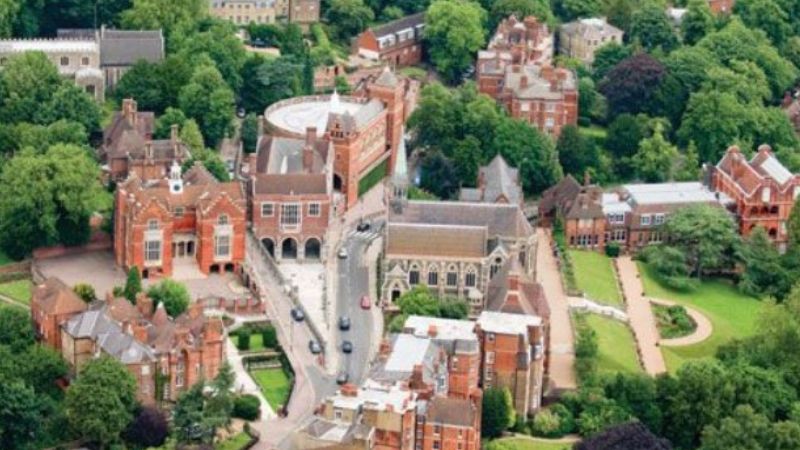
Set among historic red-brick buildings surrounded by green spaces, Harrow attracts students from across the world and continues to offer a rigorous education grounded in humanistic values and character development.
Winchester College
Founded in 1382, Winchester College is one of the oldest public schools in England. Established by William of Wykeham, its campus reflects centuries of architectural continuity and academic tradition.
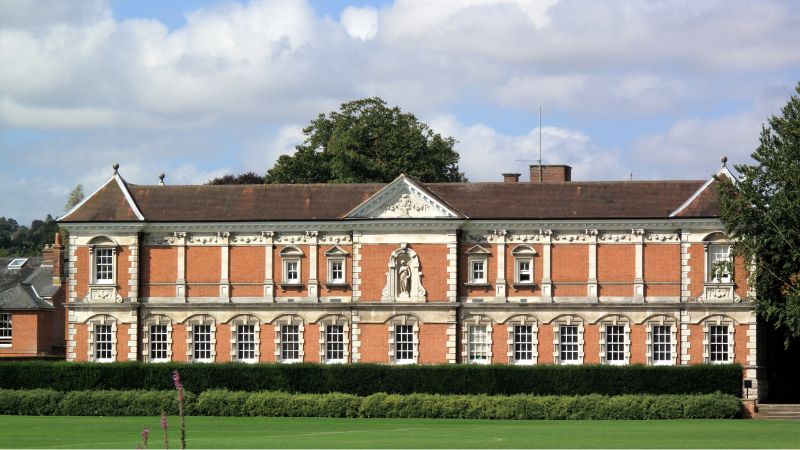
Winchester is particularly known for its focus on the liberal arts, encouraging students to develop skills in rhetoric, poetry, and critical thinking. Music also plays an important role, with highly regarded choirs performing in the school’s historic chapel.
Admission is extremely selective, and the school has educated Prime Ministers, military leaders, poets, and members of the Royal Family.
Westminster School
Founded in 1179 near Westminster Abbey, Westminster School boasts one of the richest histories of any public school in England. Its central London location has long placed it at the heart of political and cultural life.
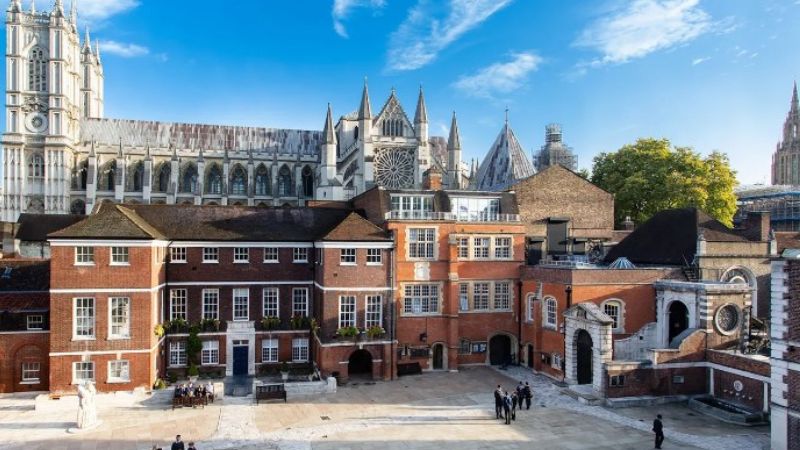
The school has educated numerous British Prime Ministers, along with leading figures in academia, the arts, and public service. Teaching is highly individualised, with a strong emphasis on classical studies, languages, and analytical thinking.
Alongside traditional subjects, Westminster offers a wide range of creative, artistic, and sporting activities, maintaining a balanced educational approach shaped by centuries of experience.
Rugby School
Founded in 1823, Rugby School is younger than many of its counterparts, yet it enjoys global recognition as the birthplace of modern rugby football. The sport was codified within its grounds and remains central to its identity.
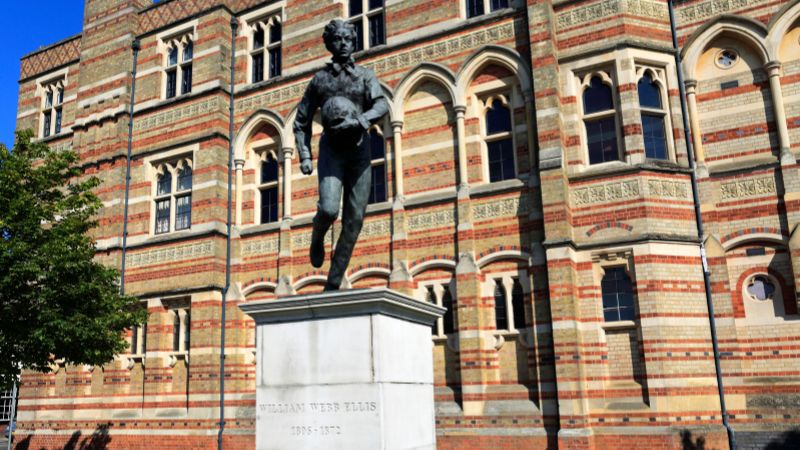
Set within the rolling countryside of Warwickshire, the school places strong emphasis on physical education and teamwork, alongside academic excellence. Values such as loyalty, discipline, and cooperation are reinforced through both sport and study.
Rugby’s former pupils include heads of state, entrepreneurs, Nobel laureates, and leading academics, reflecting the school’s long-standing influence beyond education.
Final thoughts on England’s public schools: experience British education first-hand
After exploring the history and values of England’s most prestigious public schools, it is easy to understand why they continue to capture interest around the world. Their traditions and cultural significance remain deeply influential.
If you would like to experience British education more closely, a study holiday in the United Kingdom offers that opportunity. By staying with English host families or in carefully selected colleges, you can experience everyday life, language, and learning within an authentic British context.
It is an educational experience that combines language development with cultural discovery, offering a meaningful insight into one of the world’s most established education systems.