
What can you learn besides English? Discover the personal goals to set before your study holiday that could transform your experience, help you overcome shyness and give you the confidence to take on the world!
As we said, a study trip is not just talking about improving your English. Though, we can imagine that’s probably already at the top of your list! We’re talking about all the other things you could achieve that might turn your study holiday into an experience you’ll remember for the rest of your life.
Think of your study holiday as an opportunity to discover a whole new side of yourself. You’re about to meet new people, experience a different culture and find out what you’re capable of when you step outside your usual surroundings.
But to make the most of it, it helps to know what you want to achieve.
Ready to discover which goals you should set yourself? Let’s get started!
Goal 1: Become more confident
This could be one of the most valuable things you take away from your study holiday! Self-confidence is a skill that will benefit you throughout your life, long after you’ve forgotten your irregular English verbs.
During your study holiday, you’ll have plenty of opportunities to step outside your comfort zone and discover just how capable you really are.
How to achieve it
-
Introduce yourself in English on the first day without reading from a piece of paper.
-
Ask a question in class, even if you’re worried about making a mistake.
-
Ask someone for directions while exploring your host city.
-
Order your own food in a local restaurant or café.
-
Get involved in the evening activities, even if you feel shy at first.
Every little achievement will help you feel more confident. Before long, you might find yourself doing things you wouldn’t have dreamed of attempting just a few weeks earlier.
Think of it like a video game. The more challenges you overcome, the more you level up!
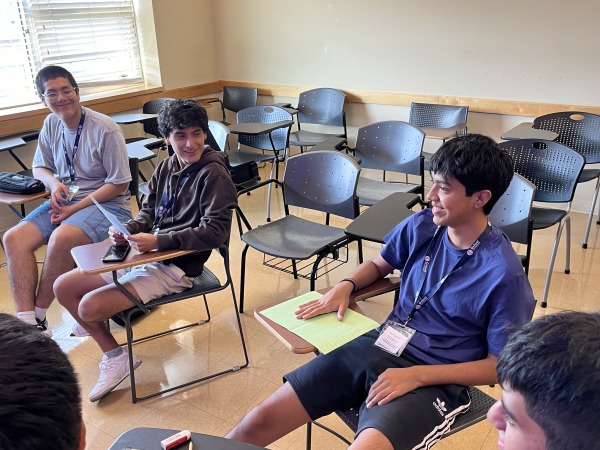
Goal 2: Become more independent
Your home, your parents, your bedroom and all your usual comforts will be a long way away for a few weeks. And you know what? That can be a really good thing!
This is your chance to prove, most importantly to yourself, that you’re capable of taking responsibility and doing things independently.
Skills to develop
-
Manage your own money and stick to a weekly budget.
-
Organise your time between lessons, activities and free time.
-
Look after your belongings without someone constantly reminding you.
-
Try to solve small everyday problems yourself before immediately calling home.
-
Follow schedules and rules without your parents having to remind you.
Independence is a bit like a muscle. The more you practise using it, the stronger it becomes.
When you return home, your family might be surprised by just how much you’ve grown!

Goal 3: Make genuine international friendships
Instagram and TikTok are full of people sharing their adventures with friends from all over the world. Well, now it’s your turn!
We’re talking about making genuine friendships with people from different countries, some of which could last long after your study holiday ends.
Your action plan
-
Don’t spend all your time with other Italian students. We know it’s tempting to stick with people you already know, but try to branch out!
-
Take a genuine interest in other cultures. Ask questions, listen to people’s stories and find out what life is like in their home countries.
-
Share something about yourself and Italian culture, too.
-
Exchange social media details and arrange video calls so you can keep in touch after your holiday.
-
Be yourself! You don’t need to pretend to be someone else to make friends.
A story from one of our former students: Sofia, aged 16, became friends with a Japanese girl and a Brazilian boy during her study holiday in Dublin.
Two years later, they’re still in regular contact and are even planning a trip to Japan together. That’s what we call making connections that last!
Goal 4: Learn as much as you can about the local culture
Every destination has its own personality, traditions and little quirks that make it special. Your mission? To become something of an expert on your host country’s culture.
Visiting famous landmarks is great, but getting to know a place means experiencing everyday life there, too.
How to experience life like a local
-
Try foods you’ve never heard of before, even the ones that look a little unusual!
-
Learn local expressions and slang that you wouldn’t normally find in your English textbooks.
-
Pay attention to how people interact. How do they greet each other? What are their everyday habits?
-
Attend local events, concerts or festivals if there are any taking place during your stay.
-
Explore interesting places that don’t always appear in the usual tourist itineraries.
Quick tip: Ask your international classmates to teach you a word or phrase in their own language. By the end of your study holiday, you might know how to say hello in ten different languages!

Goal 5: Discover new interests and hidden talents
A study holiday is the perfect opportunity to try something you’ve never done before.
Maybe you’ll discover a love of theatre or photography. Perhaps you’ll find that you’re surprisingly good at a sport you’ve never tried, or realise you have a talent you didn’t even know existed.
Opportunities to make the most of
-
Sign up for any additional workshops or practical sessions available.
-
Give the sports on offer a try, even if you’ve never played them before.
-
Take part in talent shows or themed evenings.
-
Join college clubs and organised activities where available.
-
Experiment with new hobbies during your free time.
Who knows? You might return home with a new hobby that becomes a lifelong passion!
Goal 6: Become more open-minded and understanding
The world is full of people with different backgrounds, religions, traditions and ways of looking at life.
During your study holiday, you could meet students whose everyday experiences are completely different from yours. It’s a fantastic opportunity to broaden your horizons and discover new perspectives.
How to become more open-minded
-
Listen without judging when someone tells you about their culture.
-
Ask respectful questions about traditions and customs that are unfamiliar to you.
-
Challenge your own assumptions and be willing to reconsider what you think you know.
-
Be curious about things that are different from what you’re used to.
-
Remember that different doesn’t mean wrong. It’s an opportunity to learn something new!
You might find that some of your most interesting conversations happen with people whose lives are completely different from your own.
How to prepare yourself mentally to achieve your goals
So, you’ve decided what you want to achieve. But how can you prepare yourself to make those goals a reality?
Here’s what you can do before you leave.
Step 1: Write your goals down
Grab a pen and paper, or open the notes app on your phone, and write down your three main goals.
Try to be specific! Instead of simply writing, “I want to be more confident”, try something like, “I want to be able to introduce myself to a group of people without feeling nervous.”
Having something clear to work towards will make it easier to recognise your progress.
Step 2: Imagine yourself succeeding
Close your eyes for a moment and picture yourself achieving those goals.
How would you feel? What would you be doing? How proud would you be of yourself?
Imagining yourself succeeding can be a great way to build motivation and remind yourself why you wanted to take this step in the first place.

Step 3: Get into the right mindset
Before you leave, remind yourself of two things:
“Every mistake is an opportunity to learn.”
“Stepping outside my comfort zone can help me grow.”
You might feel uncomfortable or nervous at first, and that’s perfectly normal. Remember that you don’t have to get everything right immediately.
Give yourself time to settle in, make mistakes and learn from them.
How to overcome fear and shyness
We know that travelling abroad can feel a little daunting, especially if it’s your first time away from home.
But remember, everyone is there to learn! Nobody expects you to speak perfect English, make friends instantly or feel completely confident from the moment you arrive.
If you’re shy, start with small steps. You don’t have to become the most outgoing person in the group on your first day.
Even something as simple as saying “good morning” with a smile is a great place to start.

And what if you start feeling homesick? That’s completely normal, too!
Rather than spending all your time thinking about what you’re missing at home, try to focus on the new experiences you’re having. Every day gives you another opportunity to learn something, meet someone new or become a little more independent.
Another story from one of our former students: Before his study holiday in Oxford, 15-year-old Marco was terrified of speaking English to strangers.
On his first day, he barely said a word. On the second, he managed to ask a question in class.
By the end of his first week, he was already organising a football match with his classmates!
His secret? Taking things one step at a time, without putting too much pressure on himself.
Your secret goals (the ones you don’t tell your parents about!)
We’ve covered all the serious goals, but between you and us, there are probably a few more entertaining things you’d like to achieve during your study holiday!
How about:
-
Learning how to flirt in English (with a bit of charm, of course!).
-
Becoming the group’s unofficial expert on international memes.
-
Finding the absolute best local street food.
-
Creating the ultimate playlist featuring music from around the world.
-
Becoming the person everyone relies on to take the best Instagram photos.
These goals might seem a little less important than improving your confidence or becoming more independent, but they’re part of the experience, too.
After all, having fun and making unforgettable memories is one of the best things about a study holiday!
Goals to set before your study holiday: what will you take home with you?
In a few weeks, when you’re boarding your flight home, we want you to be able to look back on your study holiday and think, “Mission accomplished!”
Hopefully, you won’t just speak better English. You’ll also feel more confident, more independent and a little more comfortable finding your place in the world.
Your parents might notice the difference as soon as you get home. Your friends might even ask what’s happened to you because you seem so much more confident!
And you’ll have plenty of stories to tell.
Maybe you’ll tell them about the first time you ordered fish and chips in a London pub, the Australian student you became friends with or the theatre workshop that helped you discover a new passion.
Remember: The goals you set before your study holiday can influence what you get out of the experience. So don’t be afraid to aim high, challenge yourself and make the most of every opportunity.
Your study holiday is waiting for you. Are you ready to see what you’re capable of?