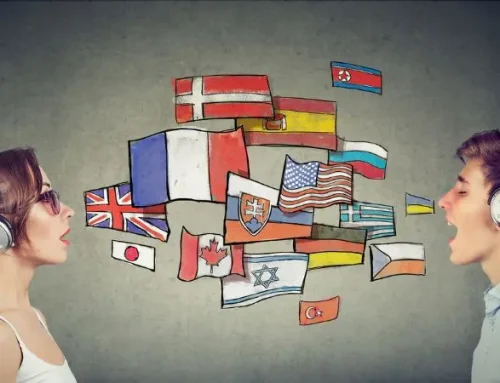

The world’s most spoken languages can be ranked in two different ways: by counting only native speakers, meaning people who learned the language from birth, or by including everyone who speaks the language as a second language.
Based on native speakers alone, Mandarin Chinese generally ranks first, followed by Spanish, English, and Hindi.
If all speakers are included, English becomes the most widely spoken language in the world, thanks to its role as the main international language for business, education, science and travel.
The exact rankings change over time as populations grow, migration patterns shift and researchers update the way languages and dialects are classified. Even so, they offer an interesting snapshot of how people communicate across the globe.
How do we decide which are the most spoken languages?
Have you ever wondered which languages are spoken by the most people around the world?
With more than 7,000 living languages, every language has its own history, culture and unique way of expressing ideas. Some, however, are spoken by far more people than others.
The rankings below are based on the number of native speakers, meaning people who learned the language as their first language from birth.
The 10 most widely spoken languages in the world
There are more than 7,000 living languages spoken around the world, each with its own history, traditions and identity. Some are spoken by small communities, while others are used by hundreds of millions of people every day.
Although it is impossible to produce perfectly accurate figures, linguists regularly estimate how many people speak each language. The rankings below are based on the number of native speakers, rather than the total number of people who speak each language.
Whether you’re choosing a language to learn or you’re simply curious about the world’s linguistic diversity, these figures provide a useful starting point:
1. Mandarin: around 930 million native speakers
Mandarin is the world’s most widely spoken first language.
It is the official language of China and Taiwan, as well as one of the official languages of Singapore. While China is home to many different Chinese languages and regional varieties, Mandarin is the standard language used in education, government and the media.
Its enormous number of speakers is largely due to China’s population, which exceeds 1.4 billion people.
Learning Mandarin can open the door to one of the world’s oldest civilisations and one of today’s largest economies. As China’s global influence continues to grow, Mandarin is becoming increasingly valuable for international business, education and cultural exchange.

2. Spanish: around 475 million native speakers
Spanish is the second most widely spoken native language in the world and the official language of 20 countries, with millions more speakers in the United States and elsewhere.
Originating in the Castile region of Spain, Spanish spread across Latin America during the colonial period and is now spoken across Europe, North America, Central America and South America.
Many learners find Spanish relatively accessible because its pronunciation closely matches its spelling. This makes it an attractive choice for speakers of other Romance languages, including Italian.
Whether you’re planning to travel, study abroad or expand your career opportunities, Spanish is one of the most useful languages you can learn.

3. English: around 380 million native speakers
Although English ranks third by native speakers, it is the world’s most widely used international language.
It serves as an official or recognised language in dozens of countries and is the main language of international business, aviation, diplomacy, higher education and much of the internet.
More people learn English as a second language than any other language in the world, giving it an estimated total of more than 1.5 billion speakers.
English belongs to the Germanic language family but has borrowed vocabulary from Latin, French, Norse and many other languages throughout its history. This rich mix of influences has created one of the largest vocabularies of any language.
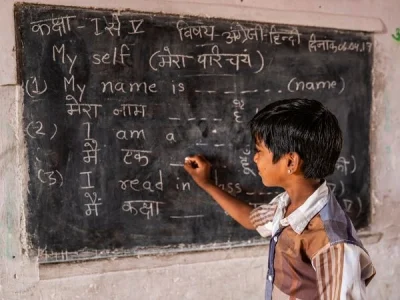
4. Hindi: around 345 million native speakers
Hindi is one of India’s official languages and is spoken by hundreds of millions of people across northern and central India.
It belongs to the Indo-Aryan branch of the Indo-European language family and shares many similarities with Urdu. While the spoken forms are often mutually understandable, they use different writing systems and have developed distinct literary traditions.
India’s growing economy and cultural influence have increased interest in learning Hindi around the world.
5. Bengali: around 235 million native speakers
Bengali, also known as Bangla, is the official language of Bangladesh and one of the most widely spoken languages in India.
It is the fifth most spoken native language in the world and has a long literary tradition that includes the work of Nobel Prize-winning poet Rabindranath Tagore.
Bengali is known for its expressive sound, rich poetry and strong cultural identity. Although it is spoken mainly in Bangladesh and eastern India, Bengali-speaking communities can also be found across the world.

6. Portuguese: around 230 million native speakers
Portuguese developed from Latin and is closely related to Spanish, although the two languages differ considerably in pronunciation and vocabulary.
It is the official language of nine countries, including Portugal, Brazil, Angola and Mozambique, making it one of the most geographically widespread languages in the world.
Most native Portuguese speakers live in Brazil, whose population accounts for the vast majority of the language’s speakers.
Learning Portuguese can be particularly valuable if you’re interested in South America, Lusophone Africa or international business.

7. Russian: around 150 million native speakers
Russian is the largest Slavic language and remains one of the most influential languages in Eastern Europe and Central Asia.
It is the official language of Russia, Belarus, Kazakhstan and Kyrgyzstan, while also being widely spoken in many neighbouring countries.
Russian has played an important role in literature, science, engineering and politics. Writers such as Tolstoy, Dostoevsky and Chekhov have made Russian literature famous throughout the world, while the language continues to be widely used in scientific and technical fields.
8. Japanese: around 125 million native speakers
Japanese is spoken almost entirely within Japan, yet its global influence extends far beyond the country’s borders.
Interest in learning Japanese has grown thanks to Japan’s contributions to technology, gaming, anime, manga, cinema and popular culture.
Japanese uses three writing systems together: hiragana, katakana and kanji. It is also well known for its many onomatopoeic expressions, which vividly describe sounds, movements and feelings.
Although it can seem challenging at first, many learners enjoy its logical grammar and unique writing system.

9. Cantonese: around 85 million native speakers
Cantonese is a major Chinese language spoken primarily in Hong Kong, Macau and China’s Guangdong province.
Although it shares many written characters with Mandarin, the two languages differ significantly in pronunciation, grammar and vocabulary. Speakers of one generally cannot understand the other without prior study.
Cantonese remains an important language for business, media and culture, particularly within overseas Chinese communities around the world.
10. Vietnamese: around 85 million native speakers
Vietnamese is the official language of Vietnam and is spoken by the vast majority of the country’s population.
Like Mandarin and Cantonese, Vietnamese is a tonal language, meaning the meaning of a word changes depending on the tone used when it is spoken.
The language has been influenced by Chinese through centuries of contact and later by French during the colonial period. Today it uses the Latin alphabet, making it more accessible to many international learners than some other Asian languages.

Why does the number of native speakers matter?
Knowing how many people speak a language as their first language gives us a better understanding of the communities that use it every day.
It can reveal patterns in population growth, migration and cultural identity, while also showing how languages develop and continue to thrive over time. This information is useful for governments, researchers and educators, but it can also help anyone deciding which language to learn.
A language with a large number of native speakers may offer more opportunities to travel, work or communicate internationally. At the same time, smaller languages remain equally valuable because they preserve unique traditions, histories and ways of seeing the world.
Looking at the number of native speakers also highlights the incredible linguistic diversity found across many countries. Switzerland, for example, has four national languages, while countries such as India are home to hundreds of languages and dialects spoken by different communities.
Study abroad with Astrolabio
Learning a language is about much more than memorising vocabulary or passing an exam. The biggest improvements often happen when you use the language every day in real situations.
A study holiday abroad gives you the chance to practise what you learn in the classroom while experiencing the local culture, meeting new people and building confidence through everyday conversations.
At Astrolabio, our study holidays combine high-quality language tuition with exciting cultural activities, helping you improve your language skills while enjoying an unforgettable experience overseas.