Cape Canaveral is the stage where science, courage, and imagination combine to send people and machines far beyond the boundaries of Earth!
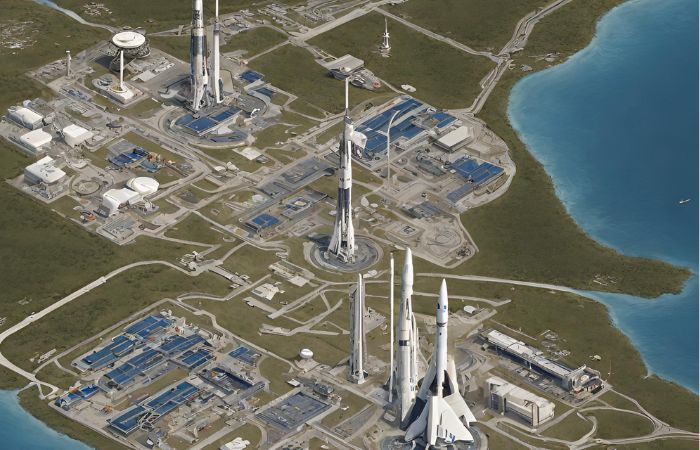
On Florida’s Atlantic coast, surrounded by flat scrubland and the slow waters of the Banana River, lies a place that changed human history. Cape Canaveral is a name almost everyone recognises, even if they’ve never seen its beaches or wetlands. For decades, it has been the place where rockets climb into the sky, carrying with them not just astronauts and satellites, but the dreams of entire generations.
From Cold War rivalry to Moon landings, from moments of triumph to days of grief, the Cape has always been where the future feels within reach. Today, as both NASA and private companies prepare for voyages beyond the Moon, its role is as vital as ever.
The birthplace of American spaceflight
Cape Canaveral became America’s spaceport almost by accident. After the Second World War, the U.S. Army needed somewhere to test long-range missiles. This narrow peninsula on Florida’s east coast offered the right geography: close to the equator, facing the open Atlantic, with plenty of uninhabited land.
What began as a missile range quickly turned into the home of Project Mercury, America’s first attempts to put humans into space. When Alan Shepard launched from here in 1961, his 15-minute suborbital flight was watched on television screens across the country. John Glenn’s orbital flight followed, and suddenly Cape Canaveral was part of every living room conversation.
The name itself became shorthand for America’s race to the Moon. If you wanted to see the future, you came here.
Apollo remembered in steel and silence
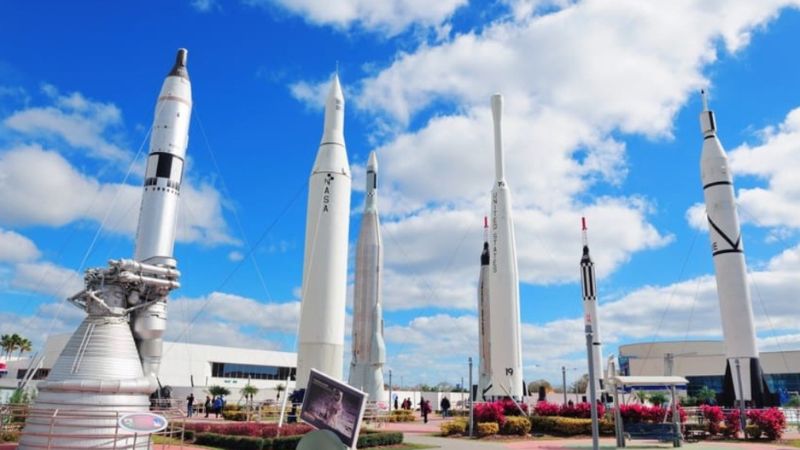
Today, visitors to the Kennedy Space Center Visitor Complex can step inside the Apollo/Saturn V Center, and it is hard not to feel small. The Saturn V rocket — the largest ever built — hangs horizontally above your head, stretching longer than a football field. Engines the size of cars stare down at you, a reminder of the power needed to lift astronauts beyond Earth.
The exhibition is carefully staged. You walk past mission patches and grainy news clips, then enter a recreated firing room where the countdown to Apollo 8 plays across giant screens. The sound builds, the seats tremble, and for a moment you are there in December 1968, when humans left Earth’s orbit for the first time.
The shuttle era brought to life
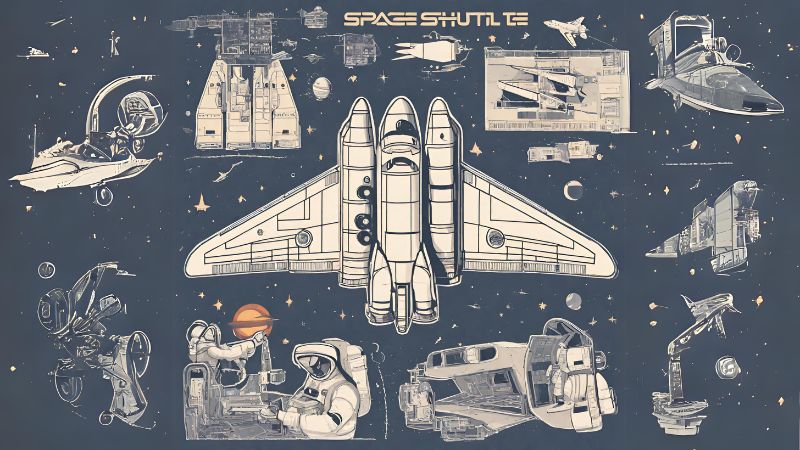
If Apollo feels like ancient history, the Space Shuttle brings you closer to the present. At the Atlantis exhibit, the orbiter hangs as though in mid-flight, payload bay doors open, robotic arm extended. It is scarred, worn and clearly used, which makes it all the more impressive.
Standing beneath it, you see what textbooks can’t capture: the thousands of heat-resistant tiles, each hand-fitted, each telling its own story of re-entry. Multimedia displays recreate the roar of launch and the thrill of landing, but the orbiter itself steals the show.
The exhibit also remembers the darker chapters. Memorials to Challenger and Columbia honour the crews lost in 1986 and 2003. Many visitors linger here, reading names and photographs in silence, reminded that spaceflight has always carried risks.
What it feels like to see a launch
Even the best exhibitions cannot match the experience of a live launch. At Cape Canaveral, that possibility is part of the allure. On launch days, visitors gather along the Banana River or at viewing platforms inside the Kennedy Space Center. Some arrive hours in advance, carrying folding chairs and binoculars.
When the countdown reaches zero, there is always a pause where you wonder if anything will happen. Then the rocket rises, almost in slow motion at first, engines blazing brighter than the Florida sun. A second later, the sound reaches you, a crackling roar that shakes the ground and rattles your chest.
Even seasoned spectators admit that the experience never loses its power. Children cover their ears, parents cheer, strangers hug. For a few minutes, everyone is united in watching a machine break free from gravity!
Meeting the people behind the missions
One of the most popular parts of the visitor experience is the Astronaut Encounter. Here, retired astronauts speak about their missions, take questions, and pose for photos. It is not a polished lecture but a chance to hear the human side of space travel, like about the nerves before launch, the strange taste of space food, the view of Earth through a small round window.
These sessions remind you that Cape Canaveral has always been about people as much as machines.
From Neil Armstrong and Buzz Aldrin to Sally Ride and John Glenn, astronauts launched here became household names. Behind them were thousands of engineers, technicians, and support staff whose work made each mission possible. Meeting even one astronaut in person helps bridge the gap between history and the present.
Heroes of space: the personalities who made Cape Canaveral great
Cape Canaveral would not be what it is without the extraordinary figures who contributed to its success over the years. The heroes of space — the astronauts and scientists who worked at the Cape — left an indelible mark on the history of exploration.
These individuals, and many others alongside them, achieved remarkable technical feats, but they also inspired the world with their stories of resilience, courage, and curiosity. They showed that space exploration is not only about science and technology, but also about human ambition and the determination to push beyond limits.
Neil Armstrong
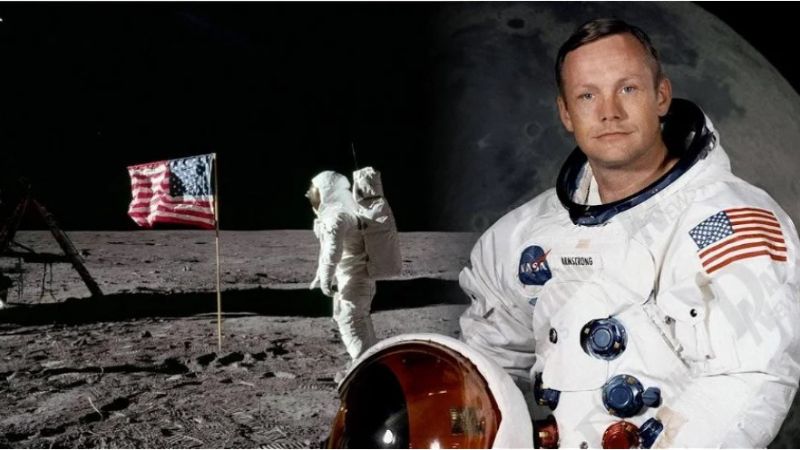
One of the most iconic figures linked to Cape Canaveral is Neil Armstrong, the first man to set foot on the Moon. The launch of Apollo 11 from the Cape on July 16, 1969, was a historic moment not only for the United States, but for humanity as a whole.
Armstrong’s words, “That’s one small step for man, one giant leap for mankind,” spoken as he walked across the lunar surface, became the defining symbol of an era of unprecedented discovery.
Katherine Johnson
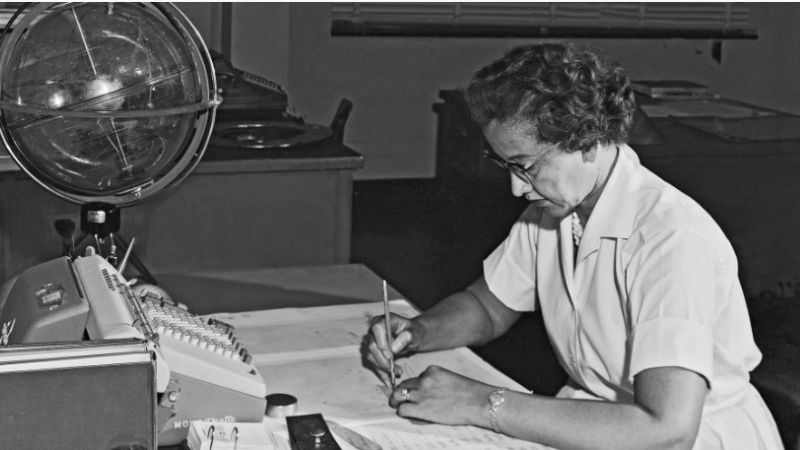
Equally important is Katherine Johnson, a mathematician and physicist whose mastery of orbital calculations played a crucial role in the Mercury missions and in Apollo 11.
Although she initially faced both racial and gender discrimination, her work ensured that astronauts could travel into space and return safely to Earth. Her story proved that intelligence and dedication know no boundaries.
John Glenn
Another hero of Cape Canaveral was John Glenn, the first American to orbit the Earth in 1962 aboard the Mercury-Atlas 6 mission. His flight marked a key milestone in the space race, showing that the United States was capable of matching the Soviet Union’s achievements.
Cape Canaveral today
Today, Cape Canaveral is busier than it has been in decades. SpaceX launches Falcon 9 rockets so frequently that locals check schedules the way others check weather forecasts. Visitors can often plan trips around upcoming launches, adding an unforgettable spectacle to their holiday.
NASA is preparing for the Artemis missions, which aim to return astronauts to the Moon. That means new rockets, new capsules, and new reasons for tourists to watch history unfold. The same pads that sent Apollo astronauts to the Moon and shuttles into orbit are once again active, modernised for a new generation.
Walking around the visitor complex, you see this mixture of past and future everywhere. A Saturn V from the 1960s sits a short walk from mock-ups of spacecraft designed to travel to Mars. Exhibits dedicated to pioneers like Katherine Johnson and Mae Jemison sit alongside displays about the commercial companies now shaping the future of exploration.
Cape Canaveral and the infinite horizon of space exploration
Cape Canaveral’s importance as a launch site and a hub of technological innovation continues to be central to humanity’s ambitions in space.
The future of exploration promises even greater wonders, and Cape Canaveral will be at the heart of them. With the development of new technologies, including long-duration human spaceflight, we are edging towards an era when travelling through space could become a reality for more and more people.