If you have ever asked yourself, why is LA called the City of Angels?, then you might be interested to know that the meaning behind its name is often misunderstood!
At first, it sounds almost poetic. A city of film stars, beaches, dreams and reinvention, named after angels. But the real story is more historical than symbolic.
Los Angeles was officially founded in 1781, when a group of settlers established a small Spanish pueblo in what is now Southern California.
The original name of the settlement was El Pueblo de Nuestra Señora la Reina de los Ángeles de Porciúncula, which translates as “The Town of Our Lady the Queen of the Angels of Porciúncula”. The word pueblo is roughly equivalent to the English word “town”. It refers to a modest settlement, larger than a village, but smaller than a fully developed city.
Over time, the long Spanish name was shortened to Los Angeles, meaning “the angels”. As the pueblo grew into a city, that meaning stayed with it, giving Los Angeles the nickname it still carries today: the City of Angels.
But how did the city get this name in the first place? To understand that, it helps to look at the history of Los Angeles, from its Indigenous roots to its Spanish, Mexican and American past.
Discover our beautiful LA program for summer 2026
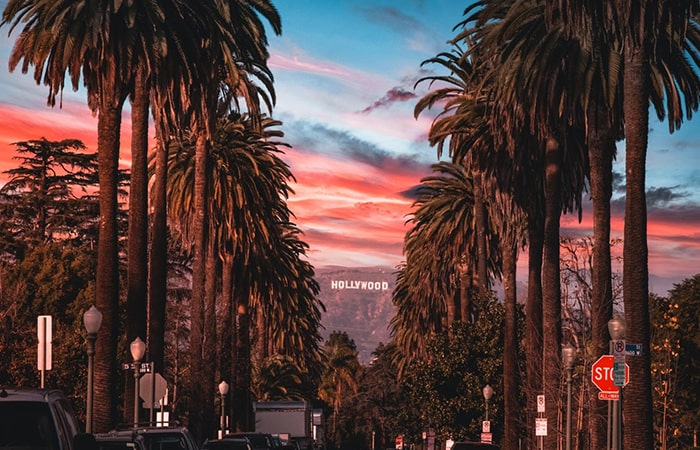
The history of the city of Los Angeles
Before the arrival of Europeans, the area now known as Los Angeles was home to Indigenous communities, especially the Tongva people. The wider Southern California region was also home to other Native American groups, including the Chumash, Cahuilla and Kumeyaay.
These communities had their own languages, customs, trade routes and ways of life long before European colonisation. The first Europeans passed through the wider region in the sixteenth century, when Spanish expeditions began claiming parts of what is now Southern California for the Spanish Empire.
However, Los Angeles itself was not officially settled until more than 200 years later. In 1781, the Spanish governor of California, Felipe de Neve, sent a group of settlers known as Los Pobladores to establish a new agricultural community.
The settlers came from the Mexican provinces of Sonora and Sinaloa, and were of Native American, African and European heritage. On the governor’s orders, they founded the pueblo that would later become Los Angeles.
The settlement took its name from the nearby river, which Spanish explorers had already named El Río de Nuestra Señora la Reina de los Ángeles de Porciúncula.
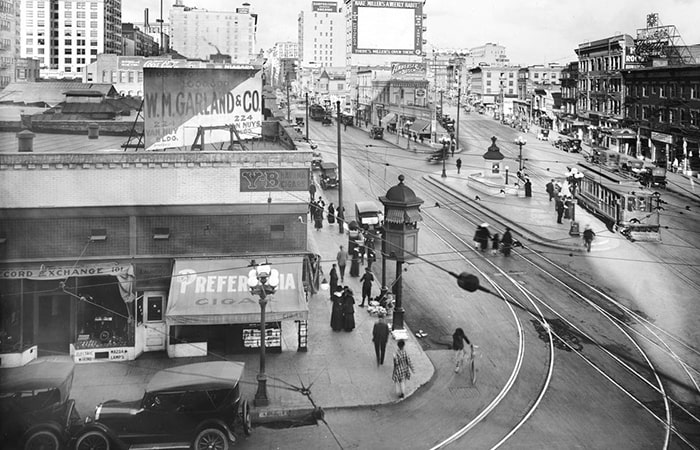
Both the city and the river were named in honour of Our Lady of the Angels, a title associated with the Virgin Mary. The name also refers to the Porziuncola, a small chapel near Assisi in Italy, linked to Saint Francis of Assisi and dedicated to Saint Mary of the Angels.
At the time, it was common for Spanish settlers to name new towns, rivers and missions after religious figures, saints or sacred places.
The settlement became an agricultural and cattle-ranching centre. One of the oldest surviving houses in Los Angeles County is the Casa de Rancho San Antonio, also known as the Gage Mansion, in Bell Gardens.
Over time, the pueblo grew. Los Angeles became part of Mexico after Mexican independence from Spain, then later became part of the United States after the Mexican-American War.
In 1850, Los Angeles was incorporated as an American city. From then on, the shortened name Los Angeles became firmly established, and the city became widely known as the City of Angels.
The people of Los Angeles today
Although the name Los Angeles comes from its Spanish and religious origins, the city’s identity today is shaped by the people who live there.
Los Angeles is a place associated with bold dreams, creative expression and possibility. It is also one of the most culturally diverse cities in the world.
People from more than 140 countries live in Los Angeles, and hundreds of languages are spoken across the city. This has helped turn LA into a huge cosmopolitan centre, where each neighbourhood has its own character, history and cultural influence.
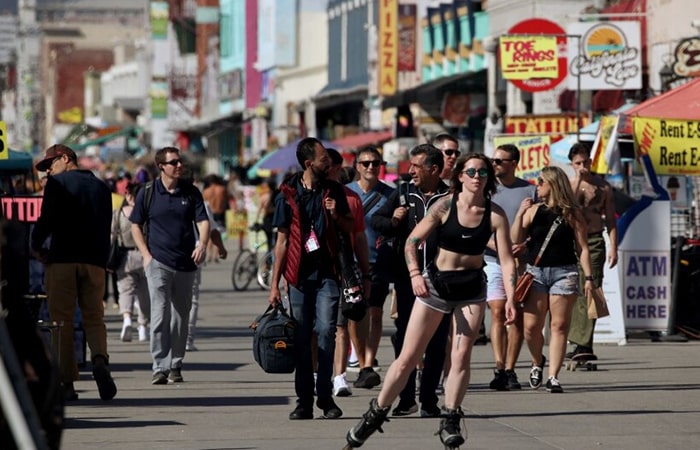
There is always something new to discover in the City of Angels, whether you are visiting for the first time or have lived there for years. From world-class museums and major sports teams to beaches, restaurants, film studios and music venues, Los Angeles reflects the many communities that call it home.
The City of Los Angeles itself has around 3.9 million residents, while Los Angeles County has around 10 million. The wider five-county Los Angeles area, which includes Los Angeles, Riverside, Ventura, Orange and San Bernardino counties, has around 18.6 million residents.
The origins of Angelenos
Los Angeles County was the first county in the United States to reach 10 million residents.
If the five-county Los Angeles area were a state, it would be one of the most populous in the country, surpassed only by California, Texas, New York and Florida. Los Angeles County alone would rank among the most populous states in America.
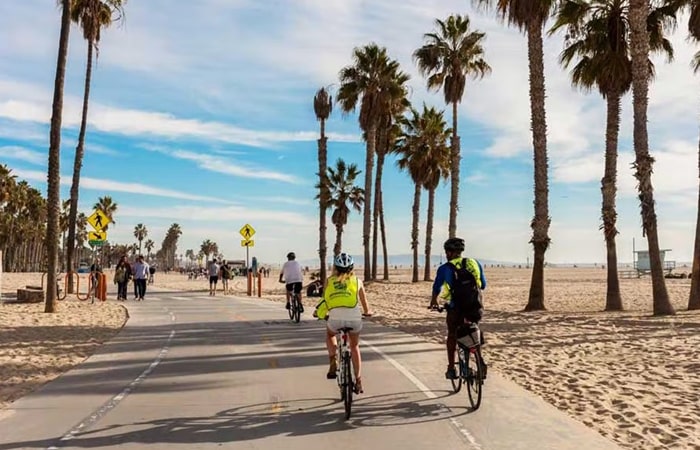
The diverse and multicultural population of Los Angeles is one of the reasons the city is often seen as a cultural centre of the Pacific Rim.
According to the 2020 American Community Survey from the US Census Bureau, the population of Los Angeles is made up of:
- Hispanic or Latino, of any race: 48.1%
- White, non-Hispanic: 28.5%
- Asian or Pacific Islander: 12%
- African American: 8.8%
- American Indian or other groups: 2.6%
This mix of backgrounds, languages and traditions is now one of the defining features of modern Los Angeles.
The city may have been named for “the angels”, but today its character comes from the millions of people who have shaped it over time.
The economy of Los Angeles, past and present
Before European colonisation, Indigenous communities in California lived through fishing, farming, hunting, trade and skilled craftwork.
In the second half of the eighteenth century, Spanish settlers developed agriculture, ranching and craft industries.
A century later, California became a focus of interest for several colonial and commercial powers, partly because of the fur trade and the search for natural resources.
After Mexico gained independence from Spain, large areas of land were divided into ranchos, where cattle ranching became one of the main economic activities.
When California became part of the United States in 1848, the discovery of gold changed the region dramatically. The California Gold Rush brought large numbers of American and European migrants into the area, leading to rapid population growth.
San Francisco became the main centre of the Gold Rush period, but Los Angeles also began to grow. Roads, schools, churches and businesses were built, and the region slowly changed from a small settlement into a major urban centre.
Today, Los Angeles is one of the world’s leading centres for the entertainment industry, with some of the most famous film and television studios on the planet. The city is also important for tourism, international trade, digital media, technology, fashion and the arts. This means the local economy is much broader than Hollywood alone.
Aerospace has also played a major role in Los Angeles’ economic and scientific development. The wider region is home to organisations and companies connected with space, engineering and advanced technology, including NASA’s Jet Propulsion Laboratory, SpaceX, Boeing and other major aerospace employers.
Los Angeles is also a major manufacturing and trade centre. The neighbouring Ports of Los Angeles and Long Beach form the San Pedro Bay port complex, one of the most important port complexes in the world. Together, they handle a major share of containerised international trade entering and leaving the United States.
So, why is LA called the City of Angels?
Los Angeles is called the City of Angels because its name comes from the Spanish Los Ángeles, meaning “the angels”.
That name is a shortened version of the city’s original title, El Pueblo de Nuestra Señora la Reina de los Ángeles de Porciúncula, or “The Town of Our Lady the Queen of the Angels of Porciúncula”.
Although Los Angeles is now known around the world for film, creativity, beaches, business and cultural diversity, its nickname comes from its earliest Spanish name.
The City of Angels began as a small pueblo. Over time, it grew into one of the most famous cities in the world, but its name still carries the story of where it began.
Experience Los Angeles on a summer study holiday
Reading about Los Angeles is one thing. Spending a summer there, learning English in the city itself, is something quite different.
Los Angeles is one of the destinations L’Astrolabio offers for summer study holidays with an accompanying group leader. Students travel together as a group, with an Italian coordinator available throughout the stay, and follow a structured programme that combines English language classes with guided excursions and free-time activities across the city.
A study holiday in Los Angeles means learning English in one of the most multicultural cities in the world, where more than 140 nationalities live side by side and hundreds of languages are spoken every day. It is exactly the kind of environment where language learning feels real, because every conversation, every street, every neighbourhood adds something to it.
Students on the programme are based at California State University Channel Islands, which offers a safe and well-organised campus setting while still giving them access to the wider city.
If you are considering Los Angeles as a destination for your child’s summer study holiday, you can find all the details — programme structure, accommodation, English course, excursions and costs — on our dedicated page.
Discover the Los Angeles study holiday programme →
[Fonte: LAEDC]