Wondering how to spend your free time on a study holiday in New York City? Here are 9 ways to explore the Big Apple as a student on a budget!
New York City, also known as the Big Apple, can feel overwhelming at first.
The skyscrapers, the constant traffic, the noise, and the sheer number of things to do can make it hard to know where to begin. For students, New York City is exciting but also expensive. The good news is that there are plenty of ways to explore without spending money.
These nine activities are free, easy to fit into your free hours on your study holiday in New York, and give a genuine taste of life in the city.
Contents
What to do for free in New York City
Central Park
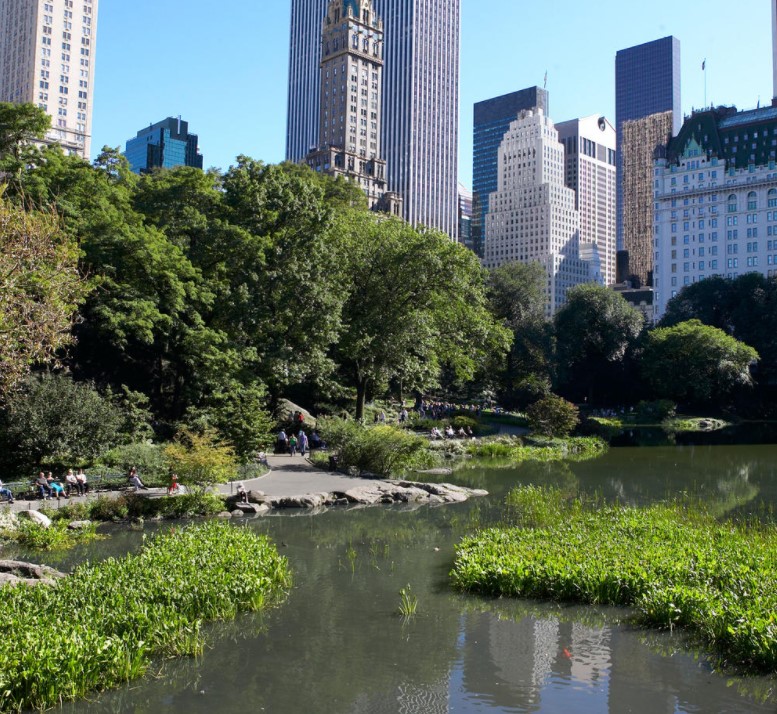
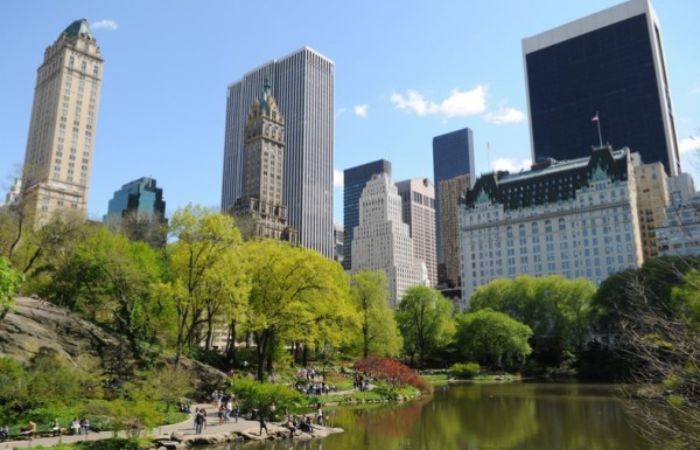
Central Park has been part of Manhattan since the 1860s and covers 340 hectares right in the middle of the city. It was designed to give New Yorkers space away from crowded streets, and today it’s one of the most visited parks in the world.
Inside you’ll find large meadows for picnics, lakes with bridges and rowboats, wooded areas, sports fields, and even statues of writers like Shakespeare and Hans Christian Andersen.
Students often enjoy recognising landmarks they’ve seen in films and TV shows, from the fountain at Bethesda Terrace to the skating rink in winter.
In summer, there are free concerts, theatre performances, and plenty of buskers. Central Park is also dotted with street artists, roller skaters, and food vendors, so there’s always something happening. For group leaders, it’s an easy way to keep students together while still giving them freedom to explore safely.
High Line
The High Line is a park built on an old elevated railway line, stretching 2.3 kilometres from Hudson Yards to Chelsea. Opened in stages from 2009, it’s now one of the city’s best-known public spaces.
Walking along the High Line gives you an unusual view of Manhattan. Instead of skyscrapers towering above, you’re raised above the traffic, with gardens planted along the route. There are seating areas, sculptures, murals, and spots where you can look directly down onto the streets.
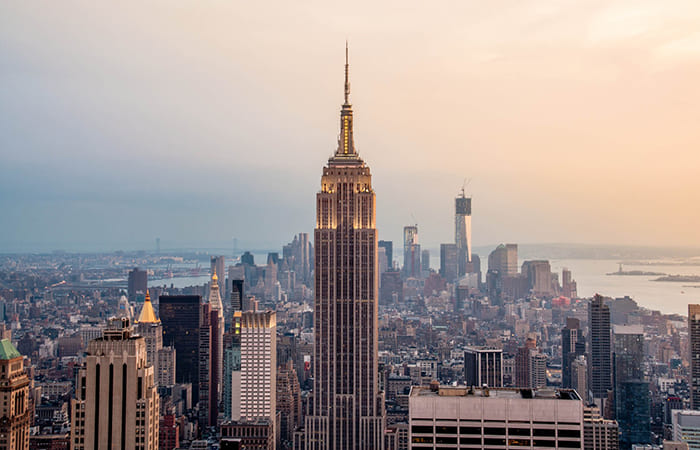
Students will enjoy spotting famous buildings such as the Empire State Building or Hudson Yards’ Vessel as they walk. Because it passes through Chelsea, the High Line also gives a glimpse of the city’s art galleries, warehouses, and apartment buildings, showing a side of New York you don’t get in Times Square.
Outdoor Cinema
When the weather warms up, New Yorkers bring cinema outdoors. Throughout the summer, free film screenings are organised in parks and open spaces across the city.
Brooklyn Bridge Park is one of the most popular locations, with the river and skyline as a backdrop. At Coney Island, screenings have a fairground atmosphere, with rides and food stalls nearby. Pier 63 on the Hudson River attracts locals who spread out on the grass with blankets and snacks.
These events are a great way for students to experience English in a relaxed setting. The films are usually shown in their original language, and the mix of locals and visitors makes for a lively atmosphere. It’s also a safe, structured evening activity for groups.
Visit Grand Central Station
Grand Central Terminal, opened in 1913, is not just a transport hub but one of New York’s most recognisable landmarks.
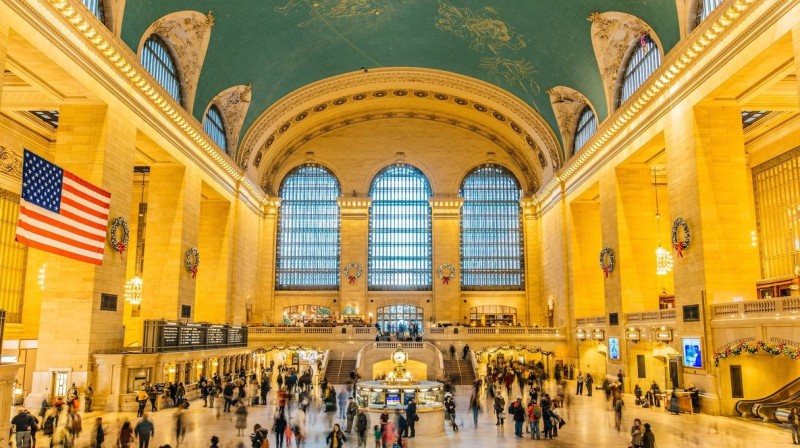
The main concourse is huge, with marble floors, high arched windows, and a ceiling painted with constellations. The famous four-faced clock above the information booth is a favourite meeting point. Students often enjoy trying the Whispering Gallery, where sound carries clearly from one corner of the tiled arch to another.
Visiting doesn’t cost anything, and it gives students a sense of New York’s history and architecture. For those interested in photography, the station is one of the most photogenic spots in the city.
Walk across the Brooklyn Bridge
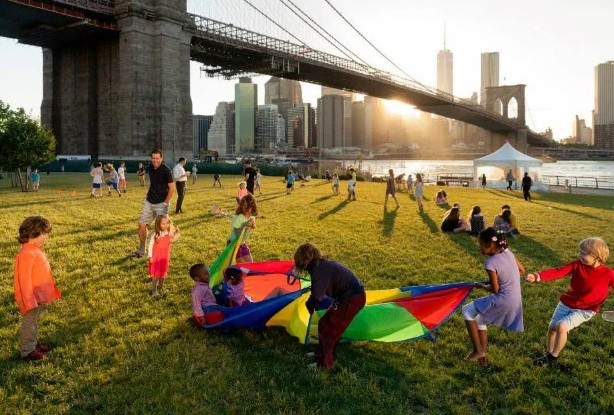
The Brooklyn Bridge has connected Manhattan and Brooklyn since 1883 and is one of the most famous bridges in the world. It has a pedestrian walkway above the traffic, making it perfect for a slow walk with views on both sides.
The crossing takes about 30 minutes, and along the way you’ll see Manhattan’s skyline, the Statue of Liberty in the distance, and the East River below. It’s especially popular at sunrise or sunset when the light makes for great photos.
Here’s Astrolabio’s top tip: for incredible views of the Manhattan Skyline, first travel to Brooklyn via the subway and then walk across the bridge back towards Manhattan at dusk.
Take the Staten Island Ferry
The Staten Island Ferry has been running since 1905 and carries millions of passengers every year across New York Harbor. The ride is completely free and runs 24 hours a day.
From the deck, you’ll get some of the best views of the Statue of Liberty and Ellis Island, where millions of immigrants arrived in America. The trip takes around 25 minutes each way, and ferries leave every half hour.
It’s one of the simplest and most cost-effective ways to give students a close look at New York’s harbour and landmarks without booking an organised tour.
Reflect at the 9/11 Memorial

The 9/11 Memorial at the World Trade Center site is a place of remembrance for the nearly 3,000 people who died in the terrorist attacks of 2001.
The footprints of the Twin Towers have been turned into two large pools, with water flowing continuously into the centre. Around the edges are the names of those who lost their lives. The memorial is always free to visit.
The museum next to the memorial has exhibits on the attacks and their impact. Entry is free on Monday evenings (at the time of writing), making it possible for students to learn more about this important part of recent history.
Spend time at the beach
New York has over 20 kilometres of public beaches, all free to access. They are busiest in summer, when lifeguards are on duty every day.
Coney Island is the best known, with its amusement park and boardwalk. Rockaway Beach is popular with surfers, and Brighton Beach is known for its Russian community and food. While these are within the city, many people also take day trips further out to Long Island’s beaches.
A visit to the beach gives students a different side of New York. It’s an easy, low-cost way to spend time outdoors, relax, or play games as a group.
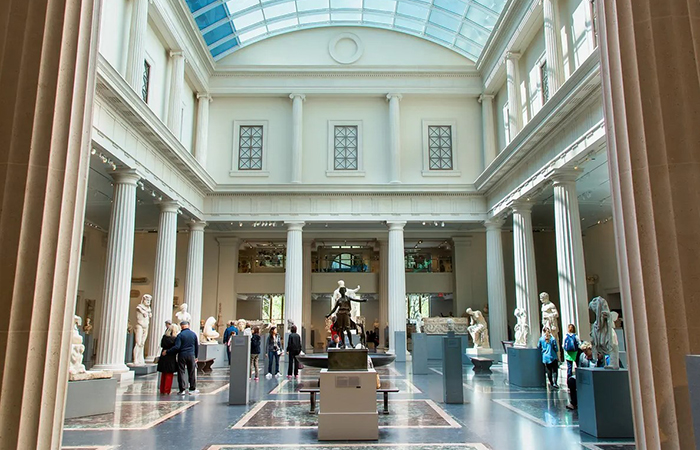
Visit museums during free opening hours
Most of New York’s major museums have free entry at certain times, or operate on a pay-what-you-wish basis.
The American Museum of Natural History has exhibits on everything from dinosaurs to space. The famous blue whale model is a highlight, and the museum is free during the last hour of the day. At other times, visitors can choose how much to pay.
The Museum of Modern Art (MoMA) is another highlight. Its collection includes works by Van Gogh, Picasso, Matisse, and Warhol which you can view for a fee of $17 for students, but the sculpture garden is open free of charge in the early hours of the morning.
These free slots make it possible for students to see world-class collections without stretching their budgets.
Make the most of your time on your study holiday in New York
You don’t need to spend much to get the best out of your study holiday in New York. Walking through Central Park, catching a ferry, or watching a film outdoors are all memorable ways to spend time between lessons.
For students, these activities are more than just sightseeing. They give a chance to use English in real situations, see how the city works, and build memories with their group.
At Astrolabio, we believe learning doesn’t stop in the classroom. In New York, every free hour can be a chance to experience something new.