
When rebellion met fashion: the history of punk in England and its lasting influence
 Punk in England emerged in the mid-1970s as a reaction to economic decline, rising unemployment and growing distrust in political leadership. Britain was experiencing inflation, industrial collapse and visible social division, particularly affecting working-class communities.
Punk, therefore, became a cultural expression of economic frustration rather than a decorative fashion movement.
For many young people, especially in urban areas, traditional promises of social mobility felt hollow.
Grammar schools, stable employment and predictable career paths were no longer guaranteed. This sense of exclusion fuelled a generation that rejected both political authority and cultural conformity.
Punk articulated that rejection in public, visible and deliberately uncomfortable ways.
Britain in crisis: the social conditions behind punk
Between 1973 and 1979, Britain faced severe economic instability.
The oil crisis, labour strikes and the so-called “Winter of Discontent” created a climate of uncertainty and anger. Youth unemployment rose sharply, and inner-city environments deteriorated in ways that were both economic and symbolic.
The movement drew heavily from working-class youth culture. It rejected middle-class respectability and the idea that success meant assimilation into existing hierarchies. In this context, punk represented class consciousness through style. Clothing and music became tools for expressing structural inequality.
The punk movement: roots and rebellion
The heart of the punk movement was London, particularly areas such as King’s Road and Camden Town. These neighbourhoods became meeting points for young rebels searching for community and identity.
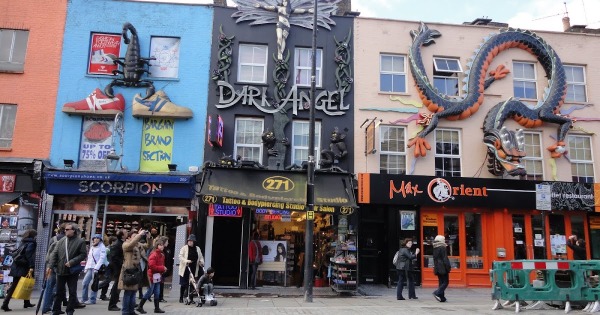
Here, they gathered in venues such as the legendary SEX shop on King’s Road, run by Vivienne Westwood and Malcolm McLaren, and clubs such as the Roxy. These spaces allowed emerging punk bands to perform and gave young people a place to showcase their bold new style.
It was within these locations that a community of outsiders formed, united by the desire to break rules and challenge the social order. Punk was about a collective identity.
Punk music: the sound of rebellion
One of the key elements that defined punk in Britain was its music.
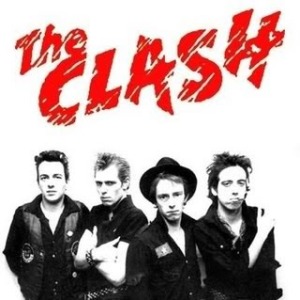
Bands such as the Sex Pistols, the Clash, the Buzzcocks and The Damned brought an aggressive and provocative energy to their songs. Their music acted as a cry of rebellion against the establishment.
Punk rock was characterised by its raw and direct sound. Guitars delivered sharp, distorted riffs, rhythms were fast and urgent, and lyrics reflected the discomfort and anger of a generation.
Punk concerts became explosive experiences, turning venues into spaces of controlled chaos. The audience did not simply watch; they participated. Pogo dancing, slam dancing and stage diving became physical expressions of collective release.
The punk scene quickly became a refuge for outsiders, for those who felt marginalised by mainstream society. It offered escape from boredom and conformity and created a space where authenticity was valued. In practical terms, punk music united rebellious minds and fuelled a cultural revolution that spread globally.
British punk music left a permanent mark on music history and youth culture. It became the sound of defiance, an anthem for those unwilling to accept imposed conventions. Even today, its rebellious spirit continues to resonate.
Punk style: from the street to the catwalk
Punk fashion in Britain represented a radical shift in the concept of clothing. Punk youth rejected trends dictated by traditional fashion industries.
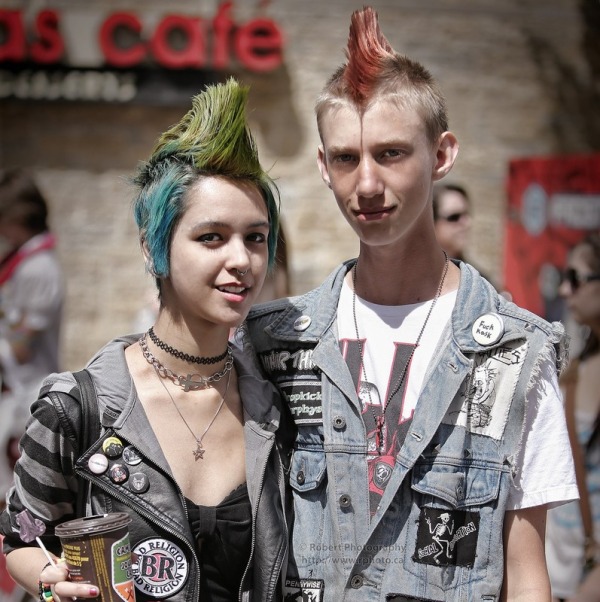
Instead of purchasing ready-made outfits from mainstream shops, they created their own individual styles. Tearing, destroying and reshaping second-hand clothing from charity shops became a creative act.
Clothing, therefore, became a vehicle for social commentary. Wearing ripped fabric or provocative slogans was a way of declaring dissatisfaction with the system, and punk fashion grew to demonstrate that style could function as social and cultural expression. It showed that clothing did not need to follow established rules to carry meaning.
Today, the legacy of punk fashion can be seen both on the street and on the runway, where the courage to stand out continues to influence designers and brands.
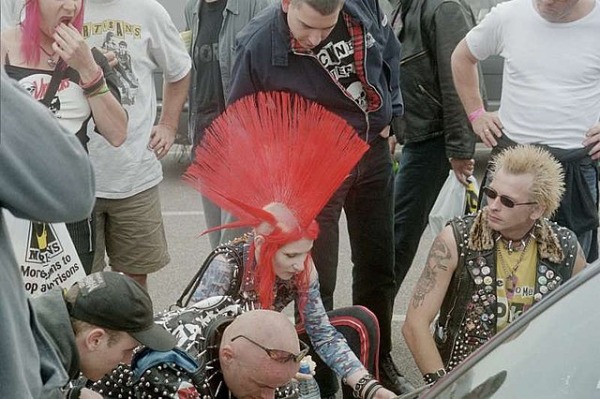
Key elements of punk fashion
Garments were designed to attract attention, because torn fabrics and distorted prints were meant to shock. In the 1970s, these details were genuinely scandalous. They disrupted conventional standards of taste and appearance:
- Trousers were often deliberately ripped to reveal fishnet tights or bare skin, breaking aesthetic norms.
- Heavy Doc Martens boots, originally associated with manual labour, became essential to the punk look.
- Safety pins, studs and chains were distinctive features of punk clothing as they symbolised rebellion and nonconformity.
- Hair was equally important. Punks adopted bold cuts such as brightly coloured mohawks, partially shaved heads or vibrant shades of pink, blue and green.

What makes punk fashion especially interesting is that many of its once-radical elements have become mainstream.
Distressed fabrics and graphic prints are now common design features.
Even you can probably recognise how ripped jeans and bold statement pieces have become accepted symbols of individuality.
Unusual accessories also became iconic. Padlock necklaces and heavy chains expressed resistance to convention.
Razor blades, once used as symbols of danger within the subculture, were later reinterpreted in fashion in safer forms and eventually even appeared as luxury pendants.
Piercings and tattoos as signs of rebellion
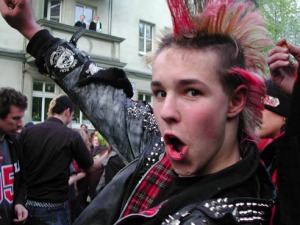
Piercings soon became another defining feature of punk fashion, with studs and pins began appearing on eyebrows, cheeks, noses and lips.
The placement of piercings and tattoos was deliberately provocative, intended to challenge conservative expectations.
Punk fashion was also largely unisex, and men began wearing facial jewellery as well.
What we now consider normal was once deeply controversial, and practices that were viewed as anti-fashion and anti-establishment are now so common that they barely raise an eyebrow.
Explore punk fashion to understand British culture
During your study holiday in England, you can experience British culture in all its dimensions. Exploring punk fashion and the locations linked to British rock gives you insight into the country’s cultural history.
When you walk through areas like King’s Road or Camden, you are moving through spaces where cultural change once felt urgent and disruptive. The British music scene is an archive of sounds that shaped national identity, and you can choose to be part of that story.