

Discovering the world and expanding your cultural horizons means coming into contact with international language schools and students from all over the globe. This is what group study holidays are all about!
The group study holiday format is especially popular with young people of all ages, as it allows them to learn or improve a foreign language through engaging, enjoyable experiences that feel far removed from traditional classroom study.
By its very nature, this type of experience is highly engaging. It offers full language immersion, giving students the opportunity to live in another country and learn the local language in an authentic, everyday context.
In most cases, the language studied is English. That said, well established study holiday providers also offer programmes focused on German, French, Spanish, and other European languages.

Whatever the destination, the shared goal of agencies like ours is to offer students memorable and meaningful travel experiences that support both linguistic and personal growth.
For this reason, excursions and activities can vary significantly depending on the specific programme chosen, the age of the students, and the location.
What remains consistent is the way the group trip is organised. Alongside language development and independence, this structure ensures that students travel in a safe and well supervised environment.
Every group study holiday includes a group leader, a key figure who supports students throughout their stay abroad and acts as a constant point of reference.
By choosing experienced and reputable organisations, both parents and students can rely on agencies that work exclusively with accredited language centres and trusted local partners.
Contents
Group and group leader: how a group study holiday is organised
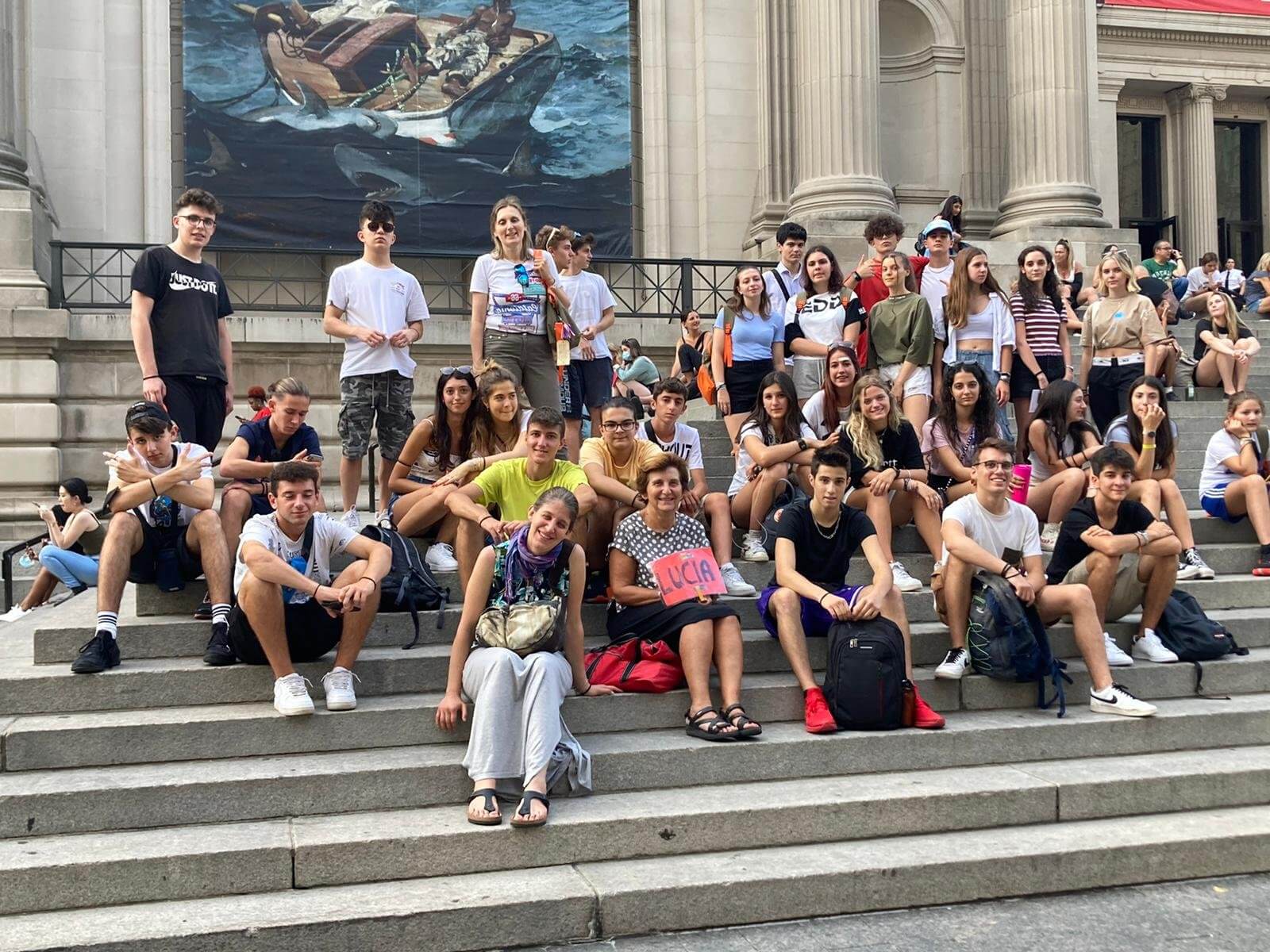
Study holidays designed by specialist agencies always include a group leader. This is usually a teacher who accompanies the students from departure in Italy and remains with them for the entire duration of the stay, until their return home.
The relationship between the group leader and the students continues throughout the whole experience, offering continuity and reassurance.
The group leader’s role combines supervision and support. In addition to helping students navigate lessons, excursions, and daily schedules, they are also responsible for managing any difficulties that may arise.
This can include health related issues, emotional concerns, or practical matters such as buying public transport tickets or dealing with lost items.

Students can rely on their group leader every day, at any time. The teacher accompanies them on excursions, guided visits, and organised activities, ensuring that everyone feels supported and included.
The only time the group leader is not present is during language lessons, when students are in class with their teachers.
While the group leader is expected to have a good working knowledge of the language spoken in the destination country, lessons are always taught by native speaking teachers.
The academic side of group study holidays is entirely managed by local language centres. These centres deliver the lessons and issue participation certificates where applicable.
Group size is another important aspect of organisation. Study holidays usually involve small groups of around 15 to 20 students, allowing everyone to receive appropriate attention.
This benefits students both in the classroom and during activities, while also enabling the group leader to provide effective support to each participant.
As for where students come from, it is common practice for agencies to form groups made up of participants from the same geographical area. This helps make travel arrangements smoother and more practical for everyone involved.

Lessons and excursions for full language immersion
Although groups are generally organised by age, once students arrive at the destination language centre they are placed into classes based on their actual language ability.
The first lesson includes a language placement test, which allows native speaking teachers to divide students into small, focused groups according to their level.
This approach ensures that lessons are effective and tailored to the needs of each student, regardless of prior experience.
Depending on age and proficiency, programmes may include basic courses for primary school pupils, intermediate courses for lower secondary students, and more advanced options for upper secondary students.

The daily structure of a study holiday involves lessons, which usually run for 15 to 20 hours per week. Teaching focuses on expanding vocabulary, improving spoken confidence, and helping students feel comfortable using the language in everyday situations.
Language learning does not stop in the classroom. Students continue practising during excursions and leisure activities, where communication happens naturally and spontaneously.
Group study holidays include organised recreational activities, overseen by the group leader and local activity leaders. These activity leaders are native speakers affiliated with the host language centre and are responsible for planning engaging initiatives.
Activities may include sports tournaments, cultural workshops, and local outings designed to encourage interaction and teamwork.
Most group programmes include both half day and full day excursions, allowing students to explore the surrounding area in depth.
Destinations often include nearby cities, historic towns, or cultural landmarks. Activities typically involve visits to castles, cathedrals, museums, and other points of interest, always accompanied by the group leader.
Evenings are also structured. Depending on the programme, students may take part in evening social activities such as themed events, karaoke nights, film screenings in the original language, or mystery games.
College, host family, or hotel: accommodation options for students
One of the most common concerns for parents when their child joins a group study holiday is accommodation. In most cases, there are three main options available, hotels, college accommodation or host family stays. What’s the difference?:
- College accommodation includes university residences, school residences, and boarding schools. University and secondary school residences are usually reserved for older students and often offer single rooms with private bathrooms. Boarding schools, more common for younger students, typically provide shared rooms and shared bathroom facilities. These structures usually include internet access, laundry services, and communal areas.
- Host family accommodation is suitable for students aged 13 and over and offers a more direct insight into everyday life in another country. Living with a local family allows students to practise the language daily and experience different cultural habits. This option requires a degree of independence, as students may need to use public transport to reach their language centre.
- Hotel accommodation is usually offered only in destinations with strong tourist appeal where college facilities are limited, such as Malta. This option is not generally recommended for younger students but can be appropriate for upper secondary students, depending on the programme structure.
Choosing a group study holiday that supports real growth
A group study holiday offers far more than language lessons abroad. It is an experience that combines learning, independence, and cultural awareness within a structured and supportive framework.
Through carefully planned lessons, shared activities, and constant supervision, students are able to grow in confidence while feeling safe and supported at every stage of their stay.
Whether accommodation is in a college, with a host family, or in a hotel, each element of the programme is designed to help students feel comfortable and engaged.
For families, this means knowing that their child is taking part in a well organised experience that balances education, discovery, and personal development in a way that feels both reassuring and enriching.