
Iconic and traditional, the English breakfast is a rich and substantial meal made up of eggs, bacon, toast and a range of other specialities from British cuisine.
Even though many people in the United Kingdom prefer a lighter start to the day with porridge or a savoury muffin, the English breakfast, also known as the fry-up, remains firmly rooted in both family kitchens and restaurant menus across the country.
Today, the traditional English breakfast is most often enjoyed on Sundays and public holidays, when breakfast becomes a proper meal in its own right. Eating a generous number of calories in the morning makes sense when you consider that Sunday evening in Britain is traditionally reserved for the roast dinner, a hearty meal of roast beef, roast potatoes and Yorkshire pudding.
If you choose to spend your summer holidays in England with us at Astrolabio, this is one of those food traditions you will be able to experience first-hand.
Contents
The history of the English breakfast
The origins of the English breakfast date back to the Middle Ages, and more specifically to rural Britain in the fourteenth century. At that time, high energy intake was a practical necessity, not a choice. Agricultural workers needed enough calories to sustain long hours of physical labour in the fields, so a filling morning meal was essential to daily life.
Foods such as sausages, toast and eggs became the ideal way to start the day, particularly when you consider that people generally ate only two main meals rather than three. Breakfast was followed by dinner, which was often based on cheese or other dairy products. When you look at it from this perspective, it becomes clear why the traditional English breakfast is so different from the lighter breakfasts many of us are used to today.
A full day of physical work required not only calories, but also salt and carbohydrates in substantial quantities.
Because of its savoury character, early versions of the breakfast were not accompanied by tea or coffee as they are now. Instead, it was common to drink a mug of beer. The shift from alcohol to tea is thought to have taken place around the seventeenth century, when tea became more widely available in Britain and gradually became part of everyday domestic habits.
The tradition is also linked to ceremony. The English breakfast is sometimes referred to as a wedding breakfast because, in medieval England, weddings were traditionally held before midday.
Couples would therefore share their first meal as husband and wife in the morning, making breakfast the first shared meal of married life.
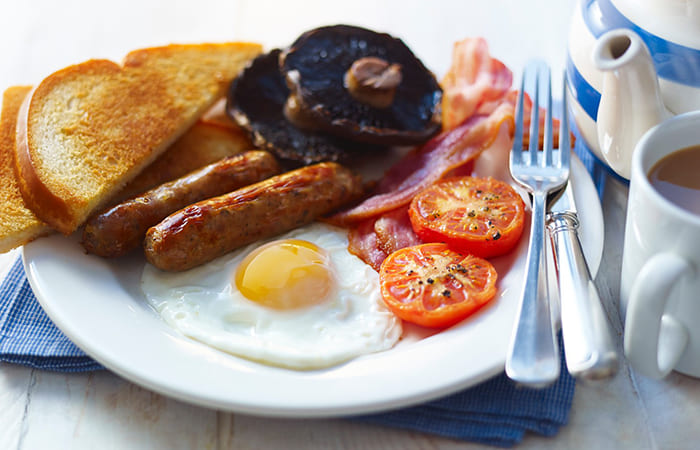
What makes up a traditional English breakfast
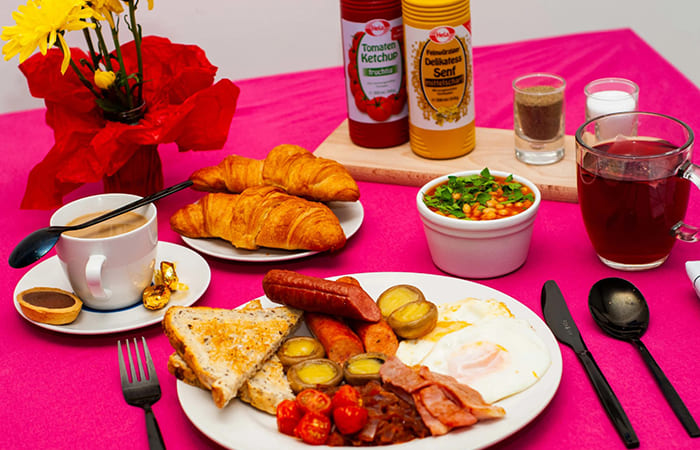
At its core, the English breakfast is built around a few key ingredients, most notably eggs and bacon. Eggs are usually either scrambled, often with a little cream, salt and pepper, or fried. Bacon should not be confused with Italian pancetta. British bacon, often back bacon, includes both lean meat and a small layer of fat, and is typically grilled or fried before being served on buttered toast.
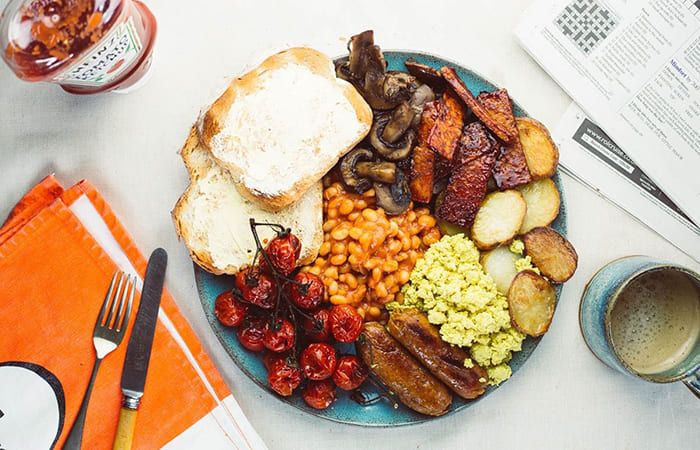
A modern full English also includes sausages and a vegetable component. Grilled tomatoes or mushrooms are common, and anyone looking for the most traditional version should add baked beans in tomato sauce. These beans have become almost inseparable from the idea of the fry-up and contribute to its distinctive sweet and savoury balance.
The most complete version may also feature black pudding, a type of blood sausage made from pork blood, fat and oatmeal, seasoned with herbs and spices. While not everyone chooses to include it, it remains part of the classic line-up in many regions and reflects the historic British approach to using every part of the animal.
In summary, a full English breakfast can include:
-
Bacon
-
Scrambled or fried eggs
-
Sausages
-
Black pudding
-
Grilled tomatoes or mushrooms
-
Baked beans
-
Buttered toast
All of this is traditionally served with a cup of black tea, often with milk. Some families may also add porridge or an English muffin, though these items developed separately within British breakfast culture and do not form part of the original medieval fry-up tradition.
Regional variations across the United Kingdom
As with many traditional dishes, the English breakfast has travelled beyond England and evolved in different parts of the United Kingdom. Each nation has adapted it to reflect its own local products and culinary habits, which means that when you travel around Britain you will encounter several distinct versions shaped by local identity and ingredients.
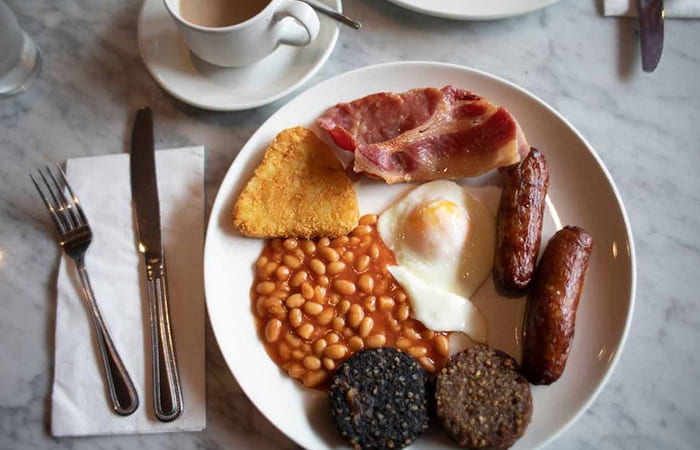
- In Ireland, the Irish breakfast closely resembles the English version but typically includes soda bread, made with bicarbonate of soda rather than yeast. In Northern Ireland, the Ulster fry follows a similar pattern and can be eaten at any time of day, not just in the morning, showing how the tradition has adapted to modern eating habits.
- In Wales, the Welsh breakfast reflects the country’s coastal heritage. One distinctive element is laverbread, made from cooked seaweed mixed with oatmeal and fried into small cakes, which highlights the historic connection between Welsh communities and the sea.
- Scotland offers perhaps the most distinctive variation. Alongside the core components, you may find potato scones, oatcakes and haggis. Potato scones are made from boiled potatoes and fried in butter, oatcakes are crisp oat-based flatbreads, and haggis is a savoury pudding made from sheep’s offal, suet, oatmeal and spices. Together, these additions give the Scottish breakfast a strong regional character that sets it apart from the English version.
Although these versions share a common foundation, each reflects the history and food culture of its region. If you are planning a study holiday in the UK with us at Astrolabio, trying these variations is not just about tasting different dishes, but about discovering how food connects to British tradition and everyday life.