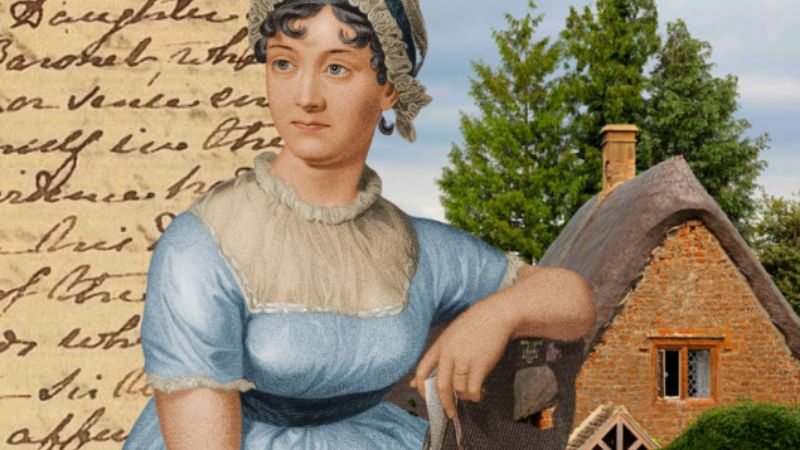
In English literature, few names shine as brightly or are as celebrated as Jane Austen.
Born in 1775 in the quiet Hampshire village of Steventon, Jane Austen grew up surrounded by rural landscapes, a close family, and the genteel society that would later provide the backdrop for her novels. Today, more than 200 years after her death, her writing still resonates with about love, money, manners, and ambition.
Her novels may be set in drawing rooms and country estates, but they are also full of sharp insights into human behaviour. They remind us that the struggles of her heroines — to secure happiness, to balance duty with personal freedom — remain surprisingly modern.
For anyone who admires Austen, visiting the places that shaped her life and inspired her stories adds a new layer of meaning. From Chawton to Bath, from sweeping country estates to atmospheric festivals, you can still step into her world today!
Contents
Jane Austen’s House in Chawton
Tucked away in the Hampshire countryside, the small red-brick house in Chawton is where Austen spent the final eight years of her life. Today it stands as the Jane Austen’s House Museum, the most important site for anyone interested in her story.
It was here that Austen revised Sense and Sensibility and Pride and Prejudice for publication. She also wrote Mansfield Park, Emma, and Persuasion at the small round table that still sits by the window. That modest piece of furniture, only just large enough for her papers and inkwell, is one of the most moving exhibits in the house.
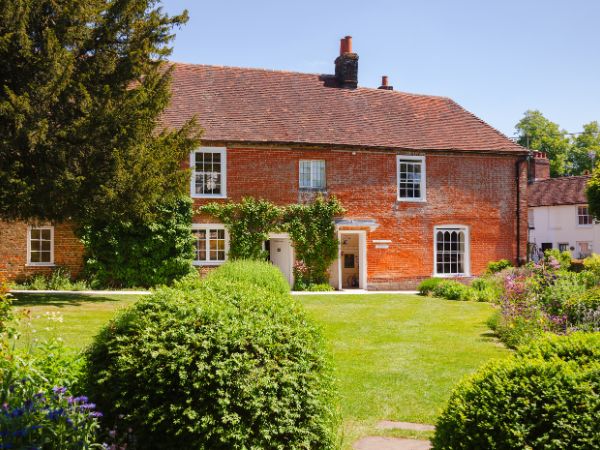
The rooms are arranged with Regency-era furnishings, some original to Austen’s time, others carefully chosen to match the period. You’ll see her writing desk, family portraits, and even jewellery she once wore. Manuscripts in her own hand are displayed alongside early printed editions of her novels.
Outside, the garden is kept in the style of the early 19th century. Herbs, roses, and climbing plants fill the borders, and you can easily picture Austen stepping outside to clear her head before returning to her characters.
The museum is an active centre for research, exhibitions, and education. Writers’ workshops, talks, and readings ensure that Austen’s legacy isn’t frozen in time but continues to inspire new generations.
Bath
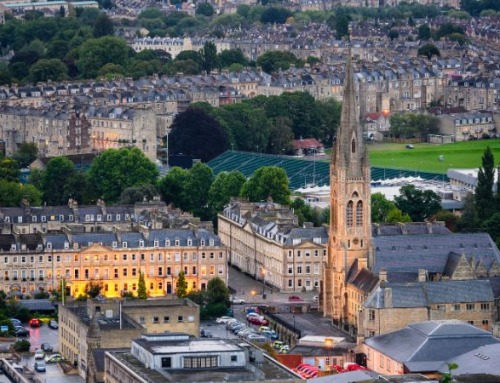
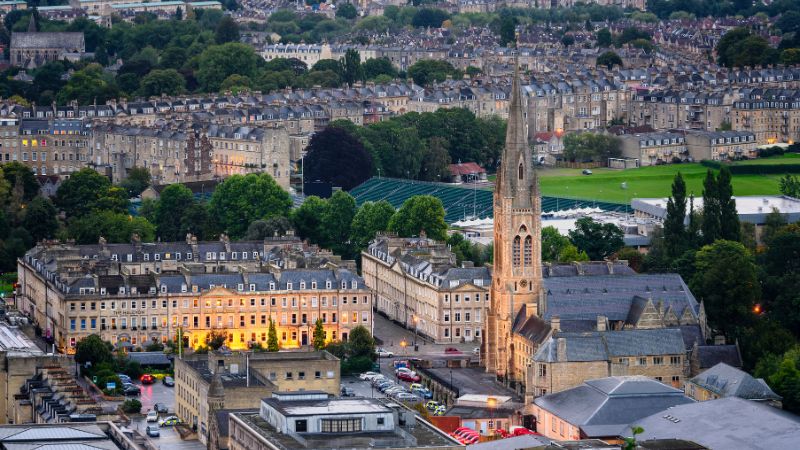
When you arrive in Bath, it’s easy to see why the city left such a mark on Jane Austen. With its honey-coloured Georgian terraces, sweeping crescents, and elegant public spaces, it was the centre of fashionable life in early 19th-century England.
Austen moved here with her family in 1801, and though she had mixed feelings about the city, she captured its atmosphere brilliantly in Northanger Abbey and Persuasion. Her novels reflect Bath’s reputation as both glamorous and superficial, a place where wealthy visitors came to socialise, gossip, and look for advantageous marriages.
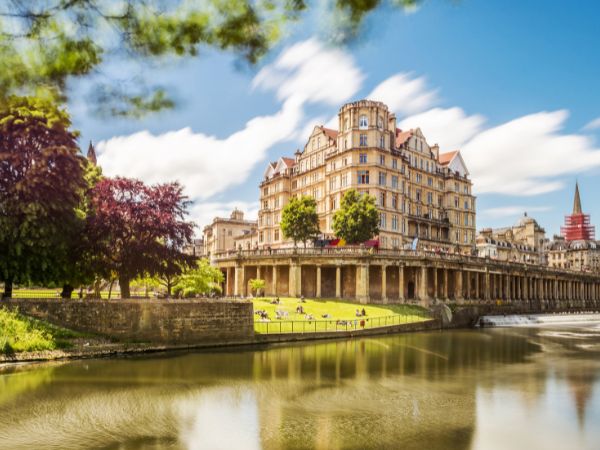
A visit to the Jane Austen Centre on Gay Street brings this world vividly to life. The museum offers costumed staff, interactive displays, and rooms decorated to evoke the Regency period. You can try on bonnets and spencers, sit at writing tables, and learn about the realities of life for women of Austen’s social class.
But Bath itself is the real museum. The Pump Room, once the place to see and be seen, is still open for afternoon tea. The Assembly Rooms, where balls and concerts were held, transport you straight into the social scenes Austen describes. The Royal Crescent and Circus are masterpieces of Georgian architecture, and remain some of the most photographed streets in England.
Even if Jane Austen herself was sometimes critical of Bath’s pretensions, today it is impossible to deny the city’s beauty.
The English Countryside
Although she lived for periods in Bath and Southampton, JAne Austen’s heart always belonged to the English countryside. Her novels are filled with scenes of village life, country lanes, and the quiet rhythms of rural society.
Visiting Steventon, where she was born, is a good place to begin. The rectory where she grew up was demolished in the 19th century, but you can still see the site and visit St Nicholas Church, where her father preached and where Jane worshipped as a child.
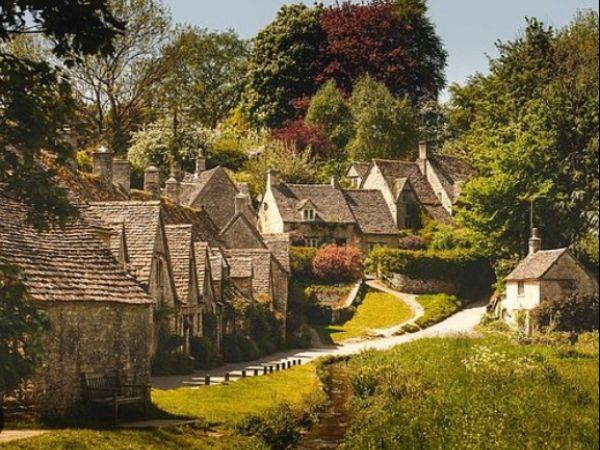
From there, Hampshire offers many more connections. The Jane Austen Trail links Alton, Chawton, and nearby villages through walking routes that cross rolling fields and hedgerows. Signposts along the way explain the significance of each place in Austen’s life.
A short journey away is Winchester, where Austen spent her final weeks in 1817. She is buried in Winchester Cathedral, and her grave is marked by a plaque that initially referred only to her personal virtues, not her literary achievements. A later memorial, funded by her nephew, now acknowledges the enduring power of her novels.
Historic houses and film locations
Part of Austen’s appeal lies in her descriptions of grand houses and estates, which often serve as symbols of wealth, power, and romantic possibility. Many of these houses can still be visited, either because they inspired her descriptions or because they later became film locations.
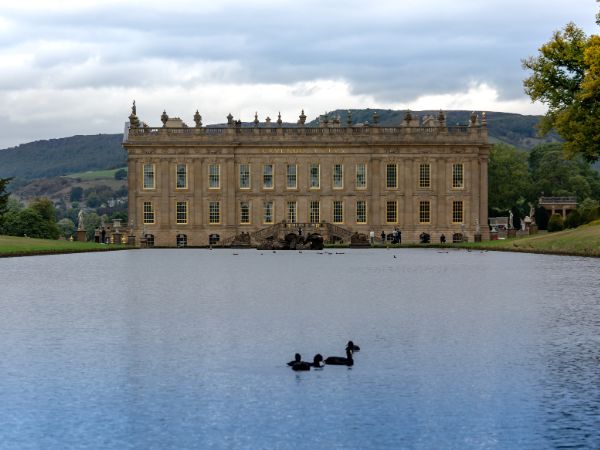
Chatsworth House in Derbyshire is perhaps the most famous. Often thought to have inspired Mr Darcy’s estate of Pemberley, it was used as a filming location in the 2005 adaptation of Pride and Prejudice. Visitors today can explore its lavish rooms, filled with Old Master paintings, marble statues, and one of the finest libraries in England. The surrounding parkland, landscaped by Capability Brown, is just as memorable.
Haddon Hall, also in Derbyshire, is a perfectly preserved medieval manor that has appeared in several Austen adaptations. Its panelled halls, stone courtyards, and terraced gardens provide an atmospheric glimpse into the past.
Lacock Abbey in Wiltshire has also starred in Pride and Prejudice and countless other period dramas. Its cloisters and vaulted halls offer the kind of timeless backdrop that film-makers love. The village of Lacock itself, with its untouched 18th-century streets, has been used again and again for Austen settings on screen.
These houses are not only film sets but living pieces of history. Visiting them adds depth to the fictional worlds of Elizabeth Bennet, Emma Woodhouse, and Anne Elliot.
Events and festivals
Austen’s world is kept alive not just in museums and stately homes, but in annual festivals that bring her era to life.
The Jane Austen Festival in Bath is the largest celebration of its kind. Each September, hundreds of visitors dress in Regency costume and take part in a Grand Regency Promenade through the city streets. Balls, readings, lectures, and concerts fill the programme, offering both entertainment and insight.
In Hampshire, Jane Austen Regency Week focuses on her connections to Alton and Chawton. Events include tours of the places she knew, open-air theatre, and musical evenings that recreate the sounds of her age.
Winchester also honours her memory with services and talks around her burial site in the Cathedral. These events are popular with readers from across the world, many of whom plan their trips around the festival dates.
Taking part in one of these gatherings allows you not only to celebrate Austen’s work, but also to meet fellow admirers and experience first-hand the fashions, dances, and customs of her time.

Step Into Jane Austen’s England
Exploring the England of Jane Austen means more than retracing the steps of a famous writer. It is a chance to experience the landscapes, houses, and towns that shaped her imagination and gave rise to some of the best-loved novels ever written.
From the modest charm of Chawton to the elegance of Bath, from windswept coastal towns to grand country houses, each place tells part of her story. Festivals and museums ensure her voice is never forgotten, while the countryside she loved continues to echo with her characters.