
Contents
When you picture a study holiday in the UK, you might imagine classrooms, textbooks, and teachers. But here in Wiltshire, learning English goes far beyond the classroom.
Wiltshire is landlocked, but its rivers drain toward the Thames to the east and the Bristol Channel and English Channel to the south and west.
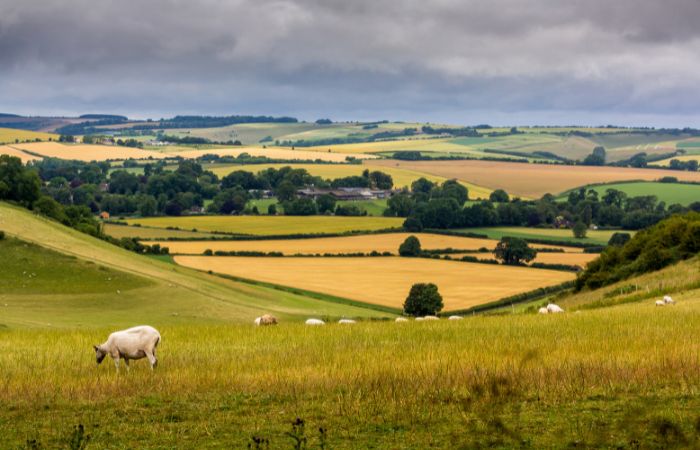
The famous Salisbury Plain dominates the centre. This wide plateau is used by the army for training, which means much of it remains untouched and peaceful. Walking here, you can sense how the landscape has kept its wild beauty.
The county is filled with charming villages. Thatched cottages sit beside winding lanes, and market towns still hold weekly fairs as they have for centuries, and the county is also home to one of the world’s most famous ancient monuments—Stonehenge.
This mix of tranquillity and deep history is what makes Wiltshire so fascinating for anyone to visit on an Astrolabio study holiday.
Getting to know Wiltshire
Wiltshire covers more than 3,400 square kilometres, making it one of the larger counties in southern England. Despite its size, it is mostly rural, with wide open spaces, farmland, and small communities connected by country lanes.
The population here is spread out rather than concentrated. Unlike nearby counties with large cities, Wiltshire has only one cathedral city, Salisbury, while the rest is made up of market towns and villages. This gives the area a slower rhythm of life that students often find refreshing compared to the bustle of London or Bristol.
Wiltshire is also a county shaped by chalk. The famous chalk downs stretch across the landscape, with white horses carved into the hillsides as local landmarks. These giant figures, created by removing turf to reveal the chalk beneath, date back as far as the 18th century. The Uffington White Horse, just over the border, is even older, from the Bronze Age.
The county’s geography has always played a part in its history. The wide Salisbury Plain provided a perfect site for prehistoric monuments like Stonehenge and Avebury, and later became useful for farming and military training. Rivers such as the Avon, the Kennet, and the Wylye have supported communities for thousands of years.
For today’s visitor, this mix of open landscapes and ancient heritage makes Wiltshire feel both peaceful and deeply meaningful. It is the kind of place where you can study in the morning, then step outside and be surrounded by views that have inspired people for millennia.
Salisbury
If you only visit one place in Wiltshire, let it be Salisbury. This city is small enough to walk around, yet it holds some of England’s greatest treasures.
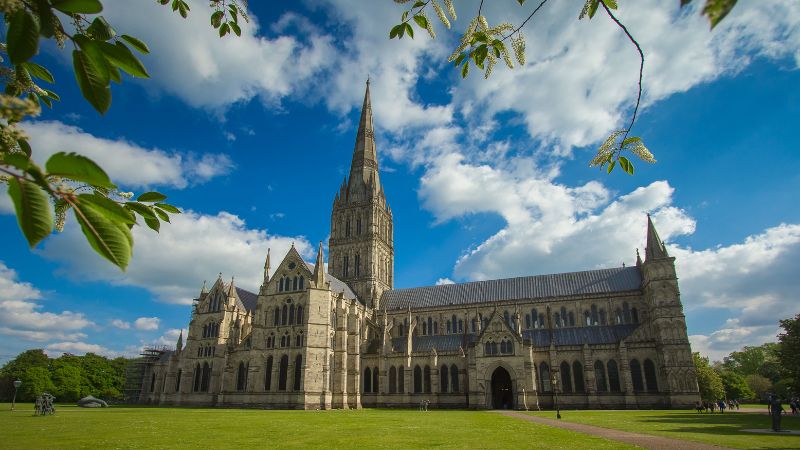
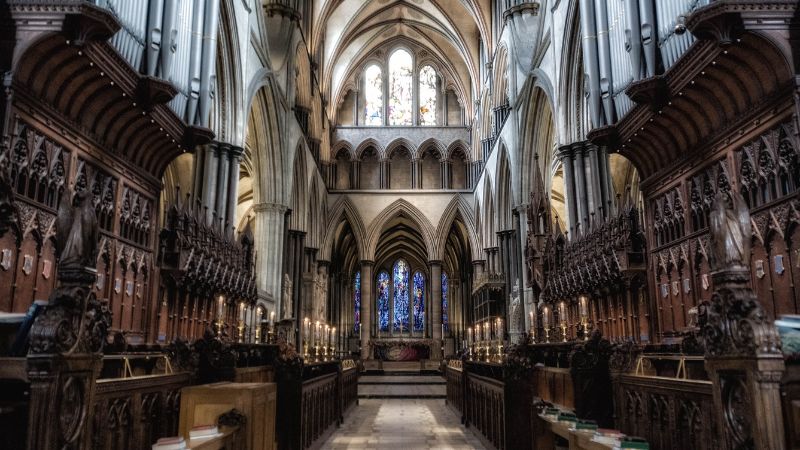
Salisbury Cathedral rises above the city with the tallest spire in Britain. Inside, you’ll see stained glass, medieval carvings, and the oldest working clock in the world. Built in 1386, it still ticks today.
One of the cathedral’s greatest treasures is a copy of the Magna Carta. This document, written in 1215, set out rules that shaped English law and democracy. Seeing it in person is a powerful experience.
A short distance away lies Old Sarum, the original site of the city. It was a fortress in the Iron Age, then a Roman settlement, then a Norman castle. The ruins you see today tell the story of how people lived here for thousands of years.
For students, Salisbury is also a lively place. Cafés, markets, and small shops line the streets, giving you plenty of opportunities to practise English in real-life situations.
Bradford on Avon
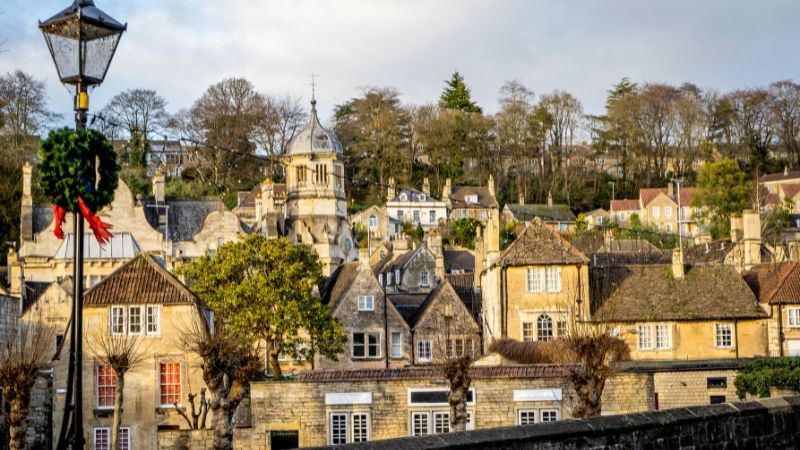
Bradford on Avon lies on the edge of the Cotswolds, a perfect stop during your stay. It grew rich on the wool trade in the 1600s, and many of the houses still show the wealth of that period.
The medieval bridge is a highlight. In the middle stands a tiny chapel that later became a lock-up for drunkards and troublemakers. Crossing the bridge feels like walking straight into the past.
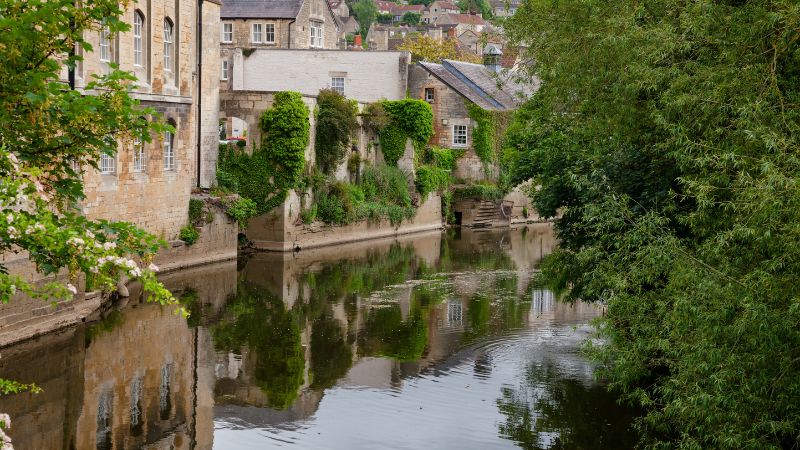
Nearby, the 10th-century Saxon church of St Laurence is one of the best-preserved of its kind. The huge tithe barn, once used to store grain, shows how important farming was to the town.
Bradford on Avon is also known for its countryside walks. You can follow the canal towpath or climb the hills for sweeping views. For students, it’s a chance to hear English spoken in everyday life while enjoying the calm of a small town.
Amesbury
Amesbury is officially the oldest continuously inhabited town in Britain. People have lived here for more than 10,000 years.
Its fame comes from Stonehenge. These giant standing stones, set up around 3000 BC, are one of the most mysterious monuments in the world. Some of the stones came from Wales, 150 miles away, carried here long before wheels and machines.
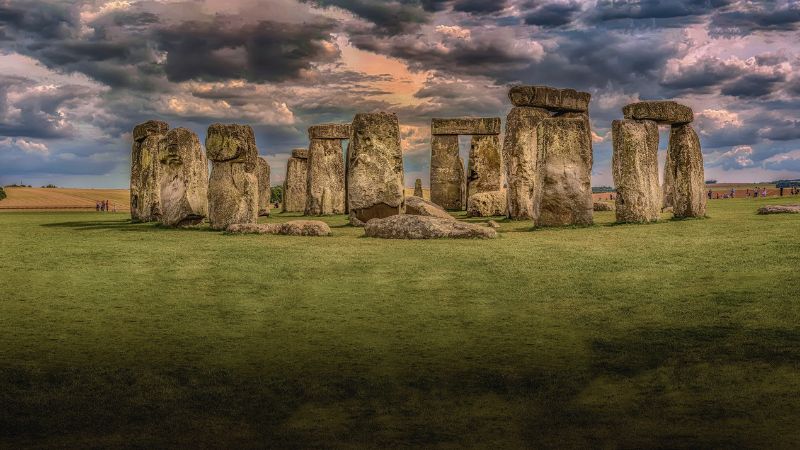
Nobody knows exactly why Stonehenge was built. Some believe it was a temple for the sun, others think it was an ancient burial site. Standing among the stones, you feel the same wonder people have felt for centuries.
The parish church of St Mary and St Melor dates back to Saxon times. Eleanor of Provence, the wife of King Henry III, is buried here. Walking through the town, you sense how the past and present meet.
Marlborough
Marlborough is famous for its High Street, the second widest in England. Markets fill it twice a week, just as they have done for centuries.
The town became rich through silk weaving, and you can explore this history at the Merchant’s House. This 17th-century building shows how a wealthy silk trader and his family lived, from painted walls to original furniture.
Today, Marlborough is full of antique shops, cosy tea rooms, and lively pubs. Students visiting here can enjoy practising English while shopping or chatting with locals at the market stalls.
The surrounding countryside is also beautiful. The Marlborough Downs are dotted with prehistoric sites, making the area perfect for exploring both nature and history.
Swindon
Swindon offers a different side of Wiltshire. It grew rapidly in the 1800s when the Great Western Railway built its main workshops here.
The STEAM Museum, located on the old railway site, tells the story of this industrial past. Huge locomotives, including the famous North Star, show how steam changed the way people lived and travelled.
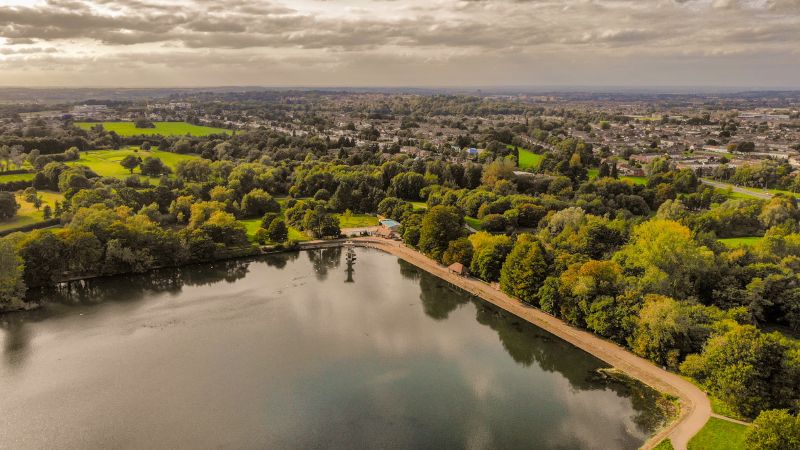
Swindon also looks forward. The Museum of Computing celebrates the early days of technology, displaying some of the first personal computers. For students, it’s a fun way to learn technical English terms while seeing how quickly technology has developed.
Just outside the town lies Lydiard Park, a country estate with landscaped gardens and a Palladian mansion. It’s a peaceful escape after exploring the busy town centre.
Lacock
Lacock is a place where time seems to have stopped. Its stone cottages, timber-framed houses, and narrow streets have hardly changed for centuries.
The entire village is cared for by the National Trust, which means it has been beautifully preserved. Because of its unspoiled look, Lacock has been used as a filming location for many films and TV shows, including parts of Harry Potter and Pride and Prejudice.
Lacock Abbey is another highlight. Once a nunnery, it later became a grand home. Inside, you can still see Tudor kitchens, a medieval cloister, and even the rooms where early photography pioneer William Henry Fox Talbot created the first photographic negative.
Wilton
Just west of Salisbury lies Wilton, a small town with a big history. It was once the county town of Wiltshire and gave the county its name.
Wilton became wealthy through its textile industry. The Georgian houses and wide streets reflect that prosperity.
The most famous attraction is Wilton House. Still home to the Earl of Pembroke, this grand house is filled with works by artists such as Anthony van Dyck. The gardens are just as impressive, with sweeping lawns and peaceful riverside walks.
For a student, visiting Wilton is a lesson in both history and art. You can admire masterpieces, then step outside to practise English in the cafés and shops of the town.
Castle Combe
Castle Combe is often called the prettiest village in England. When you see it, you’ll understand why.
The houses are built from local Cotswold stone, and the village lies beside the By Brook, giving it a picture-perfect setting. It feels as though nothing has changed for hundreds of years.
Inside the parish church, you can find the effigy of Sir Walter de Dunstanville, a knight who fought in the Crusades. Details like this remind you that even the smallest places in Wiltshire are filled with history.
Castle Combe is a favourite with film-makers, too. Its streets have appeared in productions such as War Horse and Stardust. For a student, it’s a chance to practise English while exploring a place that feels magical.
Why Wiltshire is worth adding to your Cotswolds study holiday
If you’re already planning your study holiday in the Cotswolds with us, Wiltshire is a county you shouldn’t overlook for your interary.
It lies right on the edge of the Cotswolds, which makes it easy to reach on a day trip or short stay. In just a short journey, you can go from the honey-coloured stone villages of the Cotswolds to standing among the stones of Stonehenge or walking through the medieval streets of Salisbury.
Visiting Wiltshire gives you a new perspective on England. You’ll see how the same landscapes that shaped Cotswold villages also gave rise to world-famous monuments, ancient hillforts, and some of the most beautiful market towns in the country.
With Astrolabio, your study holiday is more than language practice. It’s a chance to explore both the Cotswolds and Wiltshire, two regions that show different sides of English history and culture. Together, they make your time in the UK richer, more memorable, and full of stories you’ll never forget!
Contact us today to start planning your study holiday for summer 2026!