Have you ever wondered what daily life was like for the British royal family in the 1800s? Osborne House, on the Isle of Wight, does exactly that!
Osborne House is far more than just a royal residence. It was a home where Queen Victoria and Prince Albert raised their children, celebrated birthdays, mourned loss, and quietly reshaped the image of the monarchy.
From the moment you approach its Italian-inspired façade to the instant you walk through its sunlit corridors, you sense that Queen Victoria’s story is still alive and thriving in every corner.
This was where the monarch came to be a mother. Where the Prince Consort designed gardens by hand. Where royal children played in miniature cottages and learned to bake in a kitchen made just for them.
Osborne House gives you something rare: a glimpse into the private life of one of Britain’s most powerful figures—not in a throne room, but in a family home by the sea.
Contents
Who was Queen Victoria?
Queen Victoria was Queen of the United Kingdom of Great Britain and Ireland, and later Empress of India. She became the figurehead of a time so influential it’s now known as the Victorian era.
She and Prince Albert of Saxe-Coburg and Gotha had nine children. Their marriages created ties with nearly every royal family in Europe.
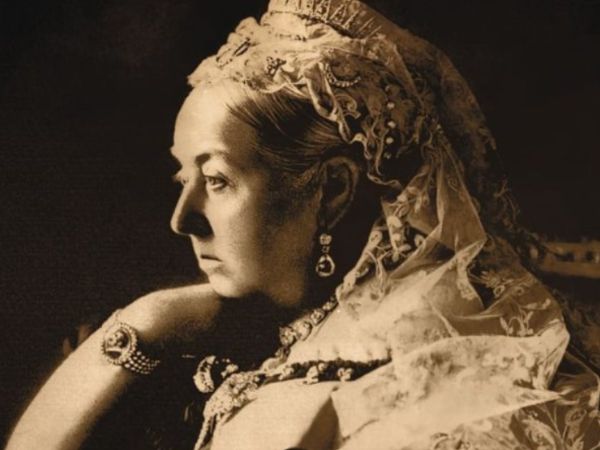
Victoria wasn’t always aligned with the changing values of her time. She resisted social reforms and technological change, but her reign saw sweeping developments in both. Industry, science, and politics all shifted around her.
Although she didn’t intend it, her time as monarch helped reshape the monarchy into a more ceremonial role, one that survives even today.
When she died, and her son Edward VII moved from Marlborough House to Buckingham Palace, it marked a shift in royal life—social, more than political—but one that reflected the monarchy’s stability under her rule.
A royal vision on the Isle of Wight
In the 1840s, Queen Victoria and Prince Albert were looking for a retreat that offered both privacy and natural beauty. Their answer was Osborne House, a property overlooking the Solent, where the sea met soft, rolling hills.
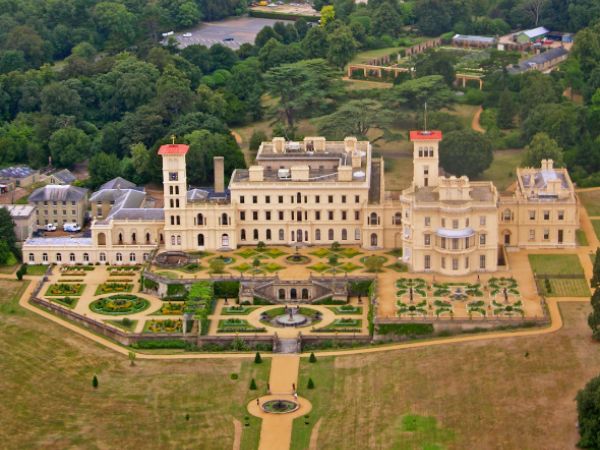
Though the estate dated back to 1705, it wasn’t until 1845 that the royal couple acquired it. Victoria wanted a peaceful home by the water for her expanding family, whereas Albert saw an opportunity to build something from the ground up, far removed from the rigid formality of court life.
What began as a simple estate soon became a purpose-built royal residence. It would serve not only as a summer home, but also as a functional space where the family could live, learn, and unwind together.
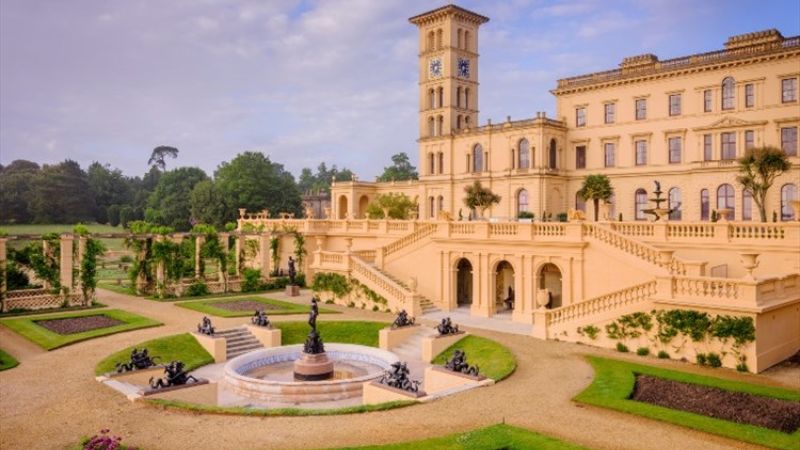
Architecture and design inspired by southern Italy
The original house was demolished to make way for a new design, inspired by the classical villas of southern Italy. Albert was closely involved in the planning, choosing an Italianate style that reflected his love for structure, beauty, and order.
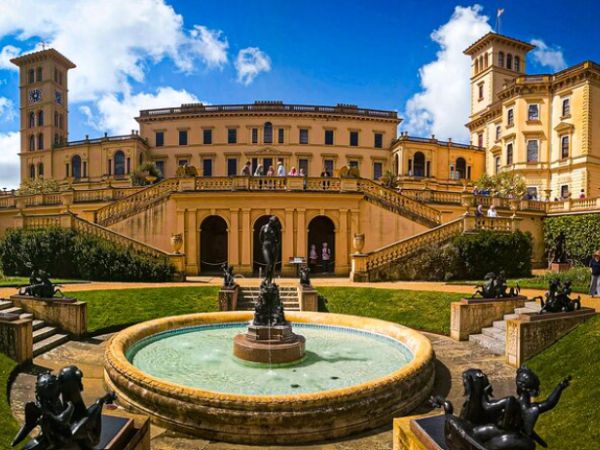
Connected by terraces and twin towers, the home blended grandeur with practicality.
The build was never only about aesthetics. Each section had its purpose, and the flow between public and private rooms was carefully considered. Broad windows welcomed in the light, and most rooms opened toward the gardens or shoreline.
Even the design itself was chosen carefully! Its pale yellow façade, twin towers, and column-lined terraces mirror the villas of the Bay of Naples, one of Albert’s favourite landscapes, which reflected the couple’s shared desire for structure, warmth, and simplicity. Osborne was regal, but not overwhelming.
It was a home first, a palace second.
The gardens and grounds
Prince Albert planned the outdoor spaces with care and intention. The original 18th-century layout was updated with magnolias, rhododendrons, and azaleas. Evergreens and poplars lined the main paths, creating colour and symmetry throughout the seasons.
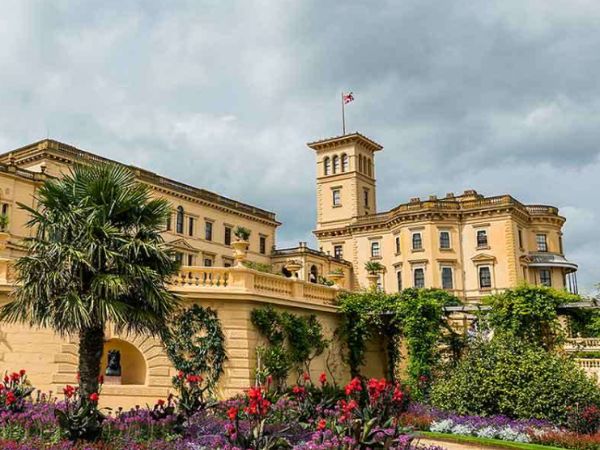
The walled garden was restored using Albert’s original layout. And in 2000, a new garden was added with a more modern planting style, using flowers named after Victoria and Albert—a living tribute to their shared legacy.
A home that grew with its family
As their family expanded, so did the house. In 1851, a new wing was added for the royal children. It was followed by the construction of the Swiss Cottage in 1853—an alpine-style playhouse where the children cooked meals, grew vegetables, and learned practical skills.
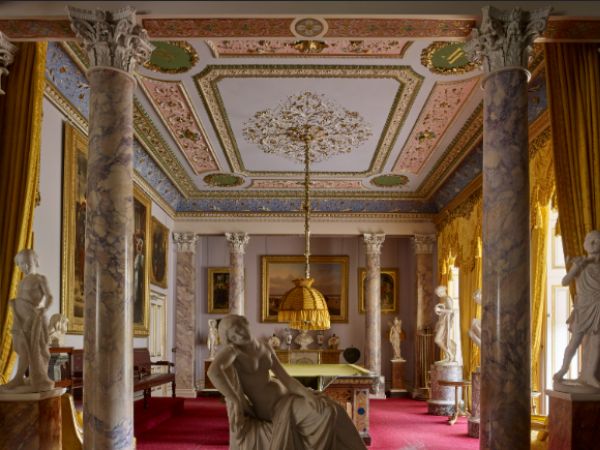
But Osborne wasn’t just for leisure. Like Astrolabio, Prince Albert believed in education through experience. The grounds became a classroom, where science, nature, and domestic life were all part of learning.
In 1862, a museum was built to hold the children’s collections, everything from fossils to handmade crafts. The house became a living archive of their childhoods!
A place of joy and grief
Osborne was filled with music, pageantry, and joy. The family celebrated birthdays with military bands and summer gatherings in the gardens. Even their private beach, just a short walk through the woods, became part of their routine.
But joy was replaced by sorrow in 1861, when Prince Albert died suddenly of illness. Queen Victoria was devastated and entered a state of mourning that lasted the rest of her life.
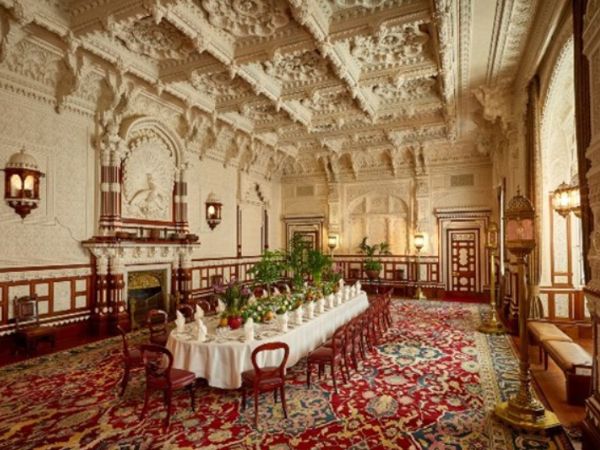
Even so, she continued to visit Osborne. The house remained important to her, and new improvements were still made. In 1862, a museum was built near the Swiss Cottage to hold the children’s collections. Later additions included a private chapel and new quarters for the household staff.
Victoria spent her last Christmas at Osborne in 1900. She passed away there in 1901, with her son Edward VII at her side.
Osborne House Today: A living connection to the past, managed by English Heritage
Over the years, Osborne House has been carefully preserved and managed by English Heritage. Thanks to their work, many of the most private spaces once reserved for Queen Victoria and Prince Albert are now open to the public, including their secluded beach, which reopened in 2012.
For anyone curious about British history, Osborne has a lot more to offer than historical facts. iIt offers insight into the everyday life, challenges, and legacy of one of the monarchy’s most iconic figures.
Every corridor, garden path, and sunlit room carries traces of a family that changed British history, not through grand declarations, but through the way they lived, learned, and loved behind closed doors.
Queen Victoria and Prince Albert didn’t build Osborne to impress. They built it to raise their children, escape the spotlight, and carve out space for a different kind of royal life.