
If you are planning a study holiday in Ireland, most of your decisions will revolve around schools, accommodation, and the structure of your programme. What often gets less attention is how much of Ireland’s history is still physically present in the places you move through each day.
There are an estimated 30,000 Irish castles across the country. Some have collapsed into partial ruins. Others remain intact, maintained, and still in use. You do not need to actively search for them. They appear along roads, on the edges of fields, or set back within estates that are still privately owned.
If you want to understand Ireland beyond the structure of a study holiday, visiting a selection of Irish castles gives you a clearer sense of how the country has been shaped over time.
Kilkenny Castle
Kilkenny Castle is one of the most accessible castles in Ireland for students, both in terms of location and layout.
It sits directly within the town of Kilkenny, which means you arrive at it as part of a normal day out rather than a separate trip. That alone makes it a common stop on organised study holiday programmes.
The castle dates back to the 12th century, although much of what you see today reflects later restoration. Inside, the rooms are fully furnished and arranged to show how the building was actually used, rather than left empty.
You move through spaces that still feel lived in, from long galleries to private rooms, which makes it easier to picture daily life inside the castle rather than viewing it as something distant.
The surrounding parkland is also part of the experience. It opens out behind the castle and gives students space to spend time there without it feeling overly formal or restricted.
Dublin Castle
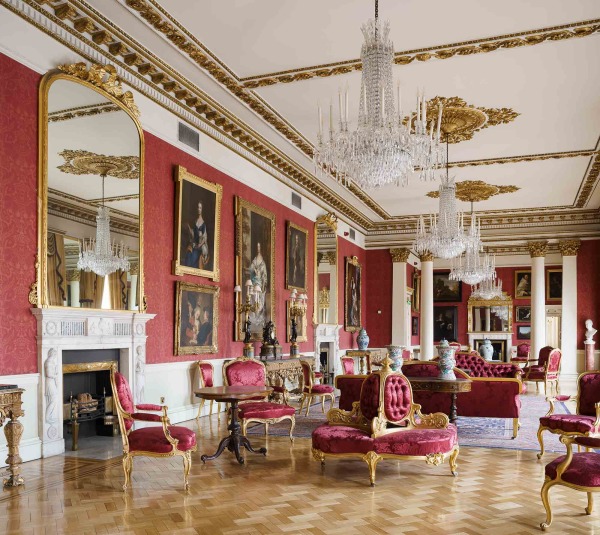
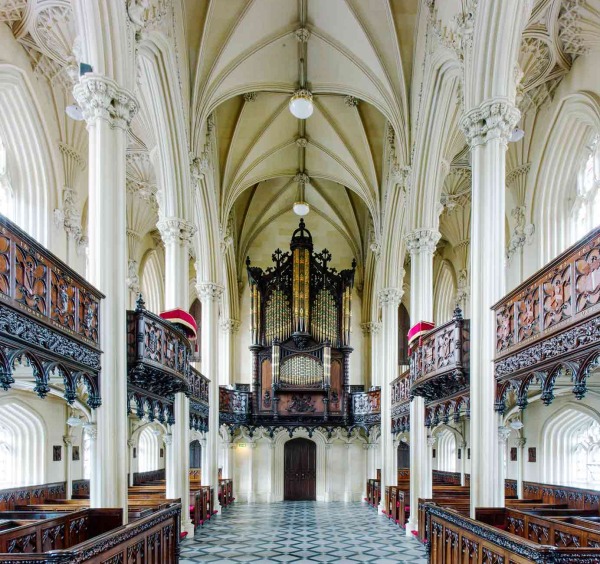
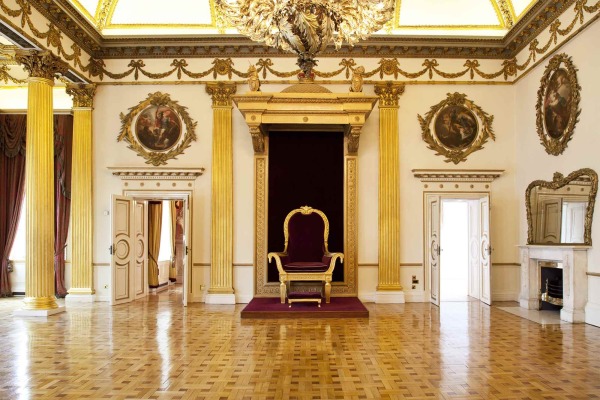
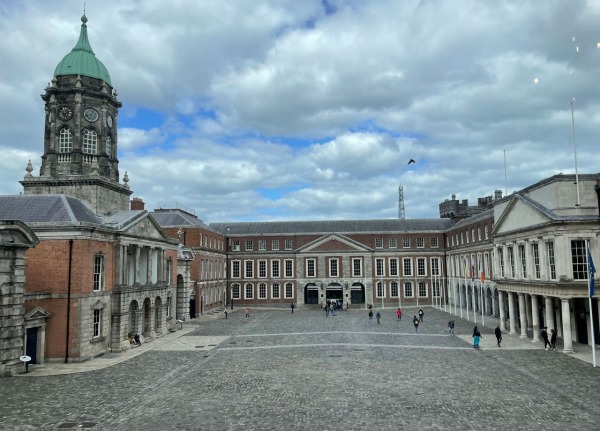
Dublin Castle offers a different perspective on Irish castles because, as parts of the site date back to the 13th century, much of the structure has been rebuilt and adapted over time. That layered history is visible as you move through the different sections.
Instead of being set in the countryside, it sits in the centre of Dublin. You move straight from city streets into a historic complex, which makes the contrast more noticeable.
It is still used for official state events, so it has not been separated from modern life in the way many historic buildings have.
For students on a study holiday in Dublin, it is one of the easiest castles to include in a visit. It does not require lengthy travel and fits naturally into time spent exploring the city.
Blarney Castle
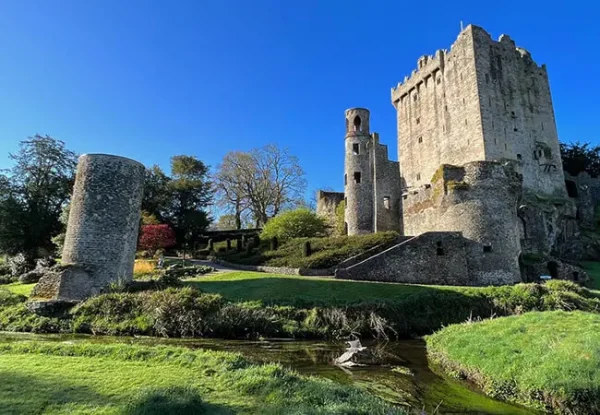
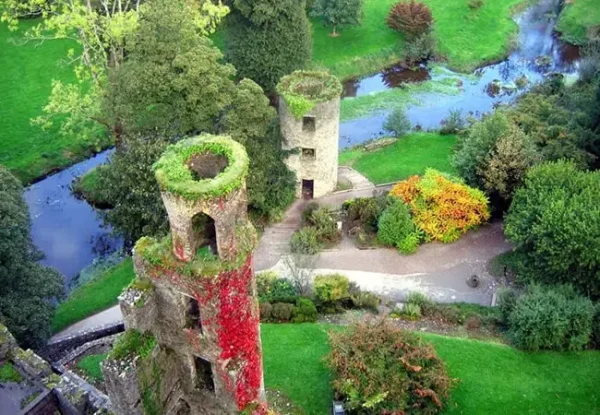
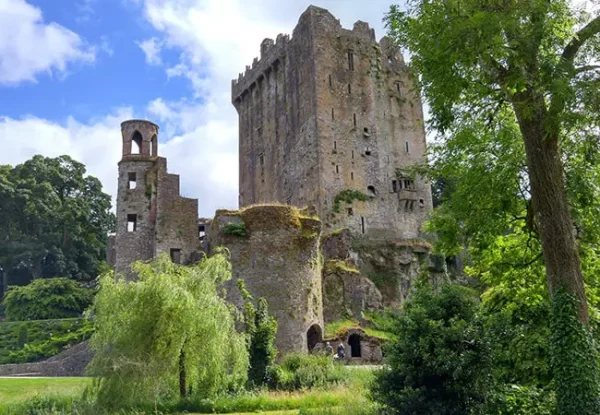
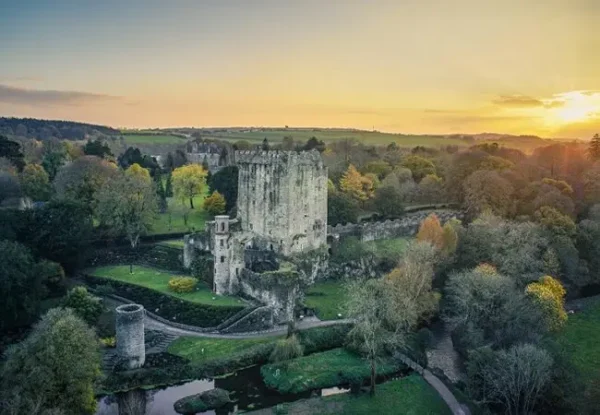
Blarney Castle is one of the most well-known castles in Ireland, largely because of the tradition linked to the Blarney Stone.
Located just outside Cork, the castle attracts visitors who want to take part in the ritual of kissing the stone, which is said to grant the gift of persuasive speech.
Reaching it involves leaning backwards over a drop while holding onto railings. It is a short moment, but one that tends to stay with people. The castle itself dates back to before the 13th century, and the structure still carries traces of earlier phases.
The grounds extend far beyond the main tower, with woodland, gardens, and paths that make the visit feel less contained. Even without the stone, it would still be a place worth seeing.
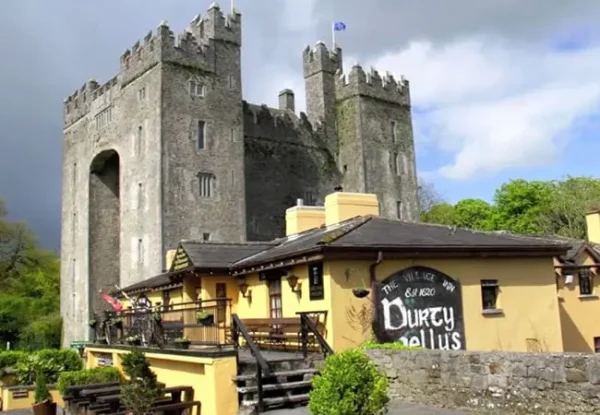
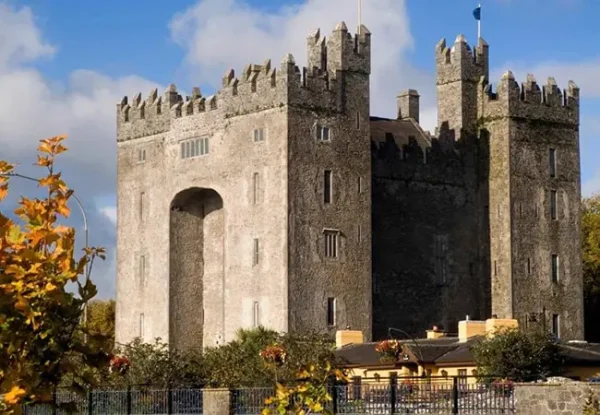
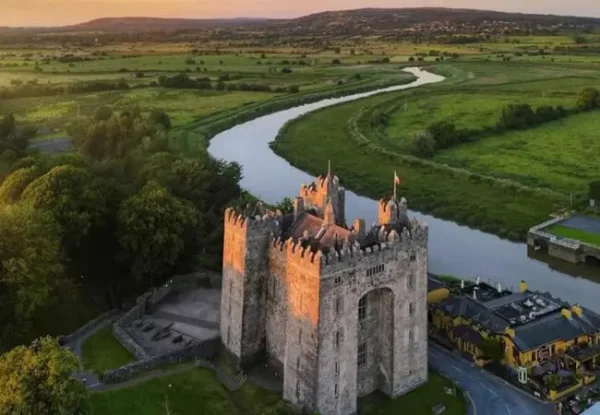
Bunratty Castle
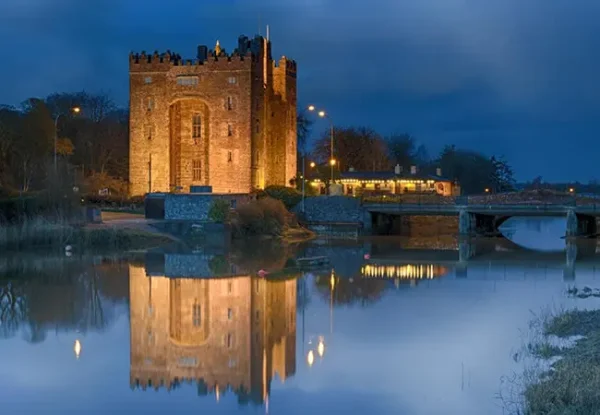
Bunratty Castle is an interesting visit because of how it presents daily life in the past.
The site began as a Viking trading settlement around 970, before the castle was built in 1275 and later expanded. A restoration in the 20th century brought it back into use.
Inside, the rooms are filled with medieval furnishings, many of which were collected and donated to recreate the atmosphere of the time. The medieval banquets are a central part of the experience, where visitors are served a multi-course meal based on historical recipes within the castle itself.
Next to the castle, Bunratty Folk Park recreates a 19th-century village with houses, shops, and public buildings. Walking through it gives a broader sense of how people lived beyond the castle walls.
Cahir Castle
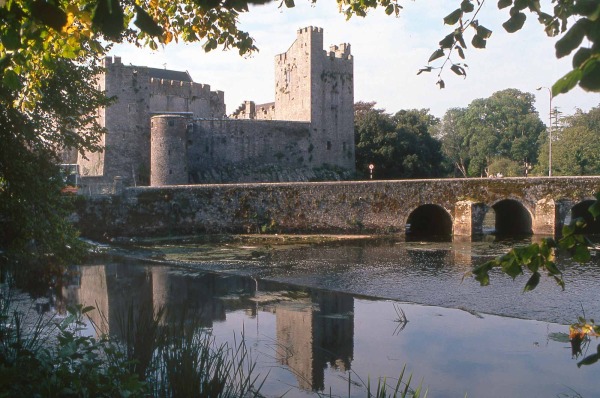
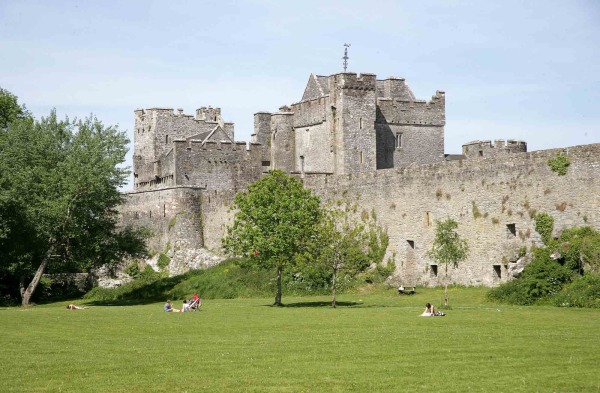
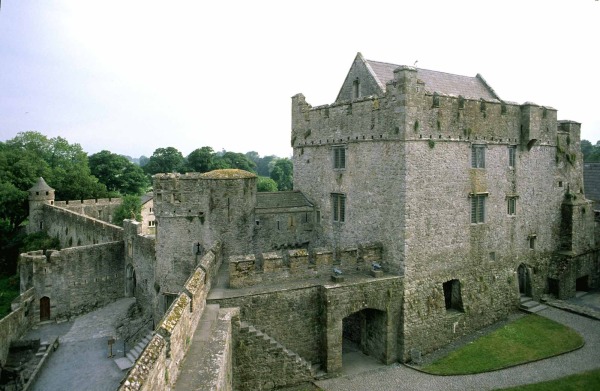
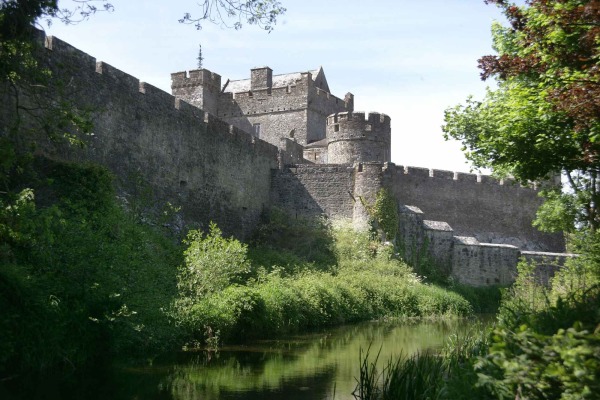
Cahir Castle is one of the best-preserved Irish castles, and it gives a much clearer sense of what a medieval stronghold actually looked like.
It is located in County Tipperary, set on a rocky island in the River Suir. The position is not just scenic, it was strategic. The surrounding water acted as a natural defence, which you can still understand just by looking at how the castle is laid out.
The structure dates back to the 13th century and has remained largely intact. Unlike castles that have been heavily restored or adapted, Cahir still reads as a defensive building first, with thick walls, towers, and enclosed spaces that feel functional rather than decorative.
As you move through it, you can see how different areas were used, from the outer defences to the inner sections. It does not rely on staging or reconstruction to explain itself. The layout does most of the work.
Why include Irish castles in your study holiday?
Adding visits to Irish castles changes how you experience your time in Ireland. You begin to notice how history is not confined to museums or lessons, but is present in buildings, in towns, and in the spaces between them!
Each castle reflects a different aspect of the country, from political history to daily life and private ownership because they are not separate from modern Ireland. They continue to exist within it, still used, still visible, and still shaping how this beautiful country’s history is understood.
Thinking about a study holiday in Ireland?
If you want to plan a study holiday that includes experiences like these, we can help you build a programme that balances learning with time to explore.
Get in touch with us to find the right destination and structure for your time in Ireland.
FAQ
Which Irish castle is easiest to visit during an Astrolabio study holiday in Ireland?
Dublin Castle is one of the easiest to include, as it is located in the centre of the city and can be visited as part of a normal day in Dublin without additional travel.
Which Irish castle is famous for the Blarney Stone?
Blarney Castle is best known for the Blarney Stone, which visitors can kiss as part of a long-standing tradition linked to eloquence and persuasion.
Where is Blarney Castle located?
Blarney Castle is located around 11 kilometres north-west of Cork, making it a common stop on trips in the south of Ireland.
Which Irish castle offers a medieval experience?
Bunratty Castle offers the most complete medieval experience, with furnished interiors, regular banquets, and the nearby Folk Park that recreates everyday life in a 19th-century Irish village.
Which Irish castle is best preserved?
Cahir Castle is one of the best-preserved Irish castles, with much of its original defensive structure still intact, including walls, towers, and internal spaces.
Which Irish castle shows how people actually lived?
Kilkenny Castle is particularly useful for this, as its interiors are fully restored and arranged to reflect how the rooms were used rather than left empty.
How many Irish castles are there?
It is estimated that there are around 30,000 Irish castles across the country, ranging from complete structures to partial ruins.
Why visit Irish castles during a study holiday?
Visiting Irish castles helps you understand the country beyond the classroom. You see how history is reflected in real places, from city centres to rural areas, and how these buildings are still part of everyday Ireland.