

Wondering how to recognise and remember false friends when you’re learning English? Here’s how to outsmart them!
Have you ever had one of those moments where you’re speaking English, everything seems to be going fine… and then suddenly, something goes wrong? You’ve said a word that felt right, sounded familiar, but the person you’re talking to is staring at you in total confusion.
Welcome to the world of false friends.
If you’re learning English, false friends are one of the trickiest—and most frustrating—parts of the process. These are the words that look or sound like something in Italian, but actually mean something else entirely. They fool your brain into trusting them, and before you know it, your meaning gets lost or twisted.
But here’s the good news: once you know how to spot them, they stop being a problem.
This article is your practical guide to understanding, remembering, and avoiding the most common false friends in English. Whether you’re preparing for a study holiday or just want to sound more natural, these tips will help you speak with clarity and confidence.
What Makes a False Friend?
False friends are like linguistic illusions.
They’re English words that look very similar to Italian ones, but have a different meaning. And that similarity is exactly what makes them so dangerous.
Take the word “parenti.” It looks like “parents,” right? But “parents” in English means “mum and dad.” Not your cousins. Not your aunt or uncle. Just your immediate parents. So if you say “I’m visiting my parents in Florence,” but you really mean “relatives,” it’s a small mistake—but one that changes the meaning completely.
These kinds of mix-ups are common. They can turn a simple conversation into a misunderstanding, or make your English sound confusing even when your grammar is perfect.
Why Do False Friends Trip Us Up?
Think about what happens in your head when you try to speak English.
You’re reaching for a word, and your brain pulls out something that feels close. Something that looks familiar. That’s exactly when a false friend shows up!
It’s not your fault. It’s just how our brains work. We rely on patterns, shortcuts, and connections to find the words we need quickly. And when a word in English looks a lot like a word in Italian, we assume the meaning is the same.
But English isn’t a direct mirror of Italian. While English has borrowed some vocabulary from Latin, English’s structure and vocabulary come mostly from Germanic roots. That means a lot of words that sound familiar might not behave the way we expect.
The key is to stop thinking in Italian. Instead, aim to start thinking in English—little by little. This shift makes it easier to spot words for what they really mean, rather than what they seem to mean.
Common False Friends for Italian’s learning English
Some English words look so familiar, it’s easy to think you know what they mean — but that’s where they catch you out. Below is a list of false friends that often trick Italian speakers. Each word might remind you of something in Italian, but the meaning is different.
Words that are false friends:
- gentle = dolce, not gentile
- to injure = ferire, not ingiuriare
- miserable = triste, not miserabile
- sympathy = compassione, not simpatia
- sensible = ragionevole, not sensibile
- actually = in realtà, not attualmente
- argument = litigio, not argomento
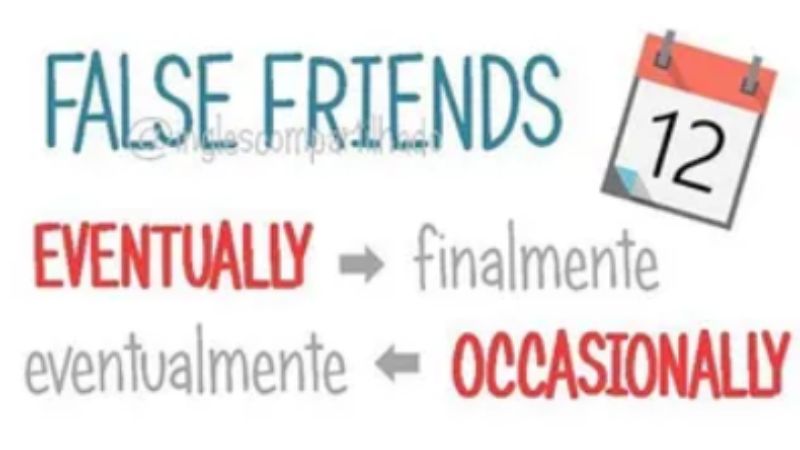
- eventually = finalmente, not eventualmente
- character = personaggio, not carattere
- journey = viaggio, not giornata
- library = biblioteca, not libreria
- license = patente, not licenza
- location = luogo, not locazione
- novel = romanzo, not novella
- agenda = ordine del giorno, not agenda
- college = università, not collegio
- factory = fabbrica, not fattoria
- lecture = conferenza, not lettura
- comprehensive = esaustivo, not comprensivo
- sale = vendita, not sale
- habit = abitudine, not abiti
- preservatives = conservanti, not preservativo
- estate = proprietà immobiliare, not estate
- petrol = benzina, not petrolio
- adjust = adattare, not aggiustare
- brave = coraggioso, not bravo
- lame = zoppo, not lama
- effective = efficace, not effettivo
- consistent = coerente, not consistente
- fortunate = fortuito, casuale, not fortunato
- grand = grandioso, imponente, not grande
- inconvenient = non adatto, inopportuno, not inconveniente
- inhabited = abitato, not inabitato
- proper = corretto, not proprio
- cold = freddo, not caldo
Verbs that are often false friends
- to annoy = infastidire, not annoiare
- to attend = partecipare a, not attendere
- to chant = scandire, not cantare
- to demand = esigere, not domandare
- to reclaim = recuperare, not reclamare
- to resume = continuare, riprendere, not riassumere
- to rest = riposare, not restare
- to retire = andare in pensione, not ritirarsi or ritirare

So, how do you avoid falling for false friends?
The best way to handle false friends is to approach them like any other part of language learning: with patience, curiosity, and a solid strategy.
Here are some effective ways to make sure you don’t fall into the false friend trap:
1. Stop Translating in Your Head
This is the biggest shift, and the most powerful one.
Start training yourself to think in English, even for small thoughts. The more you build your “English voice,” the less often you’ll fall back on Italian patterns.
Try this: when you’re describing something simple—a plan, a feeling, a memory—do it in English, even if it’s just in your head. Get used to forming sentences naturally. Over time, this helps you recognise the real meaning of English words without comparing them to Italian.
2. Read and Listen to Real English
Read books, watch movies, listen to podcasts and songs—these are your best friends when learning the true meaning of words.
When you come across a word that feels familiar, don’t assume you know what it means. Look it up. See how it’s used in context. Check if it’s really saying what you think it is.
The more examples you see, the more confident you’ll be using those words yourself.
3. Make Your Own False Friends List
Personalise your learning.
Start writing down any false friends you come across—especially the ones that trip you up. Add a quick definition and maybe a sample sentence that helps you remember.
This is a quick and powerful way to build real knowledge that sticks.
4. Use Flashcards or Apps
Apps like Anki, Quizlet or Memrise are great tools for remembering vocabulary. Create a flashcard deck just for false friends.
Make sure your cards include not just the translation, but an example sentence too. Seeing how a word behaves in real life makes it easier to remember.
5. Talk to Native Speakers
This might feel intimidating at first, but it’s one of the most effective ways to learn.
Chatting with native English speakers will show you exactly how words are used—and give you a chance to make mistakes, get feedback, and improve quickly. You’ll learn common phrases, slang, and yes, you’ll also figure out when something just doesn’t sound right.
Try language exchanges, conversation classes, or even messaging apps with language partners.

Our final thoughts on false friends in English, and our top tip before you go abroad…
If you’re planning a study trip to an English-speaking country, now’s the time to sharpen your vocabulary.
Even if your grammar is solid and your confidence is high, false friends can throw you off. And when you’re in a new country, surrounded by new people and experiences, it’s easy to get flustered if someone doesn’t understand what you meant.
So take time now to learn the most common false friends. Practice them. Say them out loud. Use them in a sentence.