Ever wondered why New York City is referred to as The Big Apple? Here’s why, and why you should care!
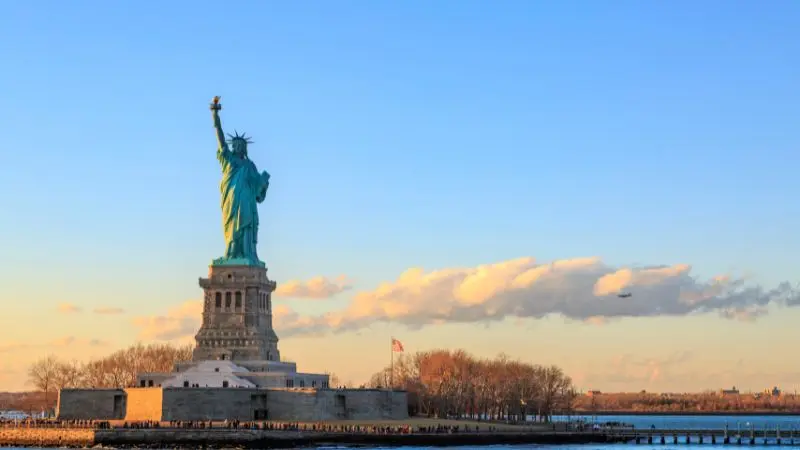
New York City is one of the most recognisable cities in the world. People come here for the art, the business, the music, and, increasingly, to learn English in one of the most linguistically and culturally rich environments on the planet.
But have you ever stopped to wonder why it’s called the Big Apple?
You’ll have seen the nickname everywhere: mugs, t-shirts, movies, and travel blogs. Spoiler alert: it has absolutely nothing to do with the fruit.
This iconic nickname actually represents a story of horse racing tracks, jazz clubs, and gritty reinvention campaigns. And once you know why, you’ll understand New York City‘s soul a whole lot better.
NYC is a city of many names
New York wears a dozen crowns: “The City That Never Sleeps,” “Gotham,” “Empire City,” “The Capital of the World.”
But “The Big Apple” stands out. It’s playful. It’s visual. And it’s the nickname that’s spread the furthest — across countries, languages, and decades.
So where does it come from? And why did a fruit become the lasting image of a global city?
Originally, the phrase wasn’t about fruit; it was metaphoric, borrowed from 19th-century slang. Back then, people joked, “I’d bet a big apple on it,” to show they were absolutely confident of a sure thing.
Apples in American culture
Why apples?
It’s worth remembering how symbolic the apple already was in the 19th and early 20th centuries. A large, red apple was a sign of generosity.
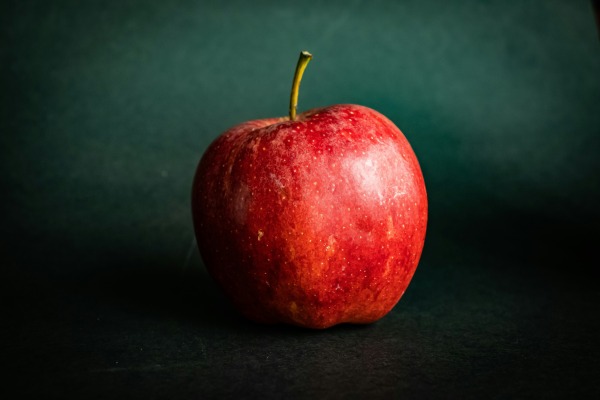
In many schools, students brought apples to their teachers as a thank-you gesture — a small but significant act.
In the U.S., apples were part of everyday life in a way that went beyond food. They appeared in stories, sayings, and metaphors “as American as apple pie”.
By calling New York the Big Apple, the idea wasn’t just that the city was desirable. It was that it was the most desirable.
1909: The earliest recorded use
One of the earliest recorded uses is in Edward Sandford Martin’s 1909 book, Wayfarer in New York. He painted a vivid picture of New York as the choicest fruit on the national tree:
“…the big apple gets a disproportionate share of the national sap.”
That line helped establish the nickname as a metaphor for something powerful and prestigious, long before it was associated with New York directly.
From the horse track to the headlines
In 1920, a journalist named John J. Fitz Gerald, who wrote for the New York Morning Telegraph, was in New Orleans covering the horse racing scene.
He overheard stable hands referring to New York as “the Big Apple”, meaning the ultimate prize for anyone in their profession. To them, winning in New York meant you had made it.
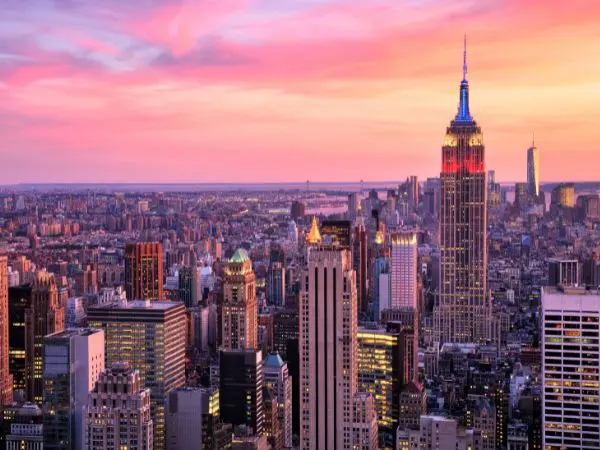
Fitz Gerald loved the phrase. Starting in 1921, he began using it in his racing column, and by 1924 he had formally titled his column Around the Big Apple.
Then in February 1924, he wrote:
“The Big Apple, the dream of every lad that ever threw a leg over a thoroughbred…and the goal of all horsemen. There’s only one Big Apple. That’s New York.”
He even explained that the Big Apple was the goal of every jockey and trainer — the most desirable place on the racing calendar.
While the phrase may have started in a niche subculture, it was colourful and easy to remember. Over time, it escaped the world of sports and made its way into the broader imagination of the city.
The Big Apple in the Jazz Era
The nickname might have started with sportswriters, but it didn’t stay there.
By the 1930s, it was popular among jazz musicians, particularly in Harlem.
For many, playing in New York meant you had finally “made it”. They could play in other cities, the “small apples,” so to speak, but New York was the dream gig.
Harlem at that time was thriving. Clubs like the Cotton Club and the Apollo Theatre were hosting artists like Duke Ellington, Billie Holiday, and Cab Calloway.
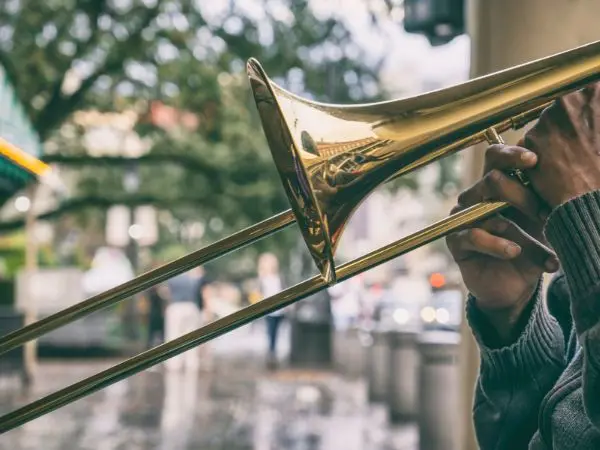
Music was everywhere, and the nickname began to take on new life.
Some bands even referenced it in their names or lyrics. Eventually, the nickname made its way into the broader American vocabulary.
By the late 1930s, New Yorkers were hearing the phrase more and more, though it still wasn’t official in any way.
If anything, this shows NYC to be the place to be for opportunity and growth. And that’s the energy you breathe in when learning English here!
A mid-century decline… then a 1970’s revival
Oddly enough, the nickname started to fade out by the 1950s and ’60s.
The post-war period brought new changes to the city, and “The Big Apple” started to sound a bit outdated. It wasn’t used as much in newspapers or conversations and it became, for a while, more of a nostalgic curiosity than the city’s identity.
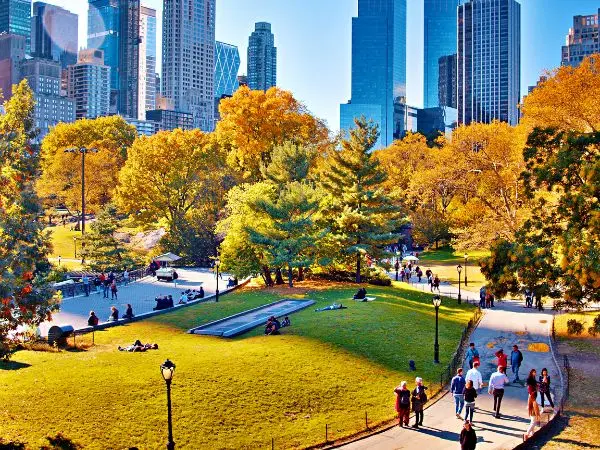
But that changed in the 1970s, when New York was in trouble. The city was going through a deep financial crisis. Crime was high, tourism was dropping, and public morale was at an all time low.
That’s when Charles Gillett, head of the New York Convention and Visitors Bureau, decided to bring “The Big Apple” back — this time as part of a citywide rebranding campaign.
The phrase sounded positive. It had energy. And, perhaps most importantly, it didn’t sound corporate or cold.
He used every tool in the book:
-
Bold red apples on posters and brochures
-
Stickers, T-shirts, and pins with the phrase “Take a bite out of the Big Apple”
-
Celebrity endorsements—from Knicks legends to TV stars—endorsing the city’s rebirth.
-
Walking tours, PR events, ads, and political buy-in
And it worked, as the nickname stuck. In 1997, Mayor Guiliani of NYC officially renamed the corner of 54th Street and Broadway “Big Apple Corner” in honour of John J. Fitz Gerald, who lived there from 1934 to 1963.
The Big Apple is a timeless symbol
In 1997, to honour Fitz Gerald, Mayor Giuliani officially named the corner of 54th Street & Broadway as “Big Apple Corner”, marking the very spot where Fitz Gerald lived from 1934 to 1963.
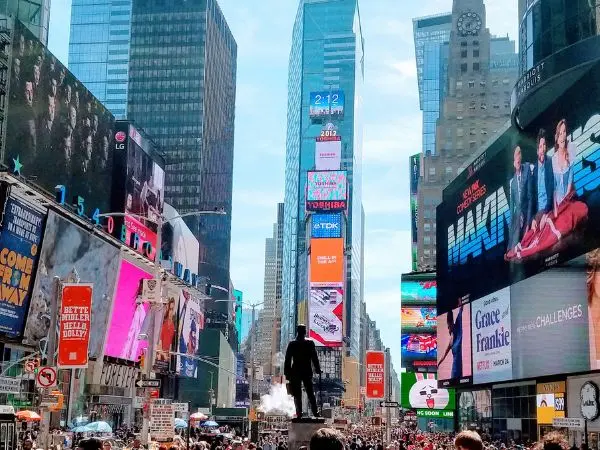
Today, “Big Apple” lives on in circuses, baseball stadiums (hello, baseball’s home-run apple!), clubs, festivals, and everyday conversations.
Final Thoughts: Why The Big Apple matters
For many people around the world, the phrase “The Big Apple” is just a nickname. But once you know the history, it’s easy to see that it’s also a story about ambition and reinvention, making it the perfect place for students to study English abroad.
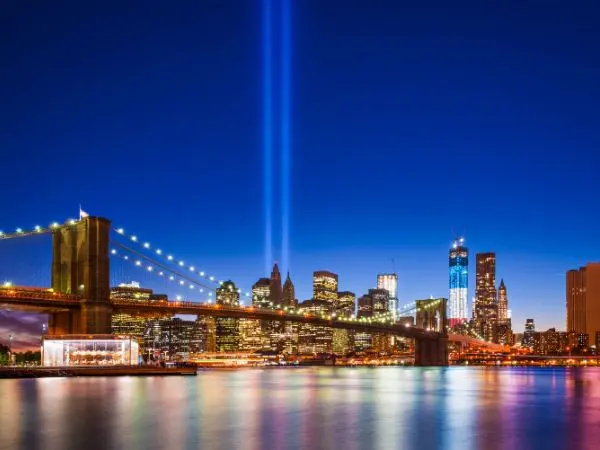
You’ll hear dozens of accents in a single subway ride. You’ll see English in menus, signs, museum plaques, performances, and political posters. You’ll hear native speakers ordering food, giving directions, and telling stories — all around you.
New York is a city where English lives outside the classroom just as much as inside. And that makes it an incredible place to learn the language, whether you’re just beginning or already confident in your skills.