Contents
Being bilingual has many benefits for your brain, your future career, and your social life!
Have you ever thought about how much your life could change if you spoke more than one language? Being bilingual means you have the ability to communicate fluently in two languages. For some people, it happens naturally because their parents speak different languages at home. For others, it comes later, through school, travel, or personal interest.
No matter how it begins, bilingualism is a gift that brings lasting benefits. It doesn’t just make travel easier or help you understand more people. It strengthens your mind, expands your opportunities, and enriches the way you connect with the world.
Why speaking two languages is so powerful
Being bilingual shows flexibility and agility of thought. When you can switch between languages, your brain is practicing focus, adaptability, and problem solving every single day.
Researchers have found that bilingual people perform better in areas such as memory, concentration, and multitasking. These are skills that support you in school, at work, and in personal relationships.
In short, learning a second language doesn’t just give you new words. It sharpens the way you think and makes your brain stronger.
Bilingualism can begin in infancy
Children can start learning two languages from their very first words. In homes where parents speak different languages, each parent often talks to the child in their own mother tongue. Doctors even recommend this approach, because it allows a child to grow up hearing and using both languages naturally.
Even in families where only one language is spoken, it’s possible to introduce another early on. Many parents do this through babysitters, relatives, or childcare where a different language is used.
Why start early? Because the younger a child is, the easier it is for them to sound like a native speaker. Studies show that before the age of ten, children absorb languages almost effortlessly.
Are there disadvantages?
Like every skill, bilingualism has its challenges. Children learning two languages at once might take a little longer to become fluent in each one. It’s also common for bilinguals to “mix” words when they’re tired or under pressure.
You might also know the feeling of having a word “on the tip of your tongue”. This happens more often to people who switch between languages regularly.
But these are minor issues compared to the advantages. With time and practice, the benefits far outweigh the drawbacks.
Learning more languages becomes easier
One of the biggest rewards of bilingualism is that it gives you an advantage in learning even more languages.
Once your brain is used to moving between two systems, it adapts quickly to a third or fourth. This isn’t about intelligence—it’s about mental training. A bilingual person already has the mental tools to spot patterns, pick up sounds, and make connections faster than someone who only speaks one language.
The multitasking advantage
Bilinguals are constantly juggling languages in their mind. Even when you’re speaking just one, the other is still active in the background. Your brain is making rapid choices about which language to use and which to hold back.
This constant practice of switching makes you better at multitasking in other areas of life. Whether you’re managing several projects at work or handling a busy day at home, bilingualism trains your brain to stay organised and efficient.
Two ways of seeing the world
Language shapes the way we interpret reality. Some languages emphasise intention, while others focus more on the action itself.
As a bilingual, you can shift perspective depending on the language you are using. This means you’re not only translating words—you’re experiencing the world in different ways.
This flexibility makes you more adaptable in cultural and social settings. You can step into different viewpoints and connect more deeply with people from varied backgrounds.
Bilingualism and your career
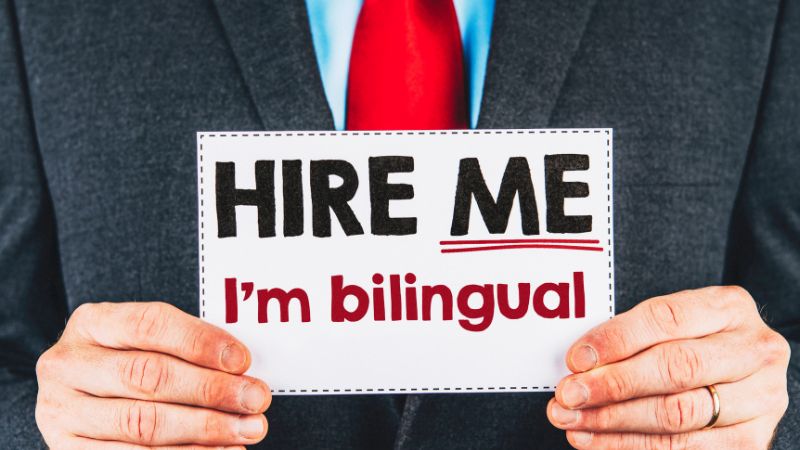
Speaking more than one language is a real advantage in the workplace. In Italy, bilingual workers can expect higher salaries and better career opportunities. Which languages you speak can make a big difference. For example, German often brings financial benefits in business, while Arabic is increasingly valuable in fields such as finance, sales, education, and technology.
Employers see bilingualism as proof of strong mental skills and cultural awareness. It shows that you can adapt, communicate, and bring value in global environments.
A benefit for entire countries
It’s not just individuals who profit from bilingualism. Whole regions and nations can see economic growth when their citizens speak multiple languages.
Take Switzerland as an example. Economists at the University of Geneva have shown that around ten percent of the country’s GDP is linked to its multilingual population. That’s proof that speaking different languages is not just cultural enrichment, but also an economic resource.
Protecting your brain as you age
Bilingualism is like exercise for your brain. The more you use different languages, the more active your mind stays.
As we grow older, mental processes often slow down. But research shows that bilingualism can delay the onset of dementia and conditions such as Alzheimer’s. People who speak multiple languages tend to maintain sharper cognitive functions for longer.
In other words, speaking more than one language can be a shield for your mental health in later life.
Everyday mental agility
Switching between languages improves what scientists call “executive functions”. These are the small mental tasks you use every day—like shifting focus, ignoring distractions, and solving problems quickly.
One way researchers test this is through the Stroop test. This involves reading colour words printed in different inks, such as the word “green” written in red. Bilinguals are usually quicker at this, because their brains are used to handling competing information and choosing the right response.
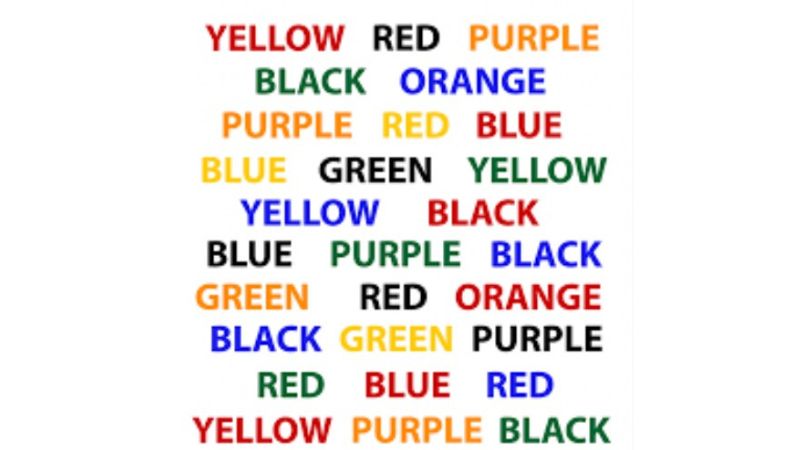
Stroop test
Why it’s worth the effort
Yes, learning a new language takes commitment. Yes, there may be moments of frustration. But the rewards are enormous.
Speaking more than one language means better education opportunities, higher earning potential, stronger mental skills, and deeper cultural connections. It’s something that enriches your daily life and builds a stronger future.
And the truth is, it’s never too late. Whether you’re a child, a teenager, or an adult, starting a new language will bring you benefits at every stage of life.
Start your own bilingual journey with us
Imagine yourself abroad, surrounded by a language that at first feels unfamiliar but soon becomes part of your daily life. With the right support, you’ll grow more confident every day—until speaking that language feels as natural as your own.
At Astrolabio, we believe that bilingualism is one of the greatest gifts you can give yourself. That’s why our study holidays abroad are designed to help you learn in real-life contexts, supported by expert teachers and cultural experiences.
Are you ready to open new doors for your mind, your career, and your future? Join us on a study holiday abroad and start building your bilingual skills today.