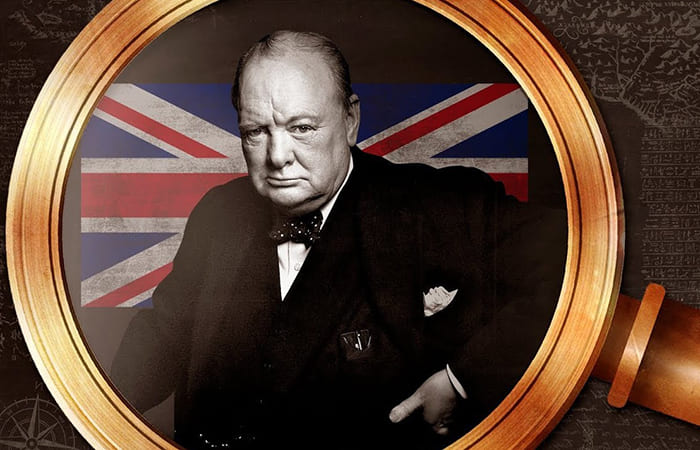
One of the most influential figures in British history, Sir Winston Churchill helped shape the outcome of the Second World War and changed the course of the twentieth century. He served as Prime Minister of the United Kingdom on two separate occasions and remains one of the most significant political leaders in modern history.
His political career lasted for more than fifty years. First elected to Parliament in 1900, Churchill remained at the heart of British politics until stepping down as Prime Minister during the 1950s.
He is also remembered as one of Britain’s greatest public speakers. His speeches inspired the British people during the darkest days of the Second World War, strengthened resistance across Europe and became symbols of determination in the face of Nazi aggression.
Here’s a closer look at the life of Sir Winston Leonard Spencer Churchill, his political career, and how he became the leader of one of the world’s most powerful nations.
Churchill’s early political career and the 1920s
Winston Churchill was born in 1874 at Blenheim Palace in Oxfordshire into an aristocratic family. His father was Lord Randolph Henry Spencer Churchill, a member of the prominent Spencer-Churchill family, closely connected to the Dukes of Marlborough.
From a young age, Churchill showed a strong appetite for adventure. After graduating from the Royal Military Academy Sandhurst, he became a cavalry officer and served in India and Sudan, taking part in Britain’s military campaign in Sudan in 1898.
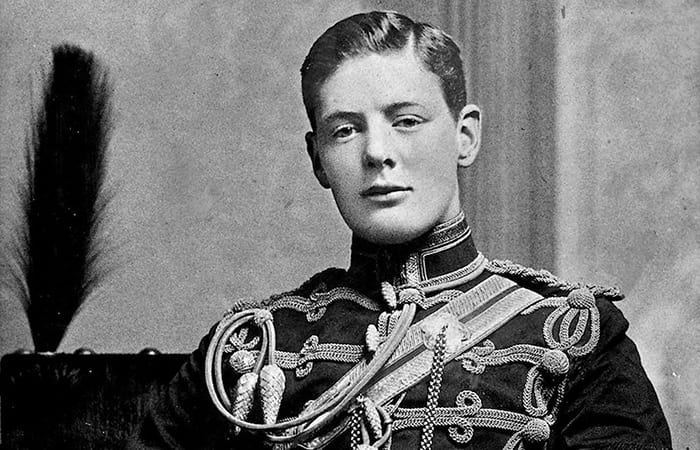
He also served during the Second Boer War in South Africa. Captured in 1899, Churchill famously escaped from imprisonment before returning to Britain, where his growing public profile helped launch his political career. In 1900, he was elected as the Conservative MP for Oldham.
In 1904, Churchill crossed the floor to join the Liberal Party. Two years later, he became Under-Secretary of State for the Colonies, marking the beginning of a rapid rise through British politics.
Between 1908 and 1910 he served as President of the Board of Trade before becoming Home Secretary from 1910 to 1911. He then accepted the role of First Lord of the Admiralty, where he focused on modernising and strengthening the Royal Navy ahead of the growing tensions in Europe.
Churchill’s reputation suffered during the First World War after the failure of the Gallipoli Campaign in 1915, a military operation he had strongly supported.
Despite this setback, he returned to government as Secretary of State for War in 1919, although he remained in the role for only two years. His support for Allied military intervention in the Russian Civil War proved highly controversial and further damaged his standing.
At the same time, Churchill achieved several important political successes. As Secretary of State for the Colonies between 1921 and 1922, he played a significant role in administering Britain’s mandate in Palestine and took part in negotiations that contributed to the creation of the Irish Free State.
These achievements helped pave the way for his appointment to Stanley Baldwin’s Conservative government. From 1924, Churchill served as Chancellor of the Exchequer.
After the Conservatives lost power in 1929, Churchill entered what became known as his “wilderness years”. During this period he strongly opposed greater self-government for India and became one of the most outspoken critics of the Indian independence movement led by Mahatma Gandhi.
Around the same time, Churchill also expressed admiration for Benito Mussolini, particularly because he viewed the Italian leader as a determined opponent of communism.
Churchill, Mussolini and the political tensions of the 1930s
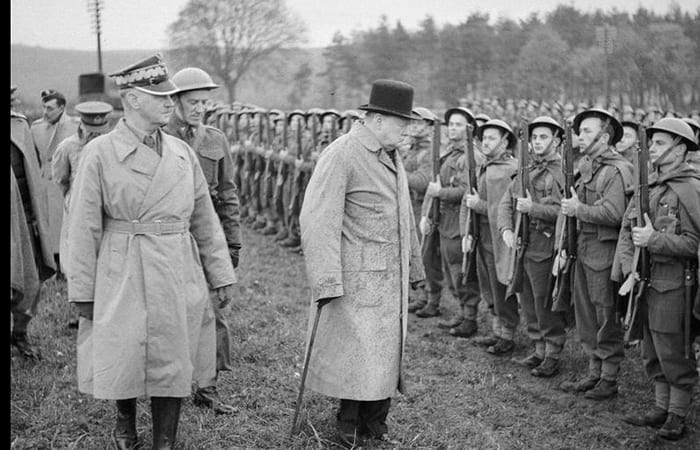
As Adolf Hitler’s policies became increasingly aggressive throughout the 1930s, Churchill repeatedly warned that Nazi Germany posed a serious threat to Europe. He criticised Prime Minister Neville Chamberlain‘s policy of appeasement, arguing that Britain needed to prepare for war rather than make concessions.
When the Second World War began in September 1939, Churchill returned to government as First Lord of the Admiralty. In May 1940, following Chamberlain’s resignation, he became Prime Minister at one of the most dangerous moments in British history.
France soon fell to German forces, leaving Britain to face Nazi Germany alone. Churchill believed that only determination, military resistance and national unity could defeat Hitler.
Britain’s fortunes gradually improved after both the Soviet Union and the United States entered the war, joining the Allies in the fight against Germany and its partners.
Although Churchill had spoken positively about Benito Mussolini in earlier years, his views changed dramatically once the Italian dictator aligned himself with Adolf Hitler and embraced fascist expansionism.
When Italy invaded Ethiopia in 1935, Churchill opposed imposing sanctions on Italy and believed Britain should seek an agreement with Mussolini. As events unfolded, however, he withdrew any support for the Italian leader.
Churchill eventually argued that fascism and communism were, despite their differences, forms of totalitarian government with many similarities. This was a notable statement given his long-standing opposition to communism.
The growing divide between Churchill’s views and Mussolini’s policies also became clear during the Spanish Civil War, which began in 1936.
As conflict spread across Spain, European nations chose different sides. The Soviet Union supported the Republican government, while Fascist Italy and Nazi Germany backed the Nationalists led by General Francisco Franco.
During this international crisis, Churchill supported Prime Minister Chamberlain’s policy of non-intervention. He believed the Spanish uprising should not simply be viewed as a military coup, but as a broader revolt involving monarchists and aristocrats following the removal of King Alfonso XIII.
The end of the Second World War and Churchill’s return to power
Although Britain remained officially non-interventionist during the Spanish Civil War, Churchill worked throughout the Second World War to prevent Spain from forming an alliance with Germany. He feared that if Hitler gained control of the Strait of Gibraltar, Britain’s naval access to the Mediterranean would be severely restricted, making it much harder to secure vital oil supplies from the Middle East.
During these same years, Churchill often expressed his belief in the superiority of the British people over other nations. His views on the British Empire, particularly in relation to India, remain among the most controversial aspects of his legacy.
Churchill argued that British rule had benefited India, describing colonisation as an act that had brought progress to what he regarded as a less developed society.
In 1942, as Japanese forces advanced through Asia, the Indian National Congress launched the Quit India Movement. When its leaders suggested that any resistance to a Japanese invasion would largely be non-violent, Churchill reacted with anger.
He publicly expressed deeply offensive views about Indian people, referring to them in racist terms that have since been widely condemned by historians. However, after witnessing the contribution of Indian troops fighting alongside British forces during the war, he later praised their courage, bravery and military service.
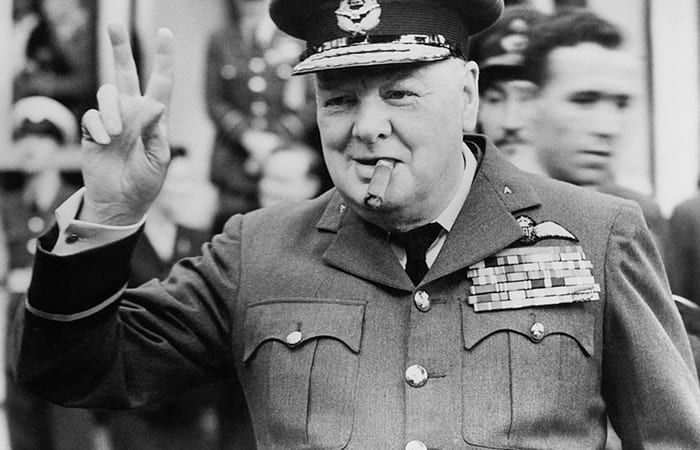
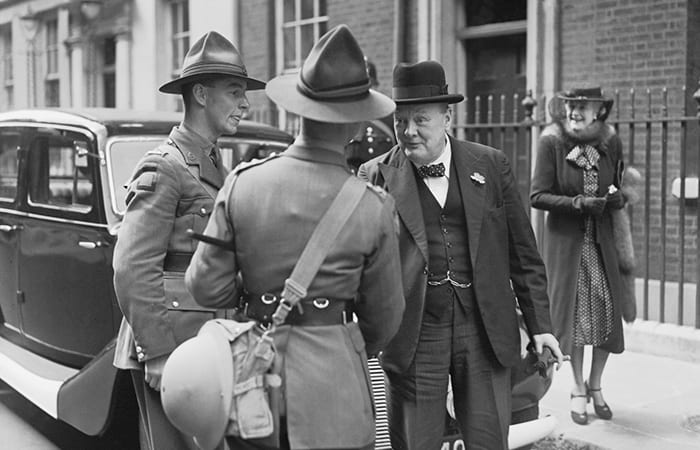
The end of the Second World War in 1945 secured Churchill’s place among the leaders of the victorious Allied powers. Alongside Joseph Stalin and Franklin D. Roosevelt, he helped shape the post-war settlement in Europe.
The countries occupied by Nazi Germany regained their independence, while Britain and the other Allied nations emerged with significant political influence on the world stage.
Despite leading Britain to victory, Churchill’s popularity did not translate into electoral success. In the 1945 general election, the Conservative Party suffered a heavy defeat to Clement Attlee’s Labour Party.
His time out of office was relatively brief. In 1951, Churchill returned as Prime Minister for a second term, remaining in office until 1955, when declining health forced him to retire.
Winston Churchill’s legacy
Churchill’s influence extended well beyond politics. As well as being an accomplished statesman, he was a talented writer and historian.
In 1953, he was awarded the Nobel Prize in Literature in recognition of his historical writing and his exceptional skill as an orator.
Sir Winston Churchill died in London in 1965 at the age of 90.
Today, he is remembered as the British leader who guided the country through the Second World War and played a major role in shaping the post-war world. His speeches continue to be studied for their power and impact, while his leadership during Britain’s darkest hours remains central to his legacy.
At the same time, historians continue to debate many aspects of his career, including his views on empire, race and colonialism, as well as his forceful personality, famously fiery temper, and his well-known fondness for alcohol and cigars.