If you want to learn English abroad, the UK isn’t your only option. With Astrolabio, you can learn English on a study holiday in Berlin too!
That’s right. Germany’s capital offers students aged 16 to 18 the chance to spend two weeks combining English lessons in the classroom with sports, cultural activities, city tours and trips outside Berlin.
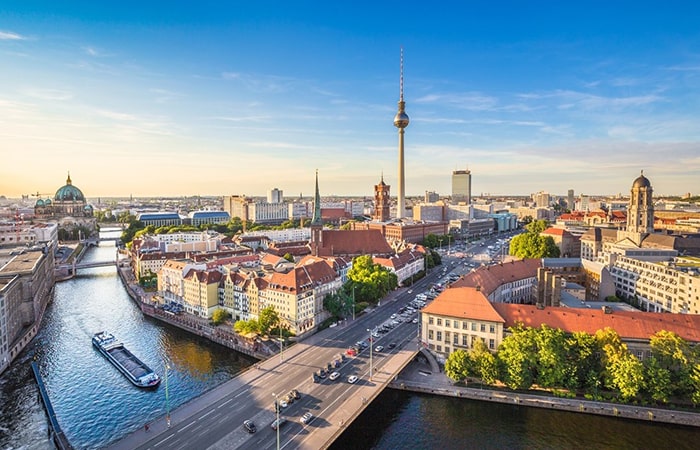
It’s a chance to experience one of Europe’s most exciting cities, known for its culture, extraordinary history and distinctive neighbourhoods, while using English throughout your stay.
Got free time in Berlin?
There’s plenty to keep you busy during your time in Berlin. Your programme includes organised activities, from walks through the city centre and visits to interesting parts of Berlin to time for shopping and exploring.
You could take on the climbing courses at MountMitte, go swimming at Lake Wannsee, take a cruise along the River Spree or cycle along the former route of the Berlin Wall.
There are also opportunities to enjoy outdoor cinema, billiards, beach volleyball and other games and activities.
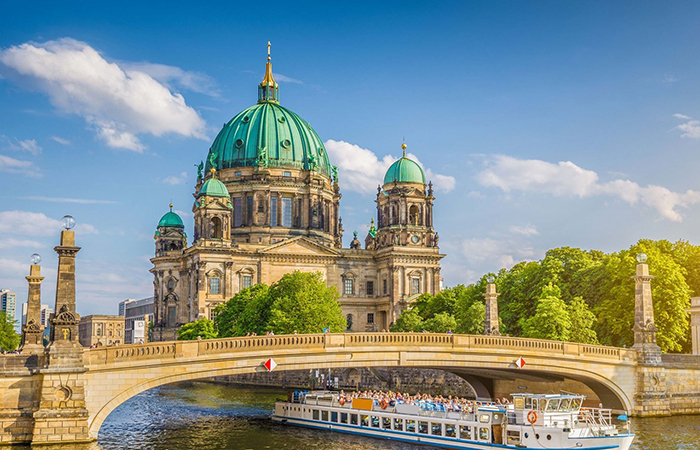
Explore Berlin from the River Spree
These activities give you plenty of opportunities to spend time with students from around the world. That means you can put your English into practice outside the classroom and become more confident using the language in everyday situations.
There are also full-day Saturday trips to places outside Berlin, including Potsdam and Sanssouci Palace.
What to see on a study holiday in Berlin
Berlin is a city where its history is rarely far from view. As you explore, you’ll find reminders of the Berlin Wall, East and West Berlin and the events of the 20th century alongside modern neighbourhoods, museums, galleries and public spaces.
There’s far more to see than you could fit into a single visit, but a two-week study holiday gives you plenty of opportunities to get to know the German capital.
Here are some of the city’s best-known sights.
Contents
Brandenburg Gate
One of Berlin’s most famous landmarks is undoubtedly the Brandenburg Gate. Once closely associated with Germany’s division during the Cold War, it has since become a symbol of German reunification.
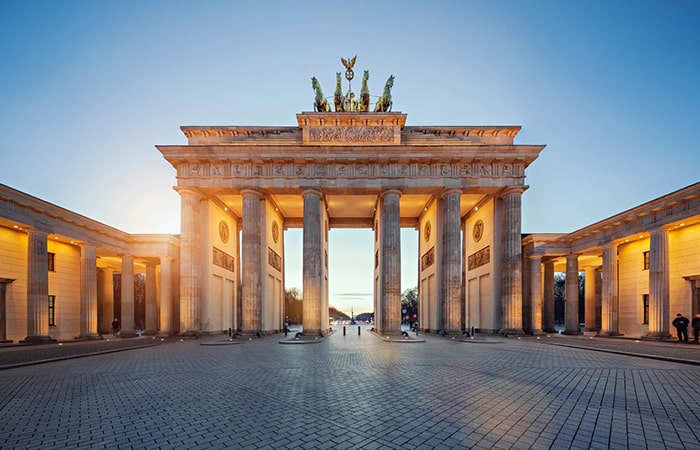
Visit the Brandenburg Gate
The neoclassical gate was commissioned by King Frederick William II of Prussia in the late 18th century and was designed by Carl Gotthard Langhans. Its design was inspired by the Propylaea, the monumental gateway to the Acropolis in Athens.
The sandstone monument stands around 26 metres high on Pariser Platz in Berlin’s Mitte district, only a short walk from the Reichstag.
Reichstag
The Reichstag building was completed in 1894 as the home of the parliament of the German Empire. Its plenary chamber was destroyed by fire in February 1933, and the building was later badly damaged during the Second World War.
After German reunification, the building was redesigned by British architect Norman Foster. The renovated Reichstag was formally handed over to the Bundestag in April 1999, and the German parliament moved permanently to Berlin later that year.
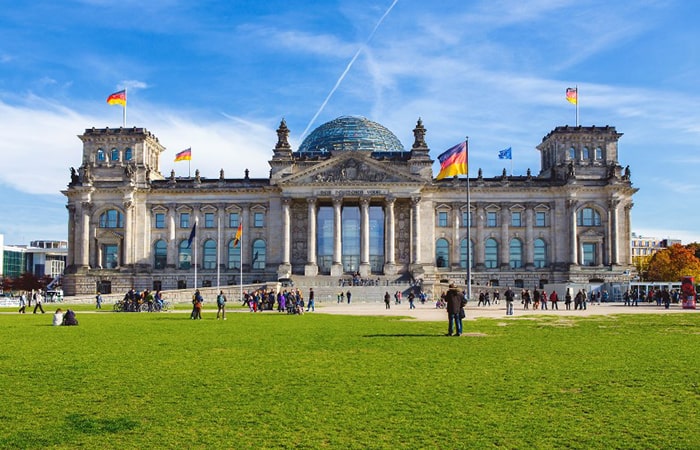
The Reichstag is home to the German Bundestag
One of the building’s most recognisable features is its modern glass dome. Visitors can walk up through the dome for views across Berlin while also looking down into the parliamentary chamber below.
The combination of the historic building and modern glass dome makes the Reichstag one of Berlin’s most recognisable landmarks.
Museum Island
Set on the River Spree, Museum Island is a UNESCO World Heritage Site made up of five major museums built between 1824 and 1930.
These are:
- Altes Museum, with collections focusing on the ancient Greek, Etruscan and Roman worlds;
- Neues Museum, home to collections including Egyptian and prehistoric artefacts;
- Alte Nationalgalerie, displaying works from movements including Neoclassicism, Romanticism and Impressionism;
- Bode-Museum, which houses sculpture, Byzantine art and an important collection of coins and medals;
- Pergamonmuseum, known for its collections of ancient architecture and Islamic art.
The Pergamonmuseum is currently closed for major renovation work. The North Wing and central section are scheduled to reopen on 4 June 2027, when visitors will once again be able to see major exhibits including the Pergamon Altar.
In the meantime, selected objects connected with Pergamon can be seen at the nearby Pergamonmuseum.
Berlin Wall Memorial
The Berlin Wall was built in 1961 after the East German government closed the border between East and West Berlin to prevent people leaving East Germany for the West.
For more than 28 years, the Wall and the wider border system divided Berlin. On 9 November 1989, border crossings were opened following mounting political pressure and mass protests, marking the beginning of the Wall’s fall. Much of the physical barrier was dismantled in the months and years that followed.
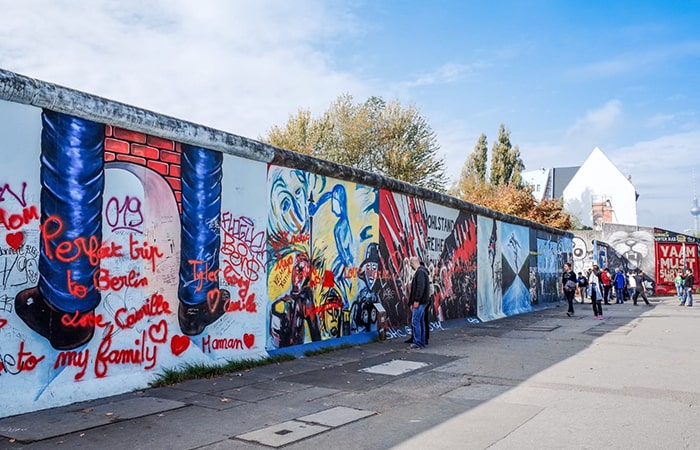
Sections of the Berlin Wall remain as reminders of the city’s division during the Cold War.
Today, traces of the former border can still be found throughout Berlin.
One of the most important places to learn about this history is the Berlin Wall Memorial on Bernauer Strasse. The memorial site extends for around 1.4 kilometres along the former border strip and preserves sections of the Wall and other elements of the former border system.
It offers a powerful insight into what the division of Berlin meant for the people who lived on either side.
Berlin TV Tower
It’s difficult to miss the Berlin TV Tower, or Fernsehturm. Standing more than 360 metres high near Alexanderplatz, it dominates the city’s skyline.
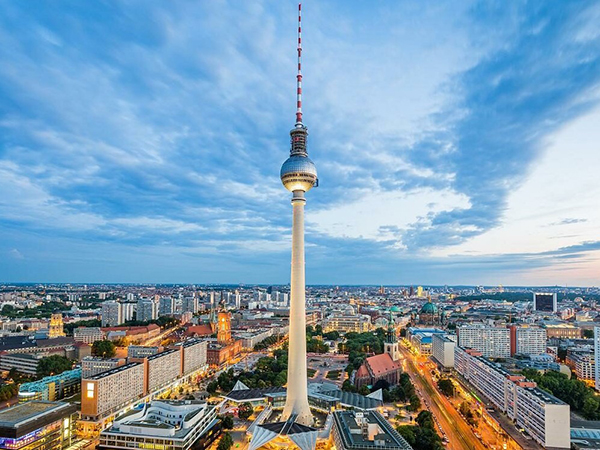
Berlin’s TV Tower offers panoramic views across the city.
The tower was constructed during the 1960s by the German Democratic Republic and opened in 1969. As well as serving a practical broadcasting purpose, it was intended to demonstrate the technological strength of the East German state.
Today, it is one of the most recognisable symbols of reunified Berlin.
Head up to the observation deck and you’ll be rewarded with panoramic views across the German capital.
Checkpoint Charlie Museum
Checkpoint Charlie was the best-known crossing point between East and West Berlin during the Cold War.
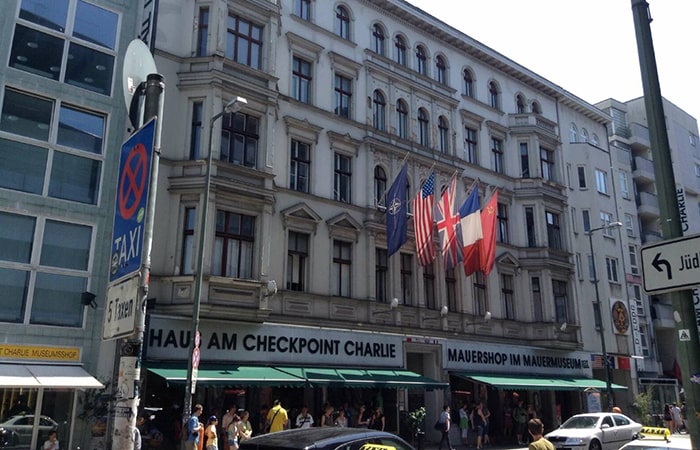
Checkpoint Charlie became one of the most famous border crossings of the Cold War.
The Checkpoint Charlie Museum, also known as the Mauermuseum, tells stories connected with the Berlin Wall, the Cold War and attempts to escape from East Germany.
It’s a particularly interesting stop if you want to understand more about what life was like in a divided Berlin and the lengths some people went to in order to cross the border.
Gendarmenmarkt
Gendarmenmarkt is one of Berlin’s best-known squares, framed by three striking buildings: the Konzerthaus, French Cathedral and German Cathedral.
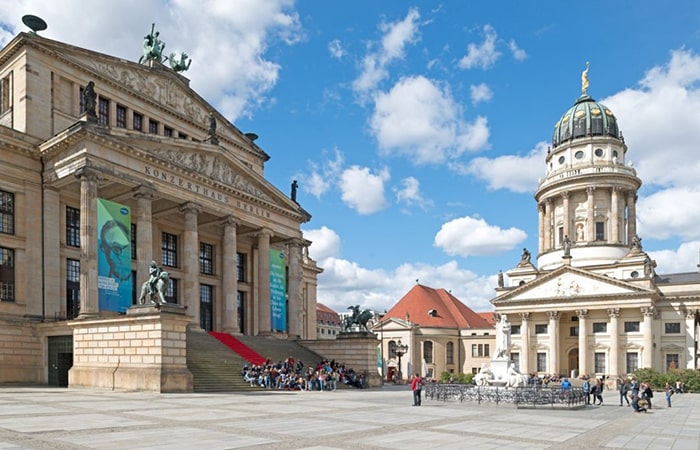
Gendarmenmarkt is one of Berlin’s best-known historic squares.
The square dates back to the 17th century and has undergone several changes throughout its history.
Following around two years of renovation work, Gendarmenmarkt reopened in March 2025. Today, you can once again walk across the historic square and take in the architecture surrounding it.
Memorial to the Murdered Jews of Europe
Close to the Brandenburg Gate, the Memorial to the Murdered Jews of Europe, often referred to as the Holocaust Memorial, commemorates the approximately six million Jewish victims of the Holocaust.
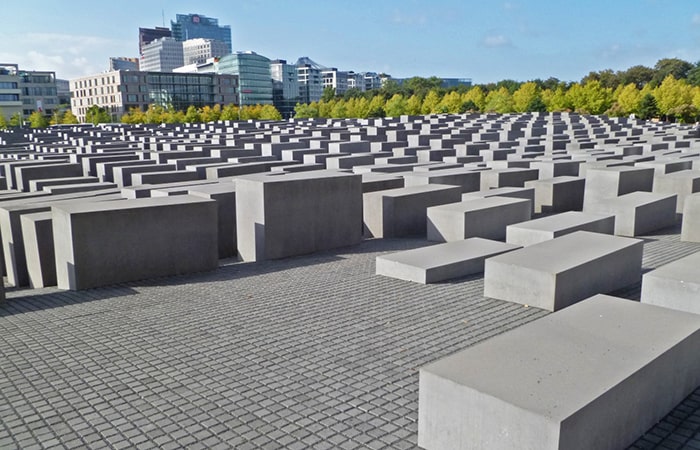
The Memorial to the Murdered Jews of Europe in Berlin.
The memorial consists of 2,711 concrete stelae arranged across an undulating site covering around 19,000 square metres.
Beneath the memorial is an information centre where you can learn more about the persecution and murder of Europe’s Jewish population through personal stories, documents, photographs and other historical material.
Berlin Zoo
Opened in 1844, Berlin Zoological Garden is the oldest zoo in Germany. Today, it is also known for having one of the largest varieties of animal species of any zoo in the world.
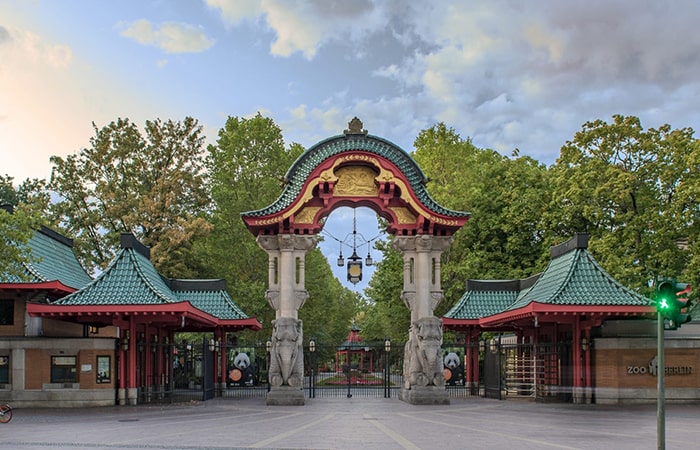
Berlin Zoo first opened in 1844
The zoo was almost completely destroyed during the Second World War, with only 91 of more than 4,000 animals surviving. It was subsequently rebuilt and developed into the zoo you can visit today.
Around 20,000 animals now live at the zoo, including elephants, giraffes, gorillas and Germany’s only giant pandas.
One particularly famous resident is Fatou, a western lowland gorilla who celebrated her 69th birthday in April 2026 and is recognised by the zoo as the world’s oldest gorilla.
Day trips from Berlin: Potsdam and Sanssouci Palace
If you’re on a study holiday in Berlin, why not take a day trip out? Around 40 kilometres from central Berlin lies Potsdam, the capital of the state of Brandenburg and a city filled with parks, lakes and palaces.
One of its best-known attractions is Sanssouci Park, which contains several royal buildings associated with the Prussian monarchy.
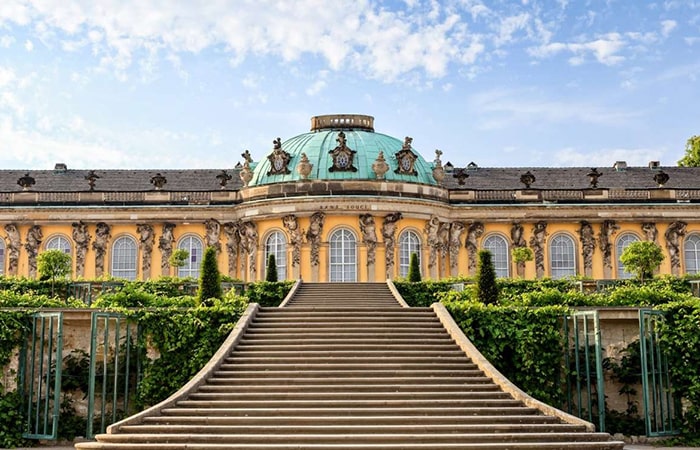
Sanssouci Palace was the summer residence of Frederick the Great of Prussia.
Potsdam developed into an important royal residence under the Prussian kings, particularly during the 18th and 19th centuries. Today, many of its palaces and parks form part of the UNESCO World Heritage Site known as the Palaces and Parks of Potsdam and Berlin.
Just west of Potsdam’s city centre is Sanssouci Palace, built for Frederick the Great in the 18th century as his summer residence.
Its name comes from the French sans souci, meaning “without worry” or “carefree”. Compared with many European royal palaces, Sanssouci is surprisingly intimate, with its main building containing just ten principal rooms on a single floor.
Around two decades later, Frederick commissioned the much larger New Palace at the western end of Sanssouci Park. Built after the Seven Years’ War, the palace was designed on a far grander scale, with more than 200 rooms.
A trip to Potsdam gives you a chance to step away from central Berlin for the day and discover another part of Germany’s history, from Prussian kings and royal palaces to landscaped parks and UNESCO-listed architecture.