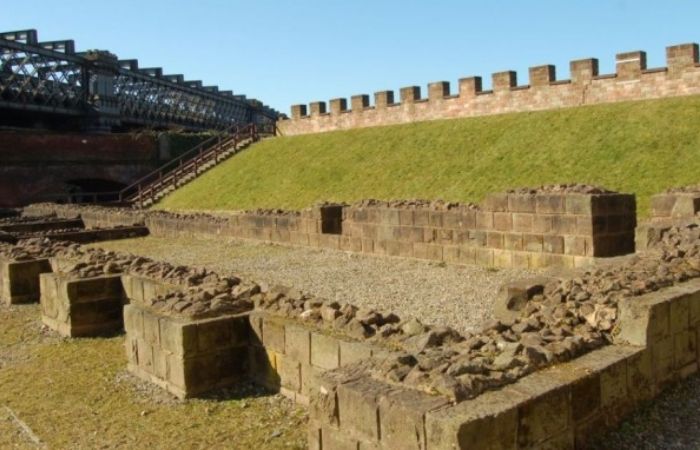
For several centuries, the Roman Empire and Britain had a special relationship… because Britain was actually part of the Roman Empire! This left a lasting mark on the country’s architecture and landscape, and many traces of Roman Britain can still be seen today.
Britain has a long and fascinating history, rich in myths and legends. The first evidence of human settlement dates back to the Ice Age, when Britain was still connected to mainland Europe by land.
Evidence of human activity in Britain stretches back hundreds of thousands of years, although settlement was interrupted by successive ice ages. Much later, during the Neolithic period, prehistoric communities constructed extraordinary monuments such as Stonehenge and Avebury, which date back approximately 5,000 years.
During the Bronze Age, from around 2500 to 800 BC, Britain experienced significant cultural changes, including the development of metalworking and new burial traditions. Celtic languages and cultural influences subsequently became established across much of Britain, although historians continue to debate exactly how and when these changes occurred.
The next major turning point came with the arrival of the Romans. Julius Caesar led expeditions to Britain in 55 and 54 BC, but the Roman conquest did not begin until AD 43, under Emperor Claudius.
Over the following decades, Roman forces extended their control across much of present-day England and Wales, eventually establishing a northern frontier close to what is now the border between England and Scotland.
The Romans in Britain
When the Romans arrived in Britain, they began transforming the landscape by constructing roads, fortresses, villas and public baths, following architectural and engineering traditions already established throughout the Roman Empire.
The Romans controlled most of present-day England and Wales and established or developed numerous towns that still exist today. Many of these places retain archaeological evidence of their Roman origins, offering an insight into what life was like almost 2,000 years ago.
London, York, St Albans, Bath, Exeter, Lincoln, Leicester, Worcester, Gloucester, Chichester, Winchester, Colchester, Manchester, Chester and Lancaster all have Roman origins or significant Roman histories.
You may also have noticed that many English place names end in -chester, -cester or -caster. These endings often derive from the Latin word castra, meaning a military camp or fort, reflecting the settlements’ connections to Roman military activity.
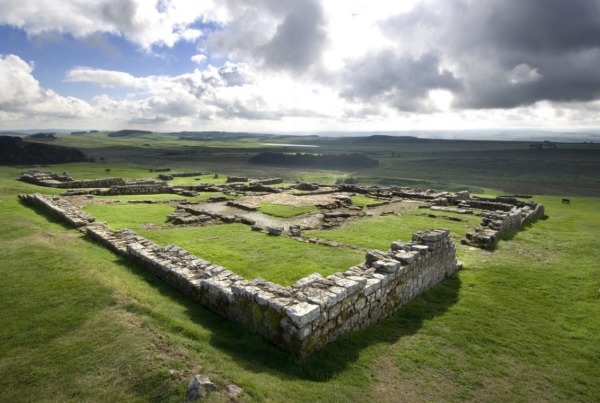
To strengthen their control of the northern frontier, the Romans constructed a defensive barrier known as Hadrian’s Wall, named after Emperor Hadrian, who ordered its construction in AD 122.
Hadrian’s Wall
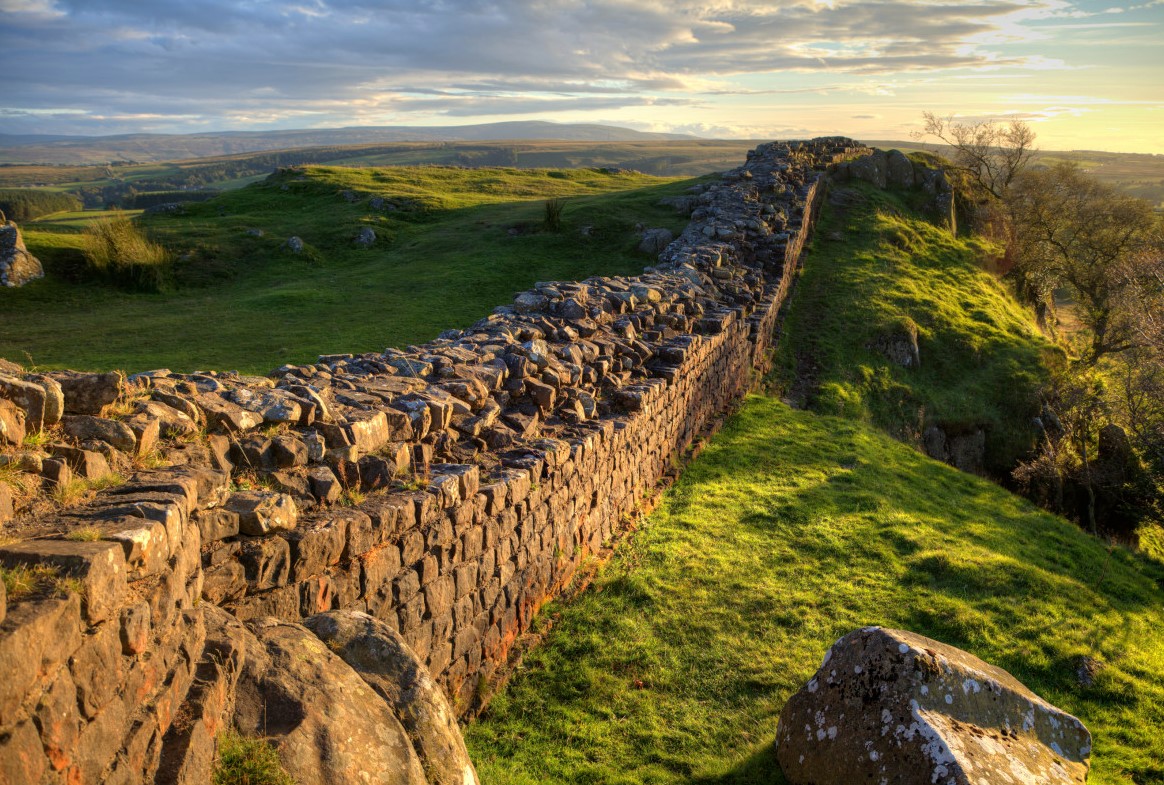
Today, Hadrian’s Wall remains one of Britain’s most important archaeological sites, marking the northern frontier of the Roman Empire for much of the Roman occupation.
The wall originally stretched approximately 73 Roman miles, or 117 kilometres, from Bowness-on-Solway in the west to Wallsend, near Newcastle upon Tyne, in the east.
Almost two millennia later, substantial sections of the wall are still visible, particularly across the countryside of Northumberland and Cumbria. Other sections have disappeared as towns expanded or as stone was removed and reused in buildings over the centuries.
The wall formed part of an extensive military frontier, with forts, milecastles and watchtowers that allowed Roman soldiers to monitor movement and control access across the border.
One of the most remarkable archaeological sites associated with this frontier is Vindolanda, a Roman fort and settlement situated just south of Hadrian’s Wall.
Excavations at Vindolanda have uncovered an extraordinary collection of everyday Roman objects, including shoes, clothing, tools and personal belongings. Among the most important discoveries are the Vindolanda writing tablets, which contain handwritten messages offering a rare glimpse into the daily lives of soldiers and their families.
Many of these tablets are now held by the British Museum in London, while Vindolanda’s own museum displays an extensive collection of objects discovered at the site.
Other evidence of the history of the Roman Empire and Britain
Evidence of Roman occupation can be found throughout Britain, particularly in England, where the remains of villas, towns, temples and military buildings have survived for centuries.
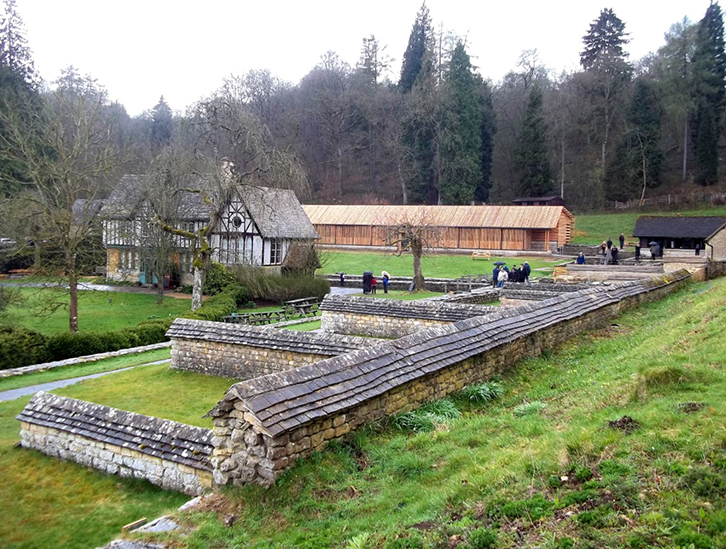
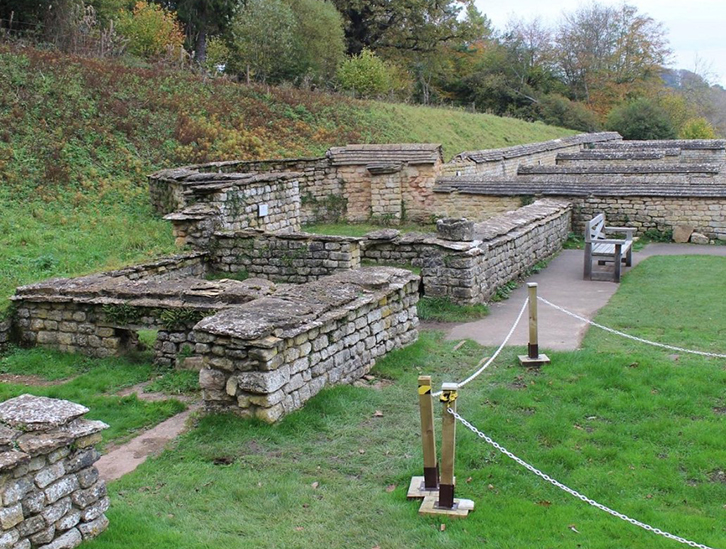
One of the most impressive examples is Chedworth Roman Villa, located in the Cotswolds in Gloucestershire. This extensive archaeological site provides a fascinating picture of the wealth and lifestyle enjoyed by some inhabitants of Roman Britain.
Contents
Chedworth Roman Villa
Chedworth Roman Villa was discovered by chance in 1864 on the estate of the Earl of Eldon. Following the discovery, the antiquarian James Farrer, who was related to the Earl, organised excavations that revealed the remains of an impressive Roman residence.
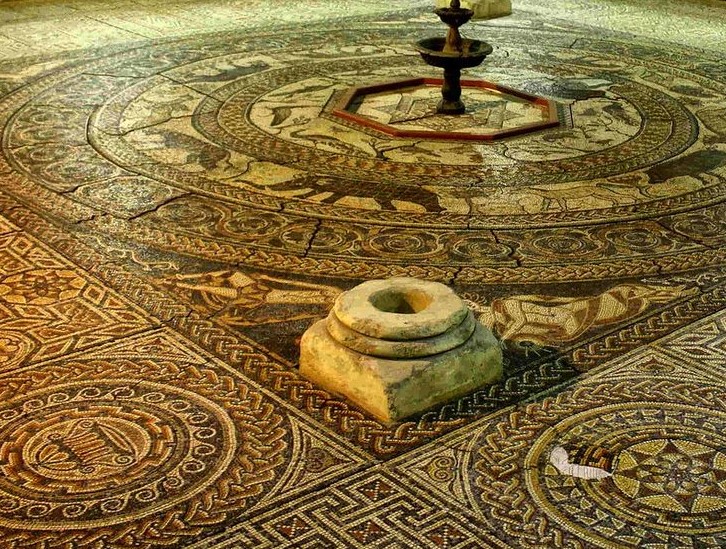
The villa contains remarkably well-preserved mosaic floors, together with surviving sections of walls and evidence of an elaborate bathing complex. These discoveries suggest that the property was once a luxurious country residence.
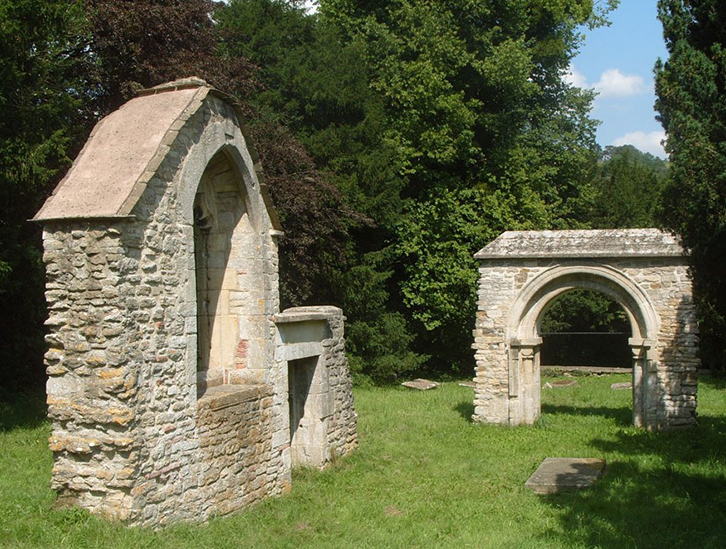
Archaeologists have also identified a natural spring that supplied fresh water to the villa. Its elaborate stonework suggests that the spring held religious significance and may have served as a shrine, rather than simply functioning as a water source.
Woodchester Roman Villa
Another remarkable Roman villa was discovered at Woodchester, also in Gloucestershire, during the 18th century.
The site is particularly famous for its enormous Orpheus mosaic, which measures approximately 15 metres square and covers an area of around 225 square metres.
Discovered in 1793, it is one of the largest Roman mosaics known in Britain. The intricate design depicts Orpheus, a figure from classical mythology, surrounded by animals and birds.
Although the mosaic is normally kept covered to protect it, its discovery provides further evidence of the extraordinary craftsmanship and wealth associated with Roman villas in Britain.
Caerleon Ampitheatre
One of the most important surviving Roman monuments in Wales is Caerleon Amphitheatre, situated just north of Newport.
The amphitheatre is oval-shaped, with eight entrances, and was built around AD 90 to serve the Roman legionary fortress of Isca Augusta. It could accommodate approximately 6,000 spectators, who gathered to watch public entertainment and military displays.
Before archaeological excavations confirmed its Roman origins, the amphitheatre was known locally as King Arthur’s Round Table, reflecting its association with the legendary British king.
Excavations beginning in 1926 revealed more about the building’s original structure and its role in Roman military life. The amphitheatre was altered and repaired during the Roman period, and its surviving earthworks remain an impressive reminder of the Roman presence in Wales.
Roman roads in Britain
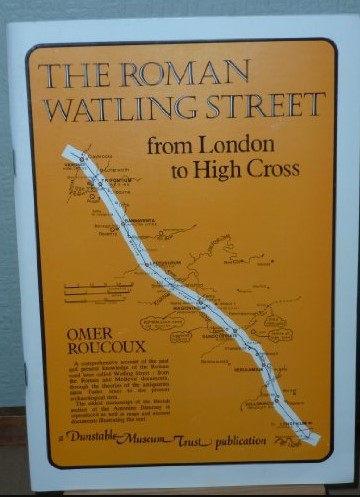
One of the most recognisable signs of Roman occupation is the network of long, straight roads that still influences Britain’s landscape today.
Roman engineers constructed an extensive road system to connect military forts, towns and administrative centres. These routes allowed soldiers, merchants and officials to travel more efficiently across the province.
Among the most important Roman roads was Fosse Way, which ran between Exeter and Lincoln, passing through places such as Bath, Cirencester and Leicester.
Other major routes included Ermine Street, which connected London with Lincoln and York, and Watling Street, which extended from the Kent coast through London towards Wroxeter, near the Welsh border.
Over the centuries, many Roman roads were resurfaced, altered and incorporated into modern transport networks. Some sections of today’s roads still follow routes established almost 2,000 years ago.
Roman sites to visit in Britain
If you’re interested in discovering more about the Roman Empire’s influence on Britain, there are numerous archaeological sites and historic landmarks you can visit.
Some of the most important include:
-
Hadrian’s Wall: Explore the remains of the Roman frontier stretching across northern England.
-
Chedworth Roman Villa: Discover beautifully preserved mosaics, Roman baths and the remains of a luxurious country residence in Gloucestershire.
-
The Roman Baths in Bath: Visit one of Britain’s best-preserved Roman bathing complexes, built around natural hot springs.
-
The Antonine Wall: Discover the remains of a second Roman frontier, constructed across central Scotland during the reign of Emperor Antoninus Pius.
-
Cirencester: Explore the Roman history of Corinium, once one of the largest towns in Roman Britain.
-
Chester Roman Amphitheatre: See the remains of Britain’s largest known Roman amphitheatre.
-
Housesteads Roman Fort: Visit one of the best-preserved Roman forts along Hadrian’s Wall.
-
Fishbourne Roman Palace: Admire the remains of an enormous Roman residence in West Sussex, famous for its elaborate mosaic floors.
-
Bignor Roman Villa: Discover an impressive collection of Roman mosaics in the West Sussex countryside.
-
Vindolanda: Explore the remains of a Roman fort and settlement, where archaeologists have uncovered remarkable objects from everyday life.
-
London Museum: Learn about the Roman origins of London through archaeological discoveries and historical collections. The museum’s new Smithfield site is scheduled to open on 28 November 2026.