
The legends of British castles, where history and mystery intertwine. A glimpse into British culture that lets you see England through new eyes.
British castles are often introduced as architectural monuments or military strongholds, but many of them are equally known for the stories that have grown around their walls. Over time, history and legend have become closely intertwined, creating narratives that are still told today.
These stories are not simply ghost tales invented for entertainment but, in many cases, they are rooted in real events, recorded deaths, social conflicts or historical trauma, later reshaped through oral tradition and local memory.
Understanding these legends offers another way of reading British history, one that reflects fear, loss, belief and imagination as much as dates and battles.
Where the stories begin
Most British castles date back to the Norman period, beginning in the eleventh century. Built for defence and authority, they were places of power, control and confinement.
They also witnessed executions, sieges, forced marriages and political imprisonment. It is not surprising that such environments later became associated with unsettled spirits and unexplained presences.
In this sense, ghost stories often act as cultural responses to violence and injustice rather than pure fantasy.
When written history meets folklore
One of the earliest examples comes from Alnwick Castle. In the twelfth century, the chronicler William of Newburgh recorded an account of a deceased man who returned to trouble the living.
This episode is sometimes described as one of the first vampire stories in English writing. Historians now believe it may reflect collective fear during a local epidemic, translated into supernatural language by medieval society.
At Scotney Castle, the legend of Arthur Darrell is similarly anchored in documented history. Records confirm his supposed death abroad in 1720, while the later discovery of his coffin filled with stones added lasting uncertainty to the story.
Here, folklore grows directly from unanswered historical questions.
Love, class and punishment
Some of the most enduring castle legends centre on forbidden relationships.
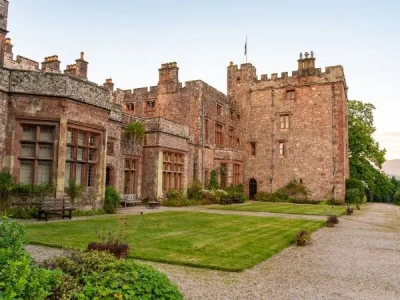
At Muncaster Castle, local tradition tells of a carpenter executed for falling in love with Heloise Pennington, the lord’s daughter. Whether every detail is accurate matters less than what the story reflects: rigid class divisions and the severe consequences of defiance.
Reports of a headless figure wandering the castle persist, reinforcing the idea that injustice leaves a long cultural memory.
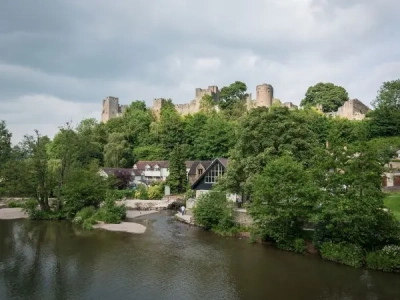
A similar pattern appears at Ludlow Castle, where the figure known as the White Lady is linked to betrayal during a period of political instability. Her story blends romance with espionage, showing how personal relationships were often entangled with wider conflicts.
War and lingering presence
Military history also shapes many castle legends.
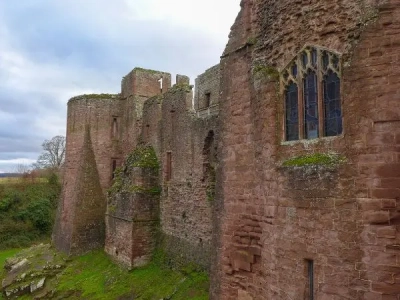
At Goodrich Castle, the English Civil War frames a tale of two lovers caught on opposing sides. Their deaths are remembered not through records alone, but through stories of voices heard during storms, reinforcing the emotional cost of civil conflict.
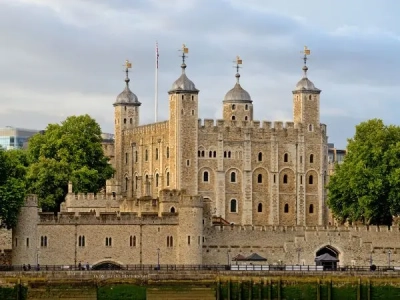
The Tower of London presents a different kind of account. In 1816, a guard reported encountering a spectral bear near the Jewel House. The incident was officially recorded, and the guard later died after the shock.
What matters here is not whether the bear was real, but how seriously the event was treated at the time.
The persistence of belief
Some stories resist explanation entirely.
At Fyvie Castle, the figure of Dame Lilias Drummond remains associated with the scent of roses and an inscription carved impossibly high into a window ledge. No conclusive explanation has ever been found.
These details endure because they sit outside rational certainty, and because visitors continue to report similar experiences centuries later.
Why these stories still matter
Haunted castles remain culturally significant because they offer a different way of engaging with history. They connect architectural spaces with emotion, memory and imagination.
Today, places such as Cardiff Castle and Craig-y-Nos Castle use guided tours, performances and overnight stays to keep these narratives alive, not as spectacle, but as part of their historical identity.
Learning history through British Castles
Visiting British castles allows you to experience history where events unfolded, where people lived, and where stories were born.

For students taking part in study trips to the United Kingdom, these locations offer an opportunity to understand British culture through place, memory and storytelling, not just through dates and facts.
Whether the shadows belong to the past or the imagination remains open to interpretation. What is certain is that these castles continue to speak to anyone willing to listen.