
Introducing active learning into your classroom, and why it’s worth continuing to explore and innovate in education
Education today is undergoing a period of evolution, with active learning playing it’s part. More and more schools are questioning whether the traditional approach to teaching can still meet the needs of new generations of learners.
Yet, despite the growing awareness that change is necessary, many teachers continue to rely on the familiar classroom model in which they explain the lesson, students take notes, and the process ends there. It is a comfortable routine, but one that often fails to create meaningful or lasting learning.
When we stop to think about it, how much of what is explained in this way is actually remembered after a few weeks? This is one of the main reasons why active learning is gaining ground as an approach capable of transforming the educational experience. Rather than limiting students to passive listening, it invites them to participate directly, to explore ideas, test hypotheses, and learn through doing.
In this model, students become the protagonists of their education, developing their ability to think critically, to solve problems creatively, and to apply their knowledge in real contexts. These are precisely the skills that will matter most in the world they are preparing to enter.
We also know that for teachers who have been working for many years, changing habits and teaching methods can feel challenging, and every class has its own rhythm and personality.
Contents
What active learning really means
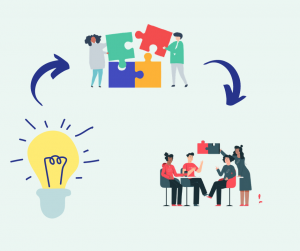
In simple terms, active learning is what happens when students have the chance to put theoretical knowledge into practice. It is not just a matter of listening to lectures or reading a text, but of engaging with the material through questions, structured tasks, and interactive experiences.
Students are asked to analyse, to experiment, and to respond, which allows them to internalise concepts more deeply and to understand how these can be used beyond the classroom.
This shift changes the entire dynamic of the lesson. Instead of absorbing information in a passive way, students begin to take ownership of their learning.
They are encouraged to question what they hear, to articulate their reasoning, and to collaborate with others in building new knowledge. The result is a more active, participatory environment in which learning becomes both more personal and more enduring.
From teaching to collaboration
Active learning represents not just a set of techniques but a real change of perspective. It moves the centre of gravity from the teacher to the student, creating a more balanced and collaborative relationship.
The teacher is no longer the sole transmitter of information, but rather a facilitator who supports and guides the class in exploring ideas. The lesson becomes a shared process, shaped by curiosity and exchange.
Imagine, for example, beginning a new topic not with an explanation but with a question. You invite students to propose their own hypotheses, discuss possible answers, and identify what they need to investigate further. In doing so, you are no longer providing ready-made solutions but helping them develop the tools to find those solutions themselves.
This approach gives you a clearer sense of how well they have understood the topic while encouraging them to take responsibility for their own learning. It also strengthens their ability to express themselves clearly, defend their opinions, and listen to different perspectives, all essential skills for adulthood.
The benefits of active learning
The benefits of active learning go far beyond academic performance. It stimulates intellectual curiosity, strengthens social and cognitive abilities, and teaches students how to learn, not just what to learn. In an age where information is abundant but not always reliable, this approach encourages the kind of critical thinking that allows young people to distinguish between credible and unreliable sources. By discussing, comparing, and analysing, they learn to make informed judgments instead of simply repeating what they have been told.
Group projects and practical tasks foster a deeper level of engagement than rote memorisation ever could. Students are asked to work together, share ideas, and take collective responsibility for outcomes.
This collaboration nurtures teamwork and communication, qualities that will be invaluable in any professional environment. It also helps them recognise the value of different perspectives and the strength that comes from combining them.
Active learning is equally effective in helping students retain information. When they are directly involved in activities that require reasoning, discussion, and creativity, they form stronger mental connections that make it easier to recall what they have learned later. Instead of short-term memorisation, knowledge becomes integrated and usable.
Another significant advantage lies in its relevance to real life. While traditional curricula often stop at theory, active learning exposes students to real-world challenges and encourages them to develop innovative, practical solutions. This hands-on approach fosters adaptability and initiative.
Technology can also play a vital role in this process. For many young people, digital tools are a natural part of daily life, yet classrooms often lag behind. Integrating technology into lessons allows students to connect learning with their reality. Whether they are using tablets to research, smartphones to collaborate, or online platforms to present their findings, technology becomes an ally in the learning process rather than a distraction. It brings lessons closer to their world and helps maintain motivation.
Finally, active learning creates a safe space for taking intellectual risks. Students can experiment with ideas, test their reasoning, and experience the consequences of their decisions within a protected environment. This not only builds confidence but prepares them for professional situations where initiative and problem-solving are key.
Putting active learning into practice
There is no universal formula for applying active learning, but there are numerous methods that can be adapted to suit the age group, subject, and atmosphere of each class. What matters most is maintaining a spirit of experimentation and reflection.
A simple but effective exercise is the One-Minute Paper, where students are asked to summarise the key point of a lesson or respond to a focused question in a single minute. It helps consolidate knowledge while allowing you to identify areas that need clarification.
Another widely used technique is the Muddiest Point: at the end of a session, students write down the concept they found most confusing, and the next lesson begins by revisiting that area through a practical example or group discussion. This ensures continuous understanding and keeps communication open between teacher and students.
The Think–Pair–Share method is another valuable tool. Students begin by reflecting individually on a question, then discuss their thoughts with a partner before sharing them with the class. This approach combines independent thinking, teamwork, and public speaking in one simple structure.
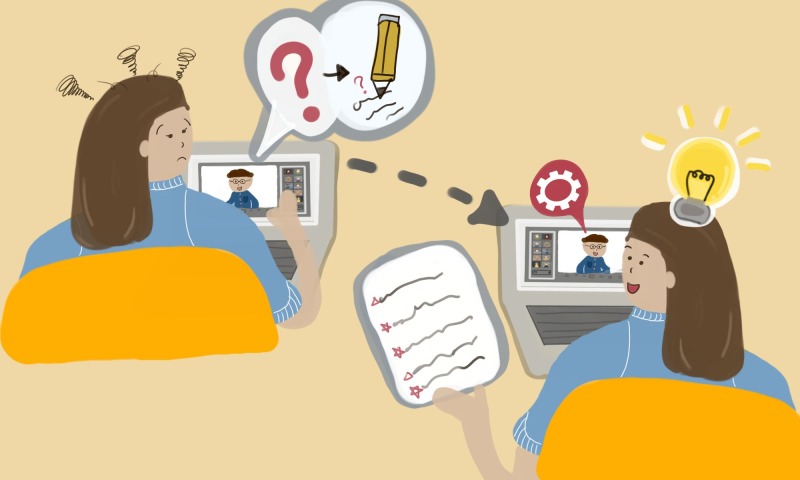
For more complex topics, case-based learning is particularly effective. Analysing real-life examples encourages students to apply theory to practice, strengthening both comprehension and memory. Similarly, role-playing activities invite them to step into different perspectives — as scientists, journalists, or citizens — cultivating empathy and awareness while keeping lessons lively and memorable.
Another powerful method is problem-based learning, in which students are presented with a real or simulated challenge and work collaboratively to develop possible solutions. This stimulates decision-making, initiative, and creativity. Finally, collaborative projects that extend over several lessons help to build a sense of shared responsibility. Students learn to coordinate efforts, distribute tasks, and manage conflict — all crucial abilities beyond the academic setting.
Continuing to innovate in the classroom
Active learning is not a passing trend but part of a broader transformation in education. It allows lessons to become more engaging and meaningful, helping students not only to understand but to connect with what they learn. Still, innovation in schools is an ongoing process. Although traditional teaching methods are slowly being replaced, there is much more to explore in order to make these new approaches truly effective in every context.
Teachers play a central role in this evolution. Staying informed about new methodologies, experimenting with them in class, and sharing results with colleagues are powerful ways to keep education moving forward. Collaboration among teachers — especially between those who are open to change and those who are more hesitant — can generate creative solutions and strengthen the learning community as a whole.
Education has always been about growth, both for students and for those who teach them. By embracing active learning, we are not only improving academic results but also cultivating curiosity, resilience, and imagination. These are the qualities that will prepare students for the unpredictable, exciting world that awaits them beyond the classroom.
Final thoughts on experimenting with new teaching methods through active learning
As we have seen, active learning can be a valuable ally in modern education. From simple classroom strategies to more advanced techniques, it has the power to enrich the way students learn and to make lessons more engaging, practical, and rewarding.
If traditional teaching has lost much of its appeal, it is because students today expect something different, something interactive, relevant, and stimulating. Yet that does not mean the traditional model must be discarded entirely; rather, it should be expanded and reimagined through experimentation, research, and collaboration.