
A study holiday in Ireland is a complete learning experience that strengthens language skills and supports students’ independence and maturity.
Planning a study holiday in Ireland is a strategic educational choice. It can offer students an experience that is genuinely life-shaping in linguistic, cultural, and personal terms.
Ireland, with its distinctive character, combines the charm of unspoilt landscapes with the buzz of its cities.
Think of Dublin, a lively capital and a hub of culture and student life. Think of Cork, an elegant city with a strong sense of history on the River Lee. Think of Galway, a west-coast gem with a thriving arts scene.
For students aged 11 to 17, this setting offers more than a chance to practise English. It also offers a way to experience a welcoming culture and a day-to-day environment that encourages learning.
A study holiday in Ireland can become a real life skills training ground. It gives students space to take on new challenges and build abilities they will use for years to come. With an integrated approach that brings together lessons, structured activities, guided trips, and contact with local life, each student is encouraged to take part fully.
That supports stronger communication, more confidence, and the ability to adapt to unfamiliar situations.
Away from routine, students can try new ways of learning and living. The setting keeps curiosity and personal growth moving forward. In the sections below, we look at why more Italian schools are choosing Ireland, which activities work best, how to pick the right accommodation, and how to build a project that aligns with school goals and guidelines.
Why choose Ireland for a study holiday
Ireland stands out among international English-language destinations for the quality and range of its educational options! It also offers a social environment that is widely seen as welcoming and student-friendly.
The Irish accent is often perceived as clear and accessible for learners, particularly in classroom settings, which can help students feel more confident when speaking both in lessons and during daily activities. This supports early engagement with the language and encourages active participation.
The Irish educational approach places strong emphasis on inclusion and on the development of the student as a whole. Wellbeing, motivation, and learning through experience are central values, with teaching environments that favour collaboration and mutual respect. Teacher-student relationships are typically supportive, within a classroom atmosphere that encourages participation and confidence. We select schools, language centres, and host families using clear standards around quality, hygiene, welcome, and transparency.

From a cost perspective, Ireland can represent a strong balance between educational quality and overall value, depending on location, programme structure, and time of year.
In recent years, the country has invested consistently in international education and language learning, becoming an increasingly popular destination for Italian schools seeking reliable, high-quality study programmes with strong value for money.
English lessons in accredited schools
Our partner schools in Ireland operate within recognised quality frameworks and adhere to national and international standards for English-language education.
Many are accredited by organisations such as MEI (Marketing English in Ireland), ACELS (Accreditation and Coordination of English Language Services), and EAQUALS (Evaluation and Accreditation of Quality in Language Services).
For families and teachers, these accreditations provide reassurance that programmes run in safe, modern learning environments with qualified teaching staff and appropriate safeguarding measures.
Classes are typically international and limited in size, allowing for more personalised attention. Also, lessons are taught entirely in English and adapted to each student’s starting level, established through an entry test.
Teaching follows a communicative and participatory approach, with activities such as role play, individual and group presentations, collaborative tasks, and practical workshops. There is a strong focus on speaking, listening, and everyday comprehension, essential for effective communication.
Initial placement testing ensures balanced classes, while a final certificate documents progress and can be included in the student’s school record.
Programmes can also be enriched with optional modules, depending on school objectives:
- CLIL modules, where subjects such as science, art, technology, or economics are taught in English.
- Specialist workshops focusing on theatre, journalism, storytelling, or public speaking.
- PCTO-style project work that may be recognised within school pathways.
- Preparation courses for internationally recognised language exams such as PET, FCE, or LanguageCert.
This modular structure allows schools to design programmes aligned with their PTOF, ensuring educational coherence and long-term benefit.
Afternoon activities and free time
A successful study holiday is shaped as much by experiences outside the classroom as by formal lessons.
For this reason, each programme includes a structured schedule of afternoon activities, supervised by trained staff and conducted entirely in English.

Language use continues naturally during leisure time, turning everyday experiences into meaningful learning opportunities. Depending on location and programme design, students may take part in:
- Traditional Irish sports such as Gaelic football, hurling, or camogie, offering cultural immersion and social interaction.
- Creative workshops including Irish dance, folk music, visual arts, and local crafts.
- Team-building activities and language games designed to strengthen communication and cooperation.
- Meetings with Irish students through guided exchanges and shared activities.
- Themed treasure hunts and cultural visits that make discovery interactive and engaging.
- Each activity is designed to encourage fluent conversation, strengthen motivation, and develop soft skills such as teamwork, leadership, and problem-solving.
Students learn by doing, using English in real and spontaneous contexts rather than as a purely academic exercise.
Trips in Ireland: culture, nature, and Celtic legends
Trips are a central part of the educational project, allowing students to explore Ireland’s history, landscapes, and traditions through direct experience.
Each visit is carefully planned and can be supported by preparatory materials, contextual briefings, and follow-up activities that deepen reflection and consolidate learning.

Full-day trips may include:
- The Cliffs of Moher and the Burren, showcasing Ireland’s dramatic west coast and unique limestone landscapes, suitable for geography or photography-based learning.
- Belfast and the Titanic Museum, offering insight into industrial heritage and modern history, with opportunities for CLIL-style activities.
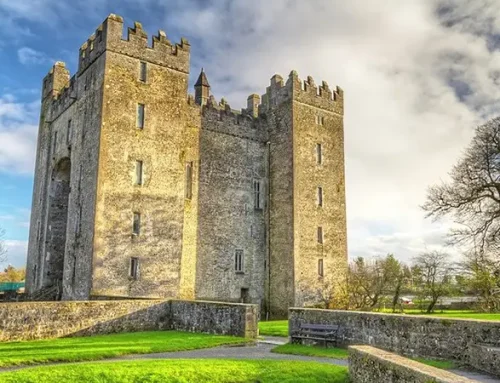
- Kilkenny, with its medieval castle, historic streets, and local legends, ideal for storytelling and creative engagement.
- Connemara National Park, featuring mountains, lakes, and bogland, providing a strong setting for environmental and science-focused learning.
Half-day trips may include:
- Trinity College and the Book of Kells, introducing students to Ireland’s academic heritage and one of its most famous cultural artefacts.
- Temple Bar and Grafton Street in Dublin, reflecting the city’s creative and youthful atmosphere.
- The English Market in Cork, offering a sensory introduction to Irish food culture.
- Guided walking tours in Galway, combining local history with Celtic legends and storytelling.
Each excursion can be linked to written reports, multimedia projects, or assessed tasks, extending its educational value.
Accommodation: host families or residence
Accommodation is planned to ensure comfort, safety, and meaningful cultural immersion.
Depending on students’ age, independence, and group needs, two supervised options, host family or college residence, are available, both designed around student wellbeing.
Host families are carefully selected and often have long experience welcoming international students. This option supports natural language development through everyday interaction and shared routines. Families are regularly monitored and receive guidance to ensure a safe and positive experience.
Residence or college accommodation offers modern facilities, single or twin rooms, shared spaces, dining halls, and continuous staff supervision. This solution works particularly well for larger school groups or groups travelling with an accompanying teacher, as it allows for centralised organisation and structured routines.
In both cases, students usually receive full board, with attention given to dietary requirements, allergies, and intolerances. Medical support is available locally if required, supporting peace of mind for families and schools.
Proven educational value
Choosing a study holiday in Ireland offers benefits that extend beyond language acquisition.
Ireland is widely recognised for the effectiveness of its education system, with a strong focus on critical thinking, participation, collaboration, and creativity.
Language immersion plays a key role in progress. Students use English throughout the day, during lessons, activities, meals, and informal interactions.
This consistent exposure supports natural learning, improved pronunciation, and a broader working vocabulary through full immersion.
Equally important are the personal benefits!
Living away from home, adapting to new environments, and building international friendships help students develop independence, adaptability, empathy, and strong interpersonal skills.
These abilities support academic success and prepare students for future educational and professional paths, strengthening personal development alongside language progress.
Inclusion and accessibility
Ireland is particularly well suited to inclusive and flexible study holiday programmes. Our projects are designed to accommodate students of different ages, levels, and educational backgrounds, with a strong focus on inclusion.
Students with beginner-level English are supported through careful placement and structured learning pathways, ensuring a positive and motivating experience.
International classes promote cultural exchange in a respectful and collaborative environment.

Ireland is also frequently chosen for programmes linked to public funding and European initiatives such as INPS Bando Itaca, Erasmus+, and PON projects, subject to current eligibility criteria.
We also provide tailored support for students with BES or DSA.
During planning, we work closely with school staff to adapt programmes, accommodation, and learning approaches to individual needs, ensuring accessibility and a fully inclusive experience.
A reliable educational partner for your school
With more than 70 years of experience in educational travel, our organisation is recognised for its expertise in designing study holidays for Italian secondary schools.
Our role goes beyond logistics.
We actively support teachers throughout the planning process, helping integrate the study holiday into the school curriculum in a coherent and recognised way, with consistent professional support.
Our support includes:
- Strategic guidance in selecting destinations and programmes.
- Preparation of clear information materials for families.
- Assistance with administrative documentation and reporting.
- Training and coordination for accompanying staff before departure.
- Ongoing contact with local teams throughout the stay.
- Operational support available 24 hours a day during the programme.
As a Supporting Agency, our aim is to simplify organisation and administration, allowing teachers to focus on educational outcomes, supported by end-to-end assistance.
Final thoughts
Choosing Ireland as a study holiday destination means offering students a complete and immersive educational experience.
High-quality teaching, a welcoming social environment, rich cultural heritage, and striking natural landscapes combine to create a programme that leaves a lasting impact.
Working with us means choosing a knowledgeable and attentive partner, committed to designing study holidays that align with school objectives and family expectations, and focused on educational quality.
Contact us for a personalised consultation. Together, we can plan a study holiday that truly makes a difference in students’ learning and confidence.