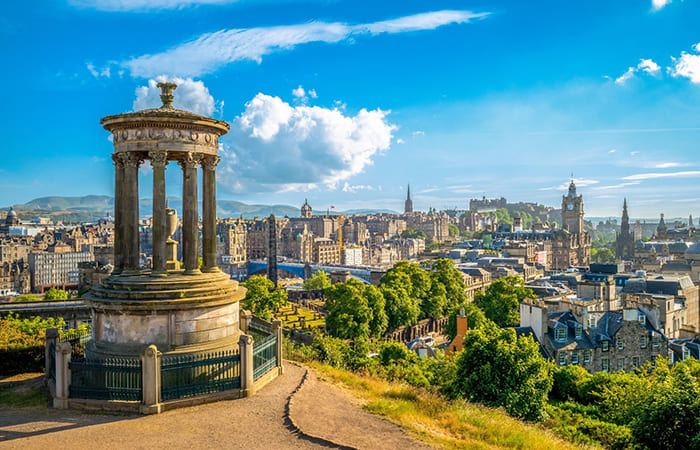
There are endless things to see in Edinburgh during a study holiday. From one of the world’s biggest arts festivals to a castle built on an extinct volcano, Scotland’s capital has plenty of famous attractions, as well as some stories you might not have heard before.
Did you know, for example, that Edinburgh Zoo is home to a knighted penguin? Or that the famous Royal Mile isn’t actually a standard mile long?
If you’re thinking about going on a study holiday in Scotland, here are seven places and experiences to add to your list, along with a few surprising facts to look out for while you’re there.
1. Experience the Edinburgh Festival Fringe
If you’re visiting Edinburgh in August, you’ll arrive during one of the biggest events in the city’s calendar: the Edinburgh Festival Fringe.
The Fringe takes place every year across Edinburgh, attracting huge numbers of locals and visitors from around the world. It has grown enormously since it began in 1947.

In 2026, more than 4,200 shows from 77 countries took part, with over 61,000 performances held across more than 300 venues.
For several weeks each August, theatres, pubs, clubs, university buildings and temporary venues across Edinburgh become performance spaces. You’ll find everything from comedy and theatre to music, dance, circus, cabaret and children’s shows.
That makes the Fringe particularly easy to experience if your study holiday falls during the summer. You don’t necessarily need to spend an entire day at the festival either. Simply walking through the city during Fringe season gives you a chance to see performers, pop-up venues and events taking place all around you.
If you happen to be in Edinburgh while the Fringe is on, it’s well worth adding a show or two to your plans.
2. Explore Edinburgh’s Harry Potter connections
Harry Potter fans will find plenty of familiar names and stories while exploring Edinburgh.
Although Edinburgh itself wasn’t a filming location for the original Harry Potter films, the city has a much stronger connection to the books through author J.K. Rowling, who wrote much of the series while living there.
Rowling spent time writing in several Edinburgh cafés, including The Elephant House, and completed Harry Potter and the Deathly Hallows at The Balmoral Hotel.
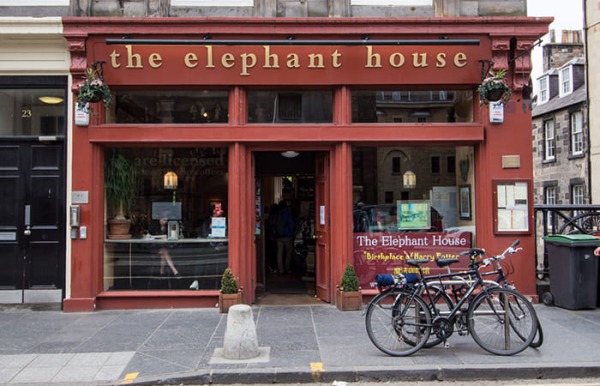
You can also visit Greyfriars Kirkyard, where gravestones bear names that Harry Potter readers may recognise, including Riddell and McGonagall.
Then there’s colourful Victoria Street, which is frequently compared with Diagon Alley because of its curved shape, historic buildings and brightly coloured shopfronts. Although it is often said to have inspired Diagon Alley, Rowling has never officially confirmed that connection.
You can visit these places independently as you explore the city or take one of Edinburgh’s Harry Potter-themed walking tours, which take you to locations associated with Rowling and the stories.
3. Meet Edinburgh Zoo’s famous penguin
Edinburgh Zoo is already a popular place to visit, but one of its residents has a story you probably won’t find at many other zoos.
His name is Major General Sir Nils Olav III, Baron of the Bouvet Islands, and he is a king penguin.
The story began in 1972, when a king penguin at the zoo was adopted by the Norwegian King’s Guard and became the regiment’s official mascot. Since then, successive penguins have inherited the name Nils Olav and continued the tradition.

Over the years, Sir Nils has steadily risen through the ranks. He was knighted in 2008, became a brigadier in 2016 and was promoted to Major General in 2023.
Sir Nils lives with the rest of the colony at Penguins Rock, home to one of Europe’s largest outdoor penguin pools.
Edinburgh Zoo’s connection with penguins goes back even further. The zoo received its first king penguins in 1913, brought to Edinburgh by the Christian Salvesen shipping company after an expedition to South Georgia.
So, if Edinburgh Zoo is on your list of things to see in Edinburgh, you may find yourself in the presence of a rather unusually decorated military officer.
4. Visit Edinburgh Castle and its extinct volcano
You can’t really miss Edinburgh Castle. Sitting high above the city on Castle Rock, it’s one of Edinburgh’s most recognisable landmarks.
What you might not realise when you first see it is that the castle is standing on the remains of an extinct volcano.
With its distinctive hills, valleys and rocky outcrops, Edinburgh’s landscape has been shaped by millions of years of geological activity. Some of the city’s best-known landmarks owe their appearance to ancient volcanic activity and the glaciers that later moved across the landscape during the Ice Age.
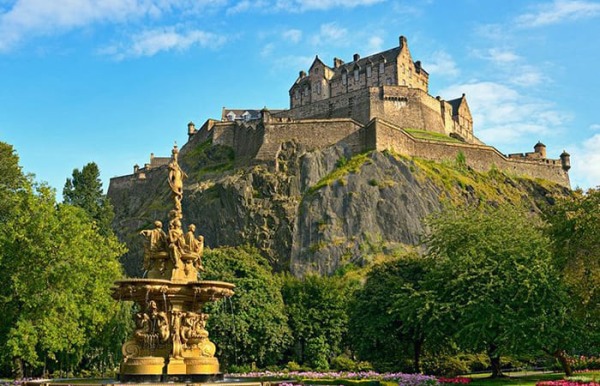
Castle Rock was formed by a volcano around 350 million years ago. Its high, rocky position also made it an excellent defensive location, which helps explain why the site has been occupied for thousands of years.
While you’re visiting the castle, try to be there in time for the famous One O’Clock Gun. The gun is fired at 1 pm from Monday to Saturday, continuing a tradition that dates back to 1861.
And there’s another rather unexpected story connected with Edinburgh Castle!
When the 78th Highlanders returned from Sri Lanka in the nineteenth century, they brought an elephant back with them as their regimental mascot. The elephant lived at Edinburgh Castle with the soldiers, and its story is still remembered there today.
So when you visit Edinburgh Castle, you’re not just visiting one of Scotland’s most famous historic sites. You’re standing on an ancient volcano and somewhere that was once home to a regimental elephant.
5. Look for Scotland’s unicorns
As you explore Edinburgh, keep an eye out for unicorns.
You’ll find them represented on historic buildings, monuments and coats of arms around the city because Scotland’s national animal isn’t a Highland cow or a golden eagle. It’s the unicorn!
The mythical creature has been associated with Scotland for centuries and began appearing on the Scottish royal coat of arms during the Middle Ages.
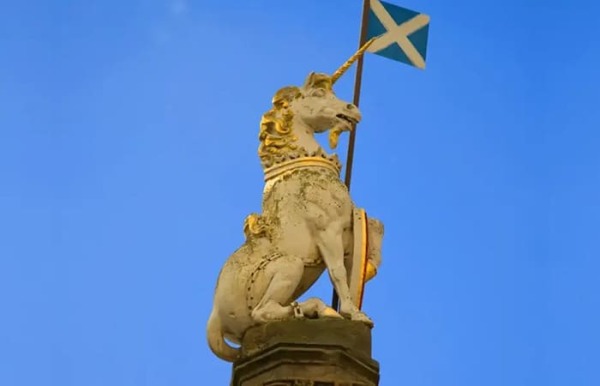
In Celtic mythology and later heraldic tradition, unicorns became associated with qualities such as purity, courage, strength and independence. Medieval legends also credited their horns with magical properties.
There was even a belief that a unicorn was so wild and powerful that only a virgin maiden could capture and tame one.
For centuries, the Scottish royal arms featured two unicorns supporting the shield. Following the Union of the Crowns in 1603, the royal arms used by James VI of Scotland and I of England brought together Scottish and English heraldic symbols.
Today, the Royal Coat of Arms used in most of the United Kingdom features a lion representing England on one side of the shield and a unicorn representing Scotland on the other.
Once you know what you’re looking for, spotting unicorns around Edinburgh can become a sightseeing activity in itself.
6. Spend some time in Edinburgh’s green spaces
Edinburgh may be famous for its medieval Old Town, Georgian architecture and dramatic skyline, but some of the best things to see in Edinburgh are its parks and green spaces.
Almost half of the city’s area is made up of green space, and Edinburgh has 144 parks and green spaces. The city is also known for having an exceptionally high number of trees in relation to its population.
That means you’re never far from somewhere to escape the busy streets for a while.
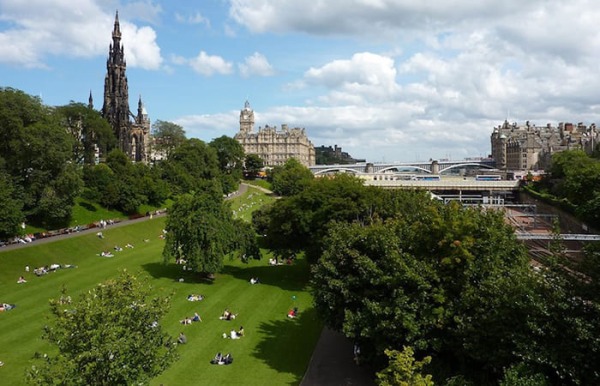
Some of Edinburgh’s best-known green spaces include Holyrood Park, home to Arthur’s Seat, The Meadows, Princes Street Gardens and Inverleith Park.
Edinburgh has previously been named the UK’s greenest city in studies comparing factors such as green space, trees and environmental performance. The city is also working towards its goal of becoming a Million Tree City.
If you have some free time during your study holiday, these spaces give you a very different view of the Scottish capital from the historic streets of the Old Town.
7. Walk the Royal Mile
No list of things to see in Edinburgh would be complete without the Royal Mile.
Edinburgh’s most famous street runs through the heart of the Old Town, connecting Edinburgh Castle at the top with the Palace of Holyroodhouse at the bottom.
Its name comes from its historic role as the processional route used by kings and queens travelling between the castle and the palace.
The Royal Mile is lined with historic buildings and attractions, including Gladstone’s Land, The Writers’ Museum, The Real Mary King’s Close, John Knox House and the Museum of Edinburgh.
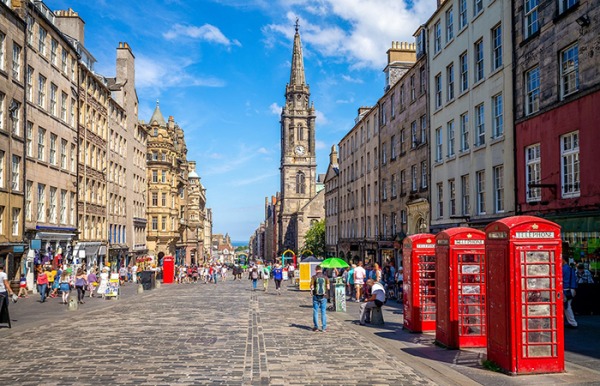
You’ll also find countless closes and narrow passageways leading away from the main street, offering glimpses into the city’s past.
But there’s something slightly misleading about the name.
The Royal Mile is roughly one Scots mile long, an old measurement that was longer than the modern English mile. The route stretches for around 1.8 kilometres, or approximately 1.1 modern miles.
Whatever measurement you use, walking the Royal Mile is one of the easiest ways to see several sides of Edinburgh’s Old Town in one go.
From an extinct volcano and a military penguin to hidden unicorns and one not-quite-a-mile-long street, there’s far more to Edinburgh than its best-known landmarks. If you’re visiting the city during your study holiday, make sure you leave some time to look out for the stories behind them too.
Discover more things to see in Edinburgh
From walking along the Royal Mile to meeting Edinburgh’s famous military penguin, there are plenty of things to see in Edinburgh beyond the attractions you might already know.
A study holiday gives you the chance to experience these places for yourself while getting to know the history, stories and traditions behind Scotland’s capital. Take a look at our study holidays in Edinburgh and discover what else you could see during your stay.