England is home to two of the most famous institutions in the world: The University of Oxford and University of Cambridge. Both have centuries of history behind them, extraordinary architecture and an academic reputation recognised around the globe.
At first glance, the two universities can seem quite similar. However, spend some time exploring Oxford and Cambridge and you will soon discover that each has its own character.
Both universities date back more than 800 years and are the two oldest universities in the UK. Oxford is the oldest university in the English-speaking world, with evidence of teaching dating back to 1096, while the earliest record of the University of Cambridge dates from 1209.
Oxford and Cambridge are also famous for their historic buildings and beautiful architecture, which gives both university cities an atmosphere that can sometimes feel like stepping back in time.
If you love English literature, you will find plenty of literary connections too. Writers associated with Oxford and Cambridge include C.S. Lewis, E.M. Forster, Lewis Carroll, J.R.R. Tolkien, William Wordsworth and Lord Byron.
Both university cities have also appeared on the big and small screen. Oxford is particularly familiar to Harry Potter fans: parts of Christ Church were used during filming, including its famous staircase, while other Oxford locations helped create the visual world associated with Hogwarts
Oxford and Cambridge: what is the difference between the two cities?
If you are planning a tour of the UK, Oxford or Cambridge certainly deserves a place on your itinerary. Cambridge is relatively compact and easy to explore on foot, with some of its most famous views found along the River Cam and the Backs, where several historic colleges meet green lawns, gardens and the river.
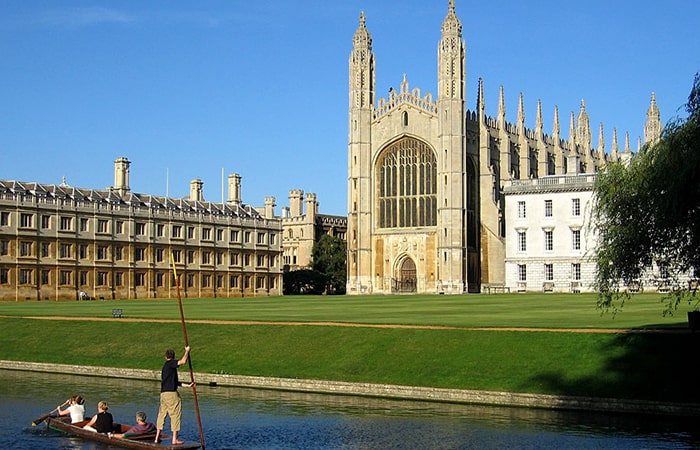
Oxford is larger and has more of the energy of a small city, with plenty to see and do beyond the university colleges themselves. Cambridge, by comparison, can feel quieter and more compact, although its historic centre is no less impressive.
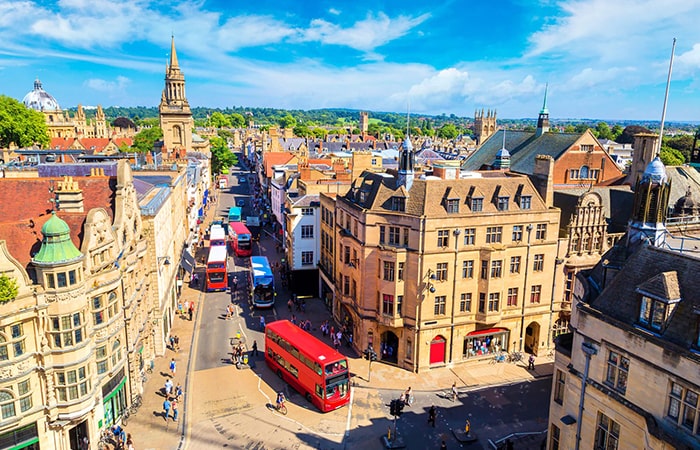
The two cities also work slightly differently as bases for exploring other parts of England. Cambridge sits to the north of London, while Oxford is particularly well placed if you want to combine your visit with other famous destinations.
The Cotswolds, Stratford-upon-Avon, Warwick and Blenheim Palace can all be reached from the wider Oxford area, making it easy to build a longer itinerary around this part of England.
Together, these destinations could easily fill an entire UK trip.
The architecture of the University of Oxford and University of Cambridge
Oxford and Cambridge are both collegiate universities, made up of individual colleges spread across their respective cities rather than one single university campus.
Many of these colleges are arranged around beautiful central courtyards. These are traditionally known as courts in Cambridge and quads in Oxford, although the terminology varies between individual buildings and colleges.
This collegiate system is an important part of life at both universities, so you should not expect to find one main university building in the way you might at many other universities.
The buildings of the University of Oxford
The University of Oxford is the oldest university in the English-speaking world. There is no known date for its foundation, but records show that teaching was taking place in Oxford by 1096, giving the university more than nine centuries of history.
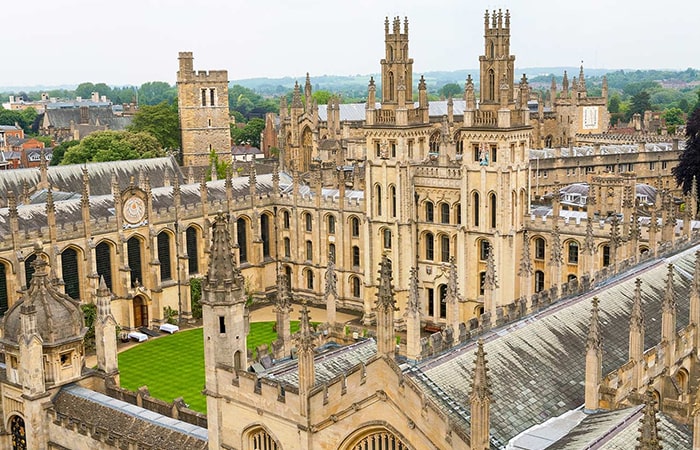
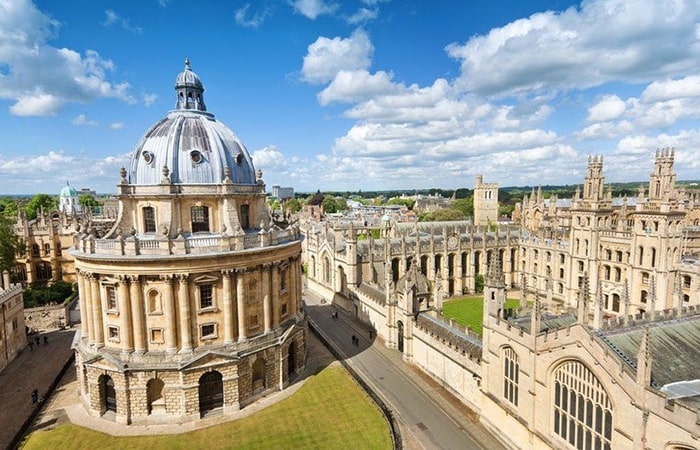
One of the things that makes Oxford so distinctive is the way architecture from many different centuries sits side by side. Medieval buildings, Gothic towers, classical façades and later Gothic Revival architecture have all contributed to the appearance of the city you see today.
Oxford also escaped the widespread destruction experienced by a number of British cities during the Second World War. Although the city was not completely untouched, its historic centre avoided the devastating wartime bombing suffered by places such as Coventry.
One of Oxford’s most recognisable architectural features is its skyline of towers and spires. The poet Matthew Arnold famously described Oxford as the “city of dreaming spires”, a description that has remained closely associated with the city ever since.
Much of Oxford’s historic architecture reflects the Gothic style that flourished in England during the Middle Ages. Many of the university’s oldest colleges were established during this period, helping to create the medieval character still visible across the city.
Gothic architecture later fell out of fashion as classical styles became increasingly popular. However, Gothic architecture returned to prominence through the Gothic Revival, particularly during the 18th and 19th centuries.
This meant that when Oxford and its university expanded significantly during the Victorian period, architects often chose styles that complemented the medieval buildings already surrounding them.
Rather than completely replacing the city’s older architectural character, many new buildings continued or reinterpreted it. Restoration projects also helped preserve much of Oxford’s medieval appearance, although some Victorian restoration work was later criticised for altering historic buildings too extensively.
Magdalen College is a particularly striking example of the way different periods of architecture coexist in Oxford. Its famous Great Tower dates from the late 15th and early 16th centuries, while other parts of the college were built or altered much later.
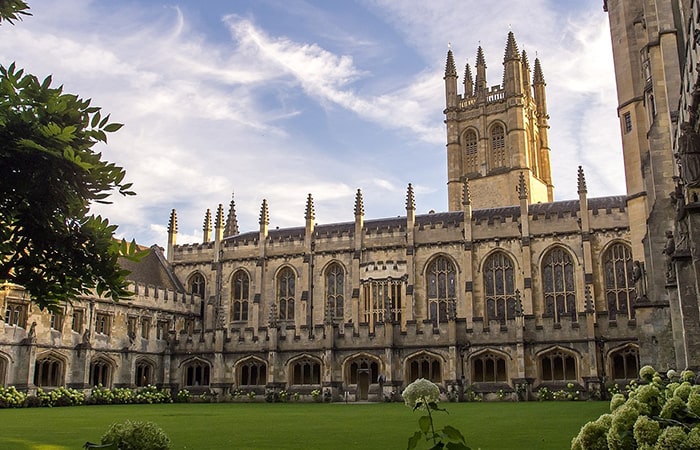
The Victorians were enthusiastic not only about constructing new Gothic Revival buildings, but also about restoring existing medieval ones.
The result is a city that has expanded enormously over the centuries but still retains a very recognisable historic character. The widespread use of local limestone across Oxford’s buildings also helps create the sense of architectural continuity for which the city is famous.
The University of Cambridge
The University of Cambridge lies around 50 miles north of London and is known around the world for its prestigious university. Some of the many famous people associated with Cambridge include Isaac Newton, William Wordsworth, Alfred Tennyson and Charles Darwin, alongside countless influential scientists, writers, politicians and thinkers.
The University of Cambridge dates back to 1209, when scholars gathered in Cambridge to study. More than eight centuries later, it remains one of the world’s best-known universities.

Cambridge’s historic architecture is one of the city’s defining features. Medieval college buildings sit alongside later additions, creating a record of how both the university and the city have changed over hundreds of years.
The university is made up of 31 colleges, which vary considerably in age and architectural style. The oldest is Peterhouse, founded in 1284, while Robinson College, founded in the 1970s, is the newest of Cambridge’s 31 colleges.
This means Cambridge is far from architecturally uniform. Medieval and Gothic buildings sit alongside neoclassical architecture and much more modern college buildings from the 20th and 21st centuries.
Homerton has an interesting history of its own. Its roots stretch back much further, but it received its Royal Charter as a self-governing college of the University of Cambridge in 2010.
Great St Mary’s is the University Church and has been closely connected with Cambridge University for centuries. The site was already home to a church by the early 13th century, and the present building developed over several centuries.
Its tower was completed in the early 17th century and today you can climb it for views across central Cambridge and many of the university’s most famous buildings.
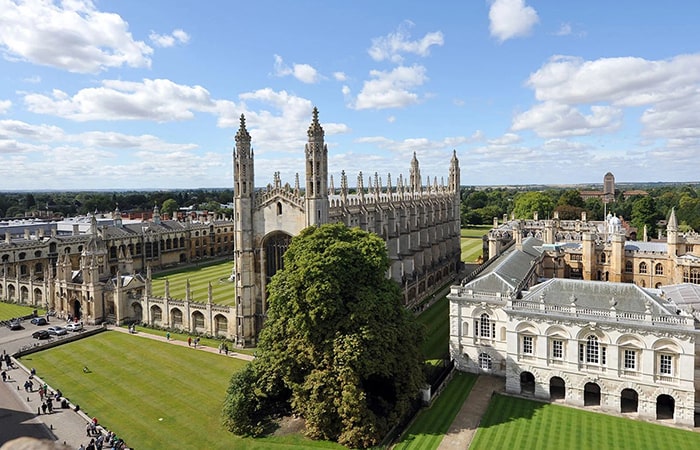
One of Cambridge’s best-known colleges is King’s College, home to King’s College Chapel, one of the finest examples of late Gothic architecture in England.
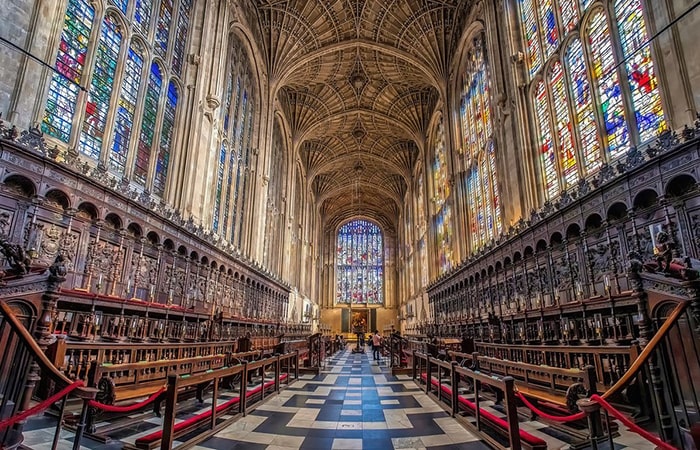
King’s College was founded by Henry VI in 1441, and the foundation stone of the chapel was laid in 1446. Construction continued under successive monarchs, with the main stonework completed in 1515.
Nearby, on Trinity Street, you will find Gonville & Caius College, whose history dates back to its original foundation as Gonville Hall in 1348. Continue along the street and you will reach the prestigious Trinity College, founded by Henry VIII in 1546.
Another place worth visiting while you are in Cambridge is the Fitzwilliam Museum, located on Trumpington Street. Its collections contain more than half a million works of art and historic objects spanning centuries and cultures.
The museum’s collections range from ancient Egyptian, Greek and Roman objects to ceramics, illuminated manuscripts, coins, sculpture and paintings. Its art collections include works by major European artists such as Titian and Frans Hals, while its wider collections contain works associated with artists including Modigliani.
Oxford or Cambridge: which should you visit?
Oxford and Cambridge are undoubtedly two of the UK’s most interesting historic university cities. Choosing between them is difficult because they share so much, from centuries of academic history to colleges filled with extraordinary architecture.
Oxford is the larger of the two and generally feels busier and more urban, with plenty to explore beyond the university itself. Cambridge is smaller and more compact, with the River Cam, the Backs and its historic colleges giving the centre a character of its own.
Whichever you visit, the history of the universities is impossible to separate from the cities around them. Walk through their old colleges, courtyards and streets and you can still see more than eight centuries of university life reflected in the architecture around you.
If you would like your students to experience some of Britain’s most famous university cities for themselves, discover our Astrolabio study holidays in the UK and start planning your next group programme with us.