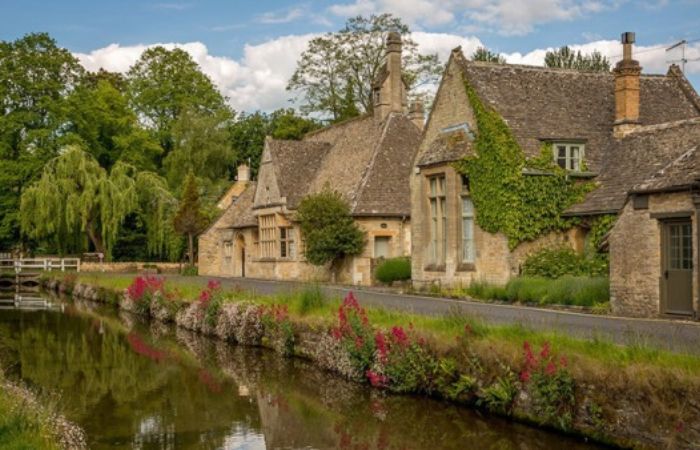
If you’re planning a summer holiday in England, make sure you leave some time to visit the Cotswolds, one of the most picturesque parts of the country.
The Cotswolds cover an area of almost 800 square miles, stretching across five counties: Gloucestershire, Oxfordshire, Warwickshire, Wiltshire and Worcestershire. Each county has its own character, but they all share the features that make the Cotswolds so recognisable: honey-coloured stone buildings and gently rolling hills, known as wolds.
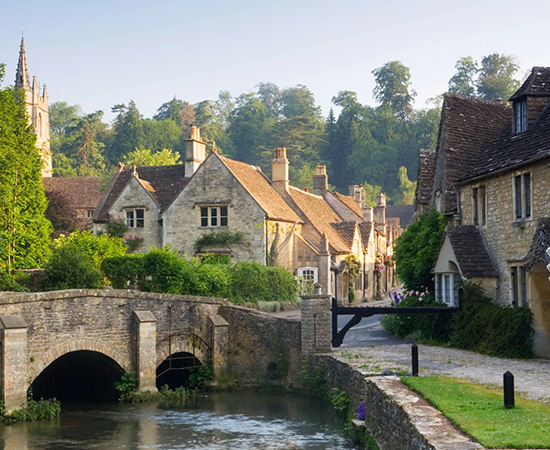
In this beautiful part of England, you can spend your days wandering through green countryside, exploring pretty villages and following scenic walking trails. Once you’ve visited, you’ll probably find yourself wanting to return for longer.
But if you’ve never heard of the Cotswolds before, we’ll give you a little time to discover why this region receives so much praise!
We’ve put together three one-day itineraries that you can follow individually or combine into a longer trip. Each itinerary includes places that are relatively close to one another, so you won’t have to spend hours driving between stops.
That means more time to explore the countryside and villages of the Cotswolds and discover why this fairytale-like corner of England is so popular with visitors.
Castle Combe, Lacock / Bradford-on-Avon
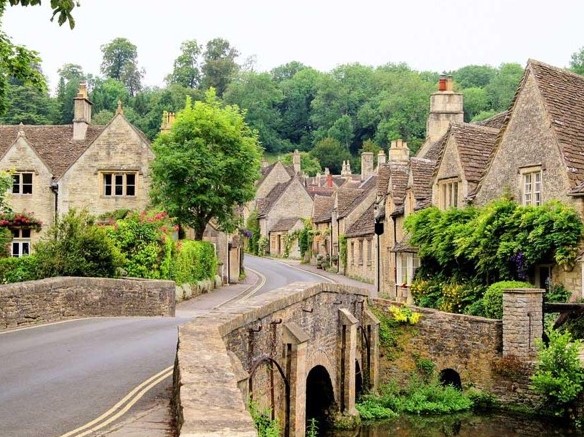
If you’re planning to visit the southern Cotswolds, near Bath and Bristol, Castle Combe is an excellent place to start. Often described as one of the prettiest villages in England, it’s also relatively easy to reach from the M4 compared with some of the region’s other famous villages.
While you’re here, visit the Market Cross and St Andrew’s Church, which dates back to the 13th century. Inside the church, you’ll find a historic working clock, believed to be one of the oldest of its kind in England.
Take a leisurely walk through the village towards the stone bridge, where you’ll be rewarded with a lovely view of the surrounding cottages and countryside. You might even come across homemade cakes, sweet treats or bunches of flowers being sold outside local residents’ homes.
After exploring the village, stop at The Manor House, a historic country house hotel with beautiful grounds. On a warm summer’s day, it’s a lovely setting for a refreshing drink or a traditional afternoon tea.
Since Castle Combe is quite small, you can easily combine your visit with a trip to another nearby destination, such as Lacock or Bradford-on-Avon.
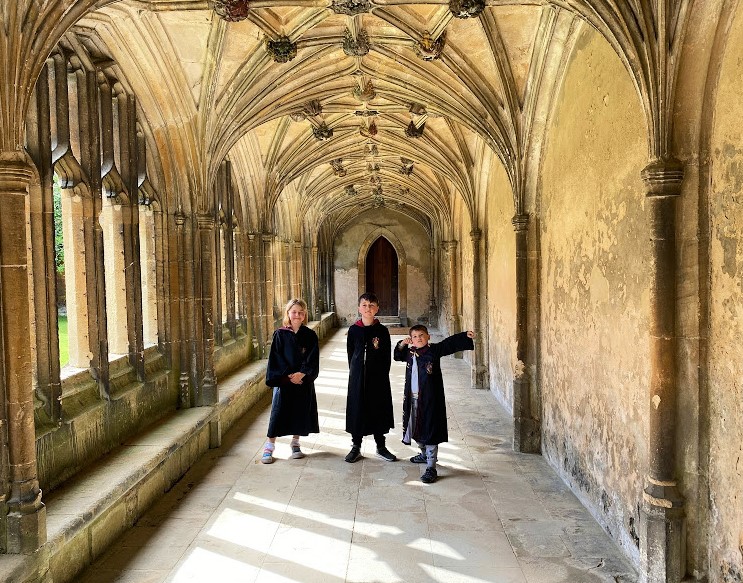
Lacock is particularly famous for its appearances in the Harry Potter films, with several village streets and buildings used as filming locations. It’s also home to Lacock Abbey, a historic property cared for by the National Trust.
Alternatively, continue to Bradford-on-Avon, a charming Wiltshire town known for its historic buildings, traditional tearooms and picturesque canal towpath, which is popular with walkers and cyclists.
If you’re feeling adventurous, you can even hire a canoe or a traditional narrowboat and spend some time exploring the Kennet and Avon Canal from the water.
Stow-on-the-Wold, Lower Slaughter and Bourton-on-the-Water
Your second itinerary begins in Stow-on-the-Wold, one of the highest towns in the Cotswolds. Located on the historic Roman Fosse Way, at the meeting point of several important roads, the town became a major trading centre during the medieval period.
Its large and impressive Market Square reflects the town’s former importance. Today, it’s surrounded by historic buildings, independent shops, antique dealers, welcoming cafés and traditional inns, many constructed from the region’s distinctive honey-coloured limestone.
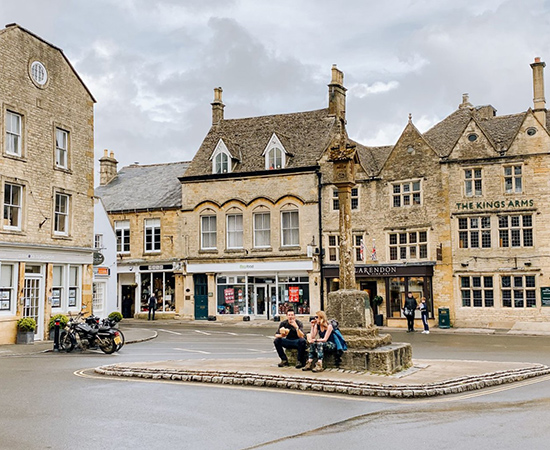
For centuries, the square was the centre of local life, hosting busy markets and attracting traders from the surrounding countryside. Stow was particularly well known for its wool trade, with large sheep fairs once bringing thousands of animals into the town.
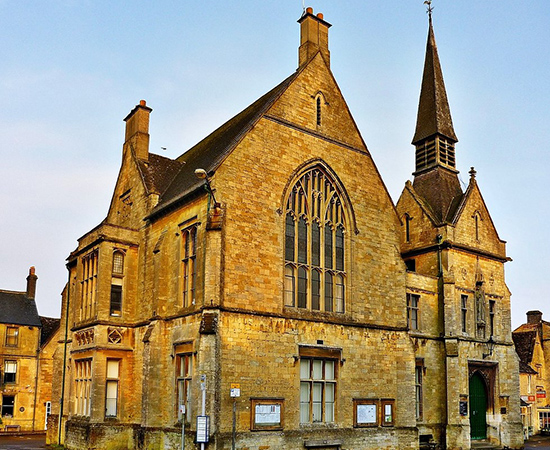
One of its notable buildings is St Edward’s Hall, a 19th-century building standing in the square, which originally served as a public hall.
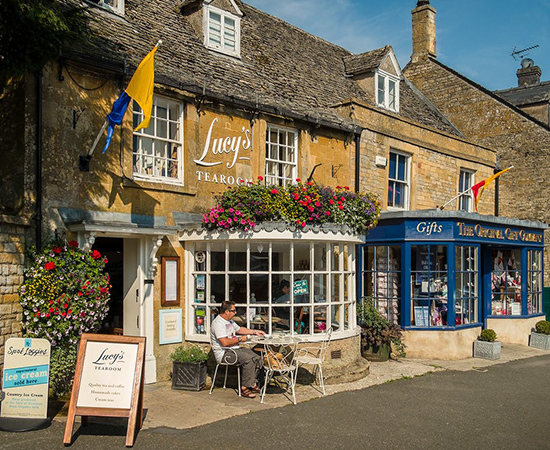
Before exploring the town’s gift shops, homeware stores and independent clothing boutiques, you could stop at Lucy’s Tearoom for a cup of tea or a traditional English breakfast.
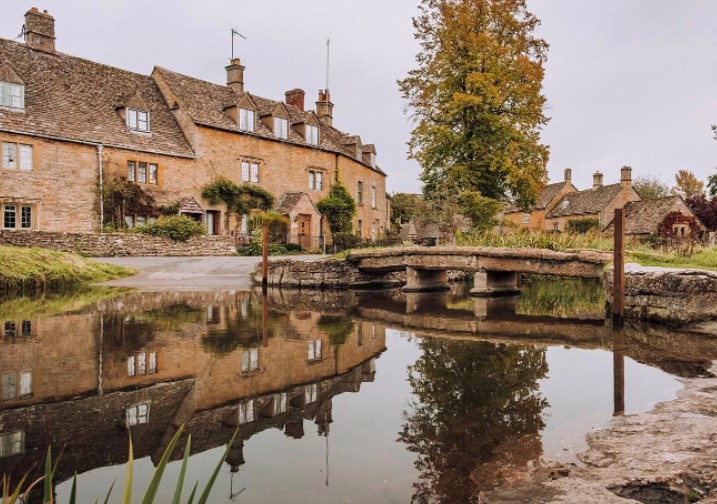
Just a few miles from Stow-on-the-Wold, you’ll find the neighbouring villages of Upper Slaughter and Lower Slaughter. Both are peaceful, predominantly residential villages situated along the shallow River Eye.
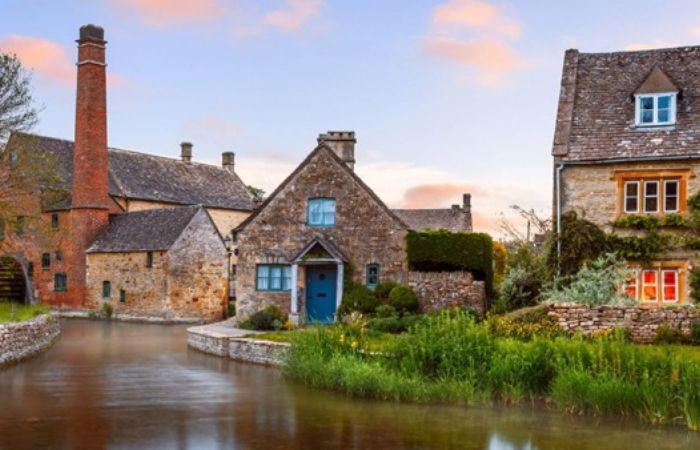
Their pretty honey-coloured cottages, quiet lanes and picturesque riverside setting make them well worth a visit. In Lower Slaughter, don’t miss the historic Old Mill, one of the village’s most recognisable landmarks.
From here, continue to Bourton-on-the-Water, one of the best-known villages in the Cotswolds.
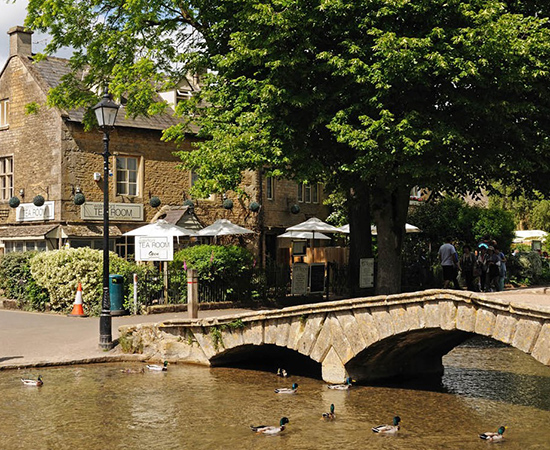
The River Windrush runs through the centre of the village, with several low stone bridges connecting its banks. These picturesque bridges have earned Bourton-on-the-Water the nickname ‘Venice of the Cotswolds‘.
The broad, tree-lined streets are home to antique shops, independent retailers, tearooms and traditional English pubs, many with outdoor seating where you can enjoy a meal in the sunshine.
If you’re visiting on a warm summer’s day, bring a snack, find a bench beside the river and spend a little time watching the world, and the ducks, go by.
Broadway, Broadway Tower and Cotswold Lavender Farm
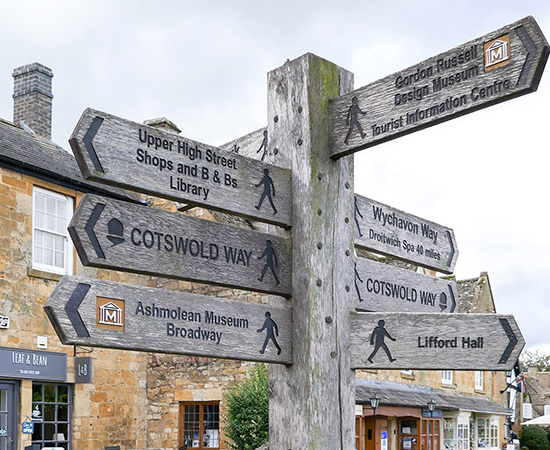
Your third day trip takes you to Broadway, another beautiful Cotswold village where you’ll find independent shops, cafés and seasonal stalls along its famous High Street during the summer months.
The attractive High Street is lined with horse chestnut trees and a mixture of historic houses and traditional honey-coloured Cotswold stone cottages, which have been attracting visitors for centuries.
Originally, the village was centred around St Eadburgha’s Church and the stream at Bury End. Over time, the settlement gradually expanded northwards, eventually developing into the High Street you can explore today.
During the 16th century, the coaching route over Fish Hill helped establish Broadway as an important stopping point for travellers heading between Worcester, Oxford and London.
As the village became busier, numerous coaching inns were established to accommodate travellers, several of which remain part of Broadway’s character today.
Broadway also has a fascinating artistic and literary heritage, having attracted celebrated figures such as William Morris, John Singer Sargent, Francis Davis Millet, J. M. Barrie and the actress Mary Anderson.
For lunch, consider stopping at The Swan, a traditional pub in the centre of Broadway where you can enjoy classic British dishes or a Sunday roast.
Alternatively, visit the historic Lygon Arms, a former coaching inn that now operates as a luxury hotel, with restaurants and spaces where you can enjoy afternoon tea.
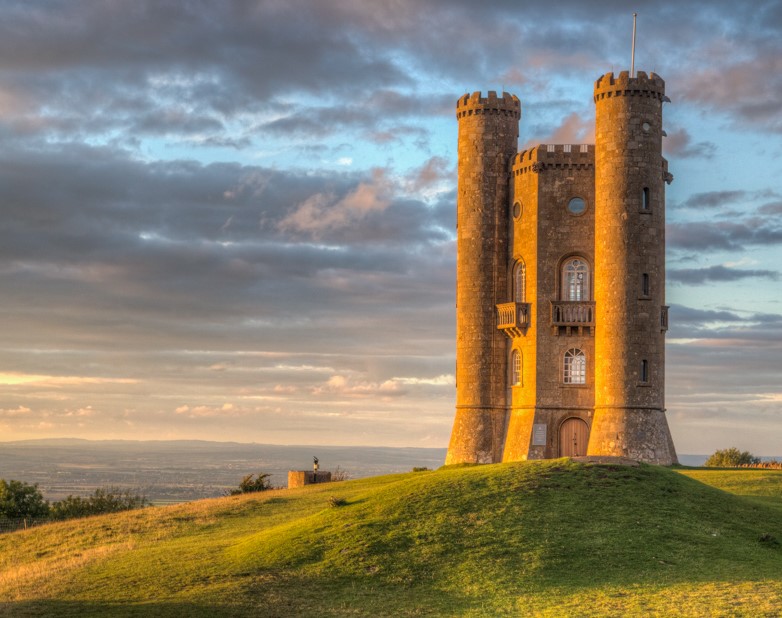
After spending some time exploring the village, head towards Broadway Tower, one of the most famous landmarks in the Cotswolds.
This distinctive, castle-like folly stands on Broadway Hill, approximately 312 metres above sea level, making it one of the highest points in the northern Cotswolds. On a clear day, you can enjoy spectacular views across the surrounding countryside, with up to 16 counties reportedly visible.
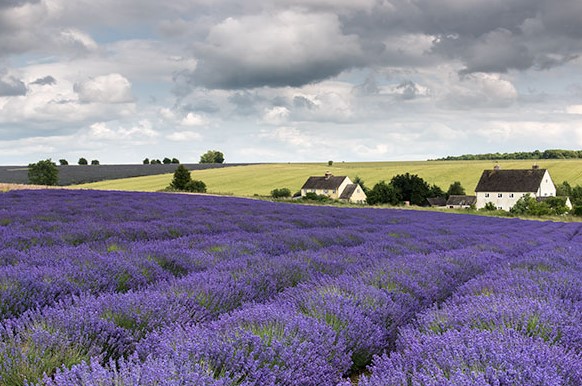
If you’re lucky enough to visit on a bright summer’s day, the views from here are particularly impressive.
Just a short drive from Broadway, near Snowshill, you’ll find Cotswold Lavender, a beautiful place to visit during the summer when the lavender fields are in bloom.
The flowers usually reach their peak in July, when the fields are covered in rows of purple lavender.
Walking among the lavender fields is a wonderful sensory experience, with their distinctive fragrance and colourful scenery providing a peaceful way to finish your day of sightseeing.
Many visitors come here to take photographs among the flowers, and it’s easy to understand why. The purple fields against the rolling Cotswold countryside make a beautiful sight, well worth the admission fee.
Discover more of the Cotswolds
Scattered throughout the beautiful Cotswold countryside are hundreds of small towns and villages, each with its own history and character, waiting to be discovered throughout the year.
These three itineraries are a great starting point, but there’s much more to see in the Cotswolds. If you decide to stay a little longer, you’ll have the opportunity to discover its historic villages, traditional English hospitality and peaceful countryside at your own pace.
Whether you’re visiting for a single day or planning a longer holiday, the Cotswolds offer a wonderful opportunity to experience a quieter, more traditional side of England.